4-Hydroxyphenylpyruvic Acid (4-HPPA) is a chemical compound widely used in laboratory settings for its versatility in chemical and pharmacological experiments. As a key building block in organic synthesis, it plays a crucial role in the development of compounds with specific biological activities. Its aromatic structure enables participation in various chemical reactions, making it an essential component for researchers aiming to create new compounds with therapeutic potential. This compound is particularly valuable in the study of antioxidants and enzyme inhibitors, contributing to advancements in both chemistry and pharmaceutical research.
The unique properties of 4-HPPA, such as its solubility in organic solvents and its ability to undergo substitution and oxidation reactions, make it a preferred choice for synthetic chemists. These characteristics allow for the efficient production of complex organic molecules, enhancing the effectiveness of laboratory processes. Its stability in chemical structure ensures safe handling and storage, reducing the risk of degradation during experiments. This reliability is especially important in environments where precision and consistency are critical.
In Indonesian laboratories, 4-HPPA is commonly used in chemical, pharmaceutical, and biochemical research. It is particularly relevant for projects focused on the development of new compounds or the optimization of synthesis processes. Due to its reliability and adaptability, it is a sought-after material among local researchers working on innovative scientific projects. Its widespread use underscores its importance in modern laboratory practices across various scientific disciplines.
- Organic synthesis applications benefit from 4-HPPA due to its reactivity and solubility, enabling the creation of complex molecules with specific biological functions.
- Pharmacological research utilizes 4-HPPA to develop compounds with antioxidant properties, supporting studies on disease prevention and treatment mechanisms.
- Biochemical experiments rely on 4-HPPA for its role in enzyme inhibition studies, aiding in the understanding of metabolic pathways and drug interactions.
- Analytical chemistry uses 4-HPPA as a reference standard for accurate identification and quantification of compounds in various samples.
- Environmental studies incorporate 4-HPPA to investigate the behavior of organic pollutants in different ecosystems and their impact on biological systems.
| Brand | TCI |
|---|---|
| CAS number | 156-39-8 |
| Molecular formula | — |
| Purity | — |
| Category | Chemistry > Building Blocks > Non-Heterocyclic Building Blocks |
| Pack sizes | 5g, 25g, 100g |
| Physical form | White crystalline powder |
| Storage | Store in a cool, dry place away from light |
4-Hydroxyphenylpyruvic Acid should be stored in a cool, dry place away from direct light to maintain its chemical stability. It is recommended to use airtight containers to prevent moisture absorption, which could affect its purity and reactivity. Since it is a solid compound, it does not require refrigeration but should be kept in a controlled environment to avoid contamination. Laboratory personnel should handle the material with care, using appropriate personal protective equipment such as gloves and safety goggles. Proper labeling of storage containers is essential to ensure safe handling and prevent accidental exposure. This compound is generally considered safe when handled according to standard laboratory protocols.
—
Produk Terkait
-
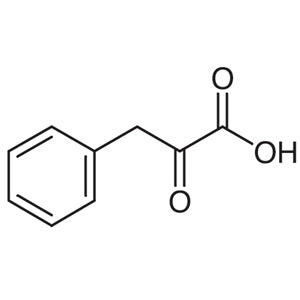
PhenylpyruvicAcid TCI P0154
Regular price From Rp 1.881.600,00Regular price -
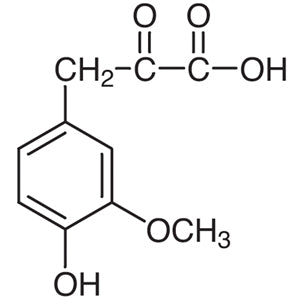
4-Hydroxy-3-methoxyphenylpyruvicAcid TCI H0539
Regular price From Rp 2.094.750,00Regular price