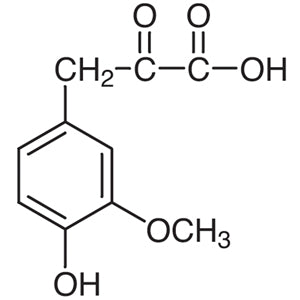
TCI H0539 4-Hydroxy-3-methoxyphenylpyruvic Acid, also known as vanilpyruvic acid, is a phenolic compound bearing an alpha-keto acid group on its side chain. Its structure combines a guaiacol core — an aromatic ring carrying adjacent hydroxyl and methoxy substituents — with a highly reactive pyruvate group. As a non-heterocyclic building block, this compound is used in organic synthesis to construct modified phenylalanine and tyrosine derivatives, and it also serves as a reference compound in research on aromatic amino acid metabolism and in metabolite analysis of biological samples.
The principal advantage of this compound lies in the diversity of its functional groups, which allows many transformation pathways to be explored from a single starting material. The alpha-keto group can undergo reductive amination, condensation, or reduction to the corresponding alcohol, while the phenolic group can be selectively etherified or acylated. Its acidic character means the compound dissolves more readily in dilute alkaline solutions and polar organic solvents than in neutral water. As is typical of aromatic alpha-keto acids, the material is sensitive to light, heat, and oxidation, and it can undergo keto-enol tautomeric equilibrium in solution.
In Indonesian laboratories, this building block is typically encountered in university and institutional research settings where synthetic organic chemistry and metabolite studies are carried out. It supports work in natural product derivatisation groups, analytical laboratories preparing reference materials for aromatic amino acid metabolite work, and teaching laboratories demonstrating the reactivity of multifunctional phenolic compounds. Quantities are normally handled at research scale rather than production scale, consistent with its role as a synthetic intermediate.
Related TCI products
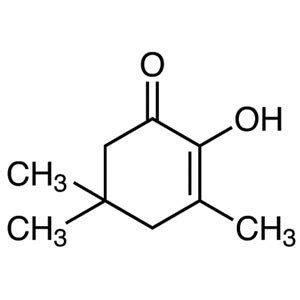
- TCI T2723 4883-60-7 2-Hydroxy-3,5,5-trimethyl-2-cyclohexen-1-one
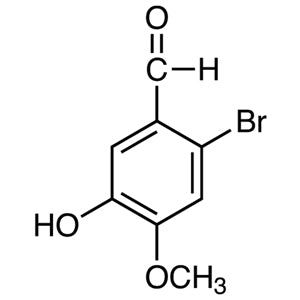
- TCI B4681 2973-59-3 2-Bromo-5-hydroxy-4-methoxybenzaldehyde
- TCI B3229 2208-15-3 4-Bromo-3-hydroxy-2-naphthoic Acid
- TCI B3180 1779-11-9 7-Bromo-3-hydroxy-2-naphthoic Acid
- TCI M3737 567-61-3 2-Hydroxy-6-methylbenzoic Acid
- TCI M2806 884-35-5 Methyl 4-Hydroxy-3,5-dimethoxybenzoate
- Synthesis of modified phenylalanine and tyrosine derivatives — the alpha-keto group provides a direct handle for reductive amination, giving access to non-standard amino acid analogues from one starting material.
- Reference compound in aromatic amino acid metabolism research — its identity as vanilpyruvic acid makes it a relevant standard for studies tracing metabolic pathways of aromatic amino acids.
- Metabolite analysis of biological samples — the compound serves as a comparison material when identifying or confirming related phenolic keto acid metabolites in complex biological matrices.
- Selective functionalisation studies — the phenolic hydroxyl can be etherified or acylated independently of the keto acid, making the molecule useful for teaching and probing chemoselective reaction strategies.
- Condensation and reduction chemistry — the reactive alpha-keto group readily participates in condensation reactions or can be reduced to the corresponding alcohol, supporting diverse route development in organic synthesis.
| Brand | TCI (Tokyo Chemical Industry) |
|---|---|
| CAS number | 1081-71-6 |
| Molecular formula | — |
| Purity | — |
| Category | Chemistry > Building Blocks > Non-Heterocyclic Building Blocks |
| Pack sizes | available in standard TCI research-scale packaging; please confirm the required pack size when ordering |
| Physical form | — |
| Storage | store protected from light and heat, as the material is sensitive to light, heat, and oxidation |
- Product code: H0539
Store the compound in a cool, dry place away from direct light and heat sources, since aromatic alpha-keto acids are sensitive to light, heat, and oxidation. Keep the material in its original tightly closed container, preferably amber or otherwise light-protected glass, and reseal promptly after each use to limit exposure to air and moisture. Handle in a well-ventilated area or fume hood using standard laboratory personal protective equipment, including gloves, safety glasses, and a laboratory coat. Prepare solutions shortly before use where possible, as the compound may undergo keto-enol equilibrium in solution, and avoid contact with strong oxidising agents. Follow the supplier safety data sheet and local institutional waste disposal procedures.
—
Produk Terkait
-
2-Hydroxy-3,5,5-trimethyl-2-cyclohexen-1-one TCI T2723
Regular price Rp 1.273.650,00Regular price -
2-Bromo-5-hydroxy-4-methoxybenzaldehyde TCI B4681
Regular price Rp 4.293.450,00Regular price -
4-Bromo-3-hydroxy-2-naphthoicAcid TCI B3229
Regular price From Rp 2.174.550,00Regular price -
7-Bromo-3-hydroxy-2-naphthoicAcid TCI B3180
Regular price From Rp 769.650,00Regular price -
2-Hydroxy-6-methylbenzoicAcid TCI M3737
Regular price From Rp 2.332.050,00Regular price -
Methyl4-Hydroxy-3,5-dimethoxybenzoate TCI M2806
Regular price From Rp 1.193.850,00Regular price -
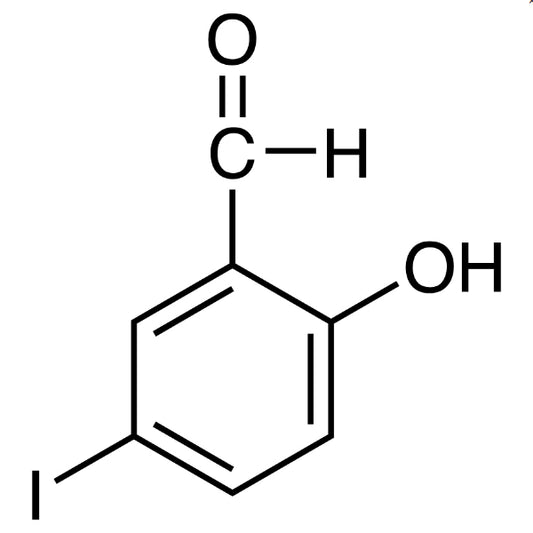
2-Hydroxy-5-iodobenzaldehyde TCI I1175
Regular price From Rp 903.000,00Regular price -
3-Hydroxy-2,2,4-trimethylpentylIsobutyrate(containsca40%2,2,4-Trimethyl-1,3-pentanediol3-Monoisobutyrate) TCI I0405
Regular price From Rp 505.050,00Regular price