Phenylpyruvic Acid from TCI (product code P0154, CAS 156-06-9) is an aromatic α-keto acid. Structurally, it is pyruvic acid carrying a benzyl group at the β-position. It matters in biochemistry because it is formed when phenylalanine undergoes transamination or deamination. Elevated levels in urine are a classic marker of phenylketonuria. As a non-heterocyclic building block, Phenylpyruvic Acid is also useful in organic synthesis. Chemists use it to build phenylalanine derivatives, phenyllactic acid, and other compounds with a phenylpropanoid skeleton. This makes it useful in both research and teaching laboratories.
Chemists choose this compound because it has two functional groups side by side: a ketone and a carboxylic acid. Together they give it rich and versatile reactivity. The keto group can be reduced, reductively aminated, or condensed with amines and hydrazines, which opens many synthetic routes from a single starting material. Like many α-keto acids that have an α-hydrogen, Phenylpyruvic Acid shows keto-enol tautomerism. Its enol form can be stabilised by conjugation with the aromatic ring. This equilibrium affects its spectra, its solubility, and how it behaves in solution, so researchers should keep it in mind when designing experiments or reading analytical data. The compound is also a natural substrate for several enzymes, including aminotransferases and amino acid dehydrogenases.
In Indonesia, Phenylpyruvic Acid is relevant to biochemistry, clinical chemistry, and organic synthesis laboratories at universities, research institutes, and industrial R&D facilities. Researchers studying amino acid metabolism use it as a reference compound and enzyme substrate. Synthetic chemists use it as an intermediate for aromatic amino acid derivatives. Teaching laboratories can use it to demonstrate α-keto acid reactivity and keto-enol tautomerism. AMI Scientific supplies the genuine TCI product to support consistent, reproducible work across these settings.
- Enzyme assays: it is a natural substrate for aminotransferases and amino acid dehydrogenases, which makes it well suited to studying enzyme activity, kinetics, and substrate specificity in biochemistry laboratories.
- Phenylketonuria-related research: elevated urinary phenylpyruvic acid is a classic marker of phenylketonuria, so the compound serves as a relevant reference material in metabolic and clinical chemistry studies.
- Synthesis of phenylalanine derivatives: its keto group can be reductively aminated, giving a direct route to phenylalanine analogues and related aromatic amino acid structures for research purposes.
- Preparation of phenyllactic acid and phenylpropanoids: reducing the ketone function gives phenyllactic acid, and the benzyl-bearing skeleton supports the construction of other compounds with a phenylpropanoid framework.
- Condensation and derivatisation chemistry: the reactive α-keto group condenses with amines and hydrazines, which is useful for preparing imines, hydrazones, and other derivatives for synthetic and analytical work.
| Brand | TCI (product code P0154) |
|---|---|
| CAS number | 156-06-9 |
| Molecular formula | — |
| Purity | — |
| Category | Chemistry > Building Blocks > Non-Heterocyclic Building Blocks |
| Pack sizes | available in the standard TCI pack sizes; please confirm current options with AMI Scientific |
| Physical form | refer to the TCI product label and Certificate of Analysis |
| Storage | follow the storage conditions stated on the TCI label and Safety Data Sheet |
Store Phenylpyruvic Acid in its original tightly closed TCI container, following the storage conditions on the product label and Safety Data Sheet. Keep it in a cool, dry, well-ventilated area, away from direct sunlight, moisture, heat sources, and incompatible materials such as strong oxidising agents. Because the compound shows keto-enol tautomerism and its behaviour in solution can vary, prepare solutions fresh when possible and record handling conditions so results stay reproducible. Handle it according to good laboratory practice: wear safety glasses, gloves, and a lab coat, avoid creating or inhaling dust, and work in a fume hood or well-ventilated area. Reseal the container promptly after use, label any working portions clearly, and dispose of waste in line with local regulations and institutional procedures.
—
Produk Terkait
-
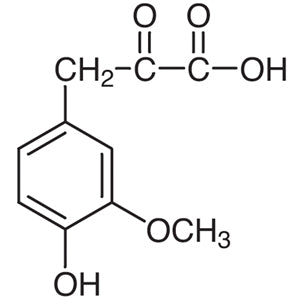
4-Hydroxy-3-methoxyphenylpyruvicAcid TCI H0539
Regular price From Rp 2.094.750,00Regular price -
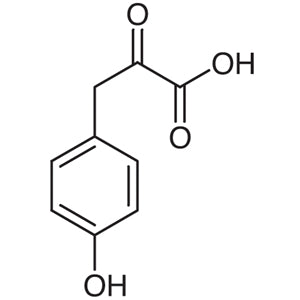
4-HydroxyphenylpyruvicAcid TCI H0294
Regular price From Rp 2.545.200,00Regular price