N-(2-Hydroxypropyl)morpholine is a chemical compound widely used in laboratory settings as a building block for the synthesis of heterocyclic compounds. This versatile molecule plays a crucial role in organic chemistry, particularly in the development of bioactive molecules such as pharmaceuticals and industrial chemicals. Its unique structure, combining a morpholine ring with a hydroxypropyl chain, allows it to participate in various chemical reactions, making it an essential component in synthetic pathways. Due to its reactivity and solubility, it is frequently employed in research aimed at creating new compounds with specific functional properties.
The compound is favored for its excellent solubility in organic solvents like ethyl acetate and acetone, which facilitates its use in a wide range of chemical processes. Its stability under certain conditions and reactivity with various reagents make it a preferred choice for applications requiring high reactivity and compatibility. Additionally, its ability to undergo substitution, coupling, and structural modification reactions enhances its utility in complex synthetic strategies. These properties ensure its effectiveness in both academic and industrial research environments.
In Indonesian laboratories, N-(2-Hydroxypropyl)morpholine is extensively used in organic chemistry research, particularly in pharmacology and the synthesis of active compounds. Its availability in liquid form simplifies handling and application, making it a reliable material for researchers working on drug development and chemical synthesis projects. Its role in creating bioactive molecules underscores its importance in advancing scientific research in Indonesia.
Related TCI products
- TCI H1355 4441-30-9 4-(3-Hydroxypropyl)morpholine
- TCI H1141 205194-33-8 4-(3-Hydroxypropyl)thiomorpholine 1,1-Dioxide
- TCI H0988 2403-66-9 2-(3-Hydroxypropyl)benzimidazole
- TCI H0827 50966-69-3 1-(3-Hydroxypropyl)pyrrole
- TCI A0409 123-00-2 N-(3-Aminopropyl)morpholine
- TCI T2215 3077-16-5 4-(p-Tolyl)morpholine
- Organic synthesis applications benefit from its reactivity and solubility, enabling efficient compound development.
- Pharmaceutical research utilizes it to create bioactive molecules with specific therapeutic properties.
- Industrial chemical production relies on its versatility for synthesizing a wide range of functional compounds.
- Structural modification studies take advantage of its ability to undergo various chemical transformations.
- Drug discovery projects use it as a key building block in the design of novel pharmaceutical compounds.
| Brand | TCI |
|---|---|
| CAS number | 2109-66-2 |
| Molecular formula | — |
| Purity | — |
| Category | Chemistry > Building Blocks > Heterocyclic Building Blocks |
| Pack sizes | Available in various sizes as per supplier specifications |
| Physical form | Liquid |
| Storage | Store in a cool, dry place away from direct sunlight |
N-(2-Hydroxypropyl)morpholine should be stored in a cool, dry environment to maintain its chemical stability. It is recommended to keep it in a sealed container to prevent exposure to moisture and air, which could affect its reactivity. Suitable storage containers include glass or high-density polyethylene (HDPE) bottles, which are resistant to chemical degradation. Laboratory personnel should handle the compound with care, using appropriate personal protective equipment such as gloves and safety goggles. Due to its solubility in organic solvents, it should be stored away from incompatible substances. Proper labeling and storage conditions ensure the safety and effectiveness of the compound in research applications.
—
Produk Terkait
-
4-(3-Hydroxypropyl)morpholine TCI H1355
Regular price Rp 2.862.300,00Regular price -
4-(3-Hydroxypropyl)thiomorpholine1,1-Dioxide TCI H1141
Regular price From Rp 2.518.950,00Regular price -
2-(3-Hydroxypropyl)benzimidazole TCI H0988
Regular price Rp 1.298.850,00Regular price -
1-(3-Hydroxypropyl)pyrrole TCI H0827
Regular price Rp 2.518.950,00Regular price -
N-(3-Aminopropyl)morpholine TCI A0409
Regular price From Rp 610.050,00Regular price -
4-(p-Tolyl)morpholine TCI T2215
Regular price Rp 3.367.350,00Regular price -
N-(Trimethylsilyl)morpholine TCI T1277
Regular price From Rp 1.431.150,00Regular price -
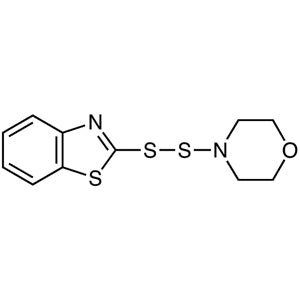
4-(2-Benzothiazolyldithio)morpholine TCI B1349
Regular price Rp 477.750,00Regular price