TCI H0573 3,4-Hexanedione is a symmetrical vicinal diketone carrying two adjacent carbonyl groups at the centre of a six-carbon chain. This arrangement makes it a highly useful non-heterocyclic building block, because the two neighbouring carbonyls provide a distinctive reactivity pattern that ordinary ketones simply do not offer. In the laboratory the compound serves as a starting material for constructing heterocyclic rings, as a chelating ligand once converted into its dioxime derivative, and as a reference compound in studies of volatile compounds with buttery aroma character.
The property that makes it a preferred choice is the high electrophilicity of both carbonyl groups, which arises from their mutual electron-withdrawing effect. As a result, the compound reacts rapidly with nitrogen nucleophiles such as diamines, hydrazines, and hydroxylamine. The reaction with ortho-phenylenediamine, for example, proceeds smoothly to form the quinoxaline framework in a single step. The molecular symmetry removes any question of regioselectivity, since the two carbonyl groups are equivalent, so a single product is formed and purification remains straightforward.
As a yellowish, readily volatile liquid, the compound is also easy to separate from reaction mixtures by evaporation or distillation. In Indonesian laboratories this makes it a practical choice for synthetic chemistry groups in universities and research institutes, where heterocycle construction, ligand preparation, and flavour or aroma compound studies are routine activities and where simple workup procedures using standard rotary evaporation or distillation equipment are preferred.
Related TCI products
- TCI M0752 13706-86-0 5-Methyl-2,3-hexanedione
- TCI D2773 3375-38-0 1,6-Diphenyl-1,6-hexanedione
- TCI M1133 1193-55-1 2-Methyl-1,3-cyclohexanedione
- TCI M0945 4341-24-6 5-Methyl-1,3-cyclohexanedione
- TCI H1546 172611-72-2 2-(1-Hydroxy-3-methylbutylidene)-5,5-dimethyl-1,3-cyclohexanedione
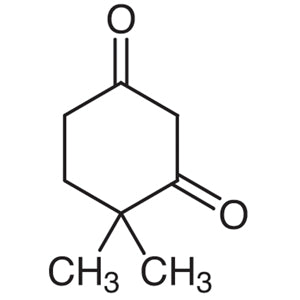
- TCI D2681 562-46-9 4,4-Dimethyl-1,3-cyclohexanedione
- Heterocyclic ring synthesis: the adjacent carbonyl pair condenses directly with ortho-phenylenediamine to build the quinoxaline framework in a single step without additional activation.
- Chelating ligand preparation: conversion into the corresponding dioxime derivative with hydroxylamine yields a bidentate nitrogen donor suitable for coordination chemistry and metal complex studies.
- Condensation with hydrazines: the strongly electrophilic carbonyls react rapidly with hydrazine reagents, giving clean access to nitrogen-containing ring systems from a simple starting material.
- Aroma and flavour research: the compound serves as a reference standard in studies of volatile substances that carry a characteristic buttery aroma profile.
- General non-heterocyclic building block work: molecular symmetry eliminates regioselectivity problems, so reactions give a single product that is straightforward to isolate and purify.
| Brand | TCI |
|---|---|
| CAS number | 4437-51-8 |
| Molecular formula | — |
| Purity | — |
| Category | Chemistry > Building Blocks > Non-Heterocyclic Building Blocks |
| Pack sizes | available in standard TCI catalogue pack sizes; please confirm the required size when ordering |
| Physical form | yellowish, readily volatile liquid |
| Storage | keep in a tightly closed container in a cool, well-ventilated place away from ignition sources |
Store the material in a tightly closed container in a cool, well-ventilated area, away from heat, open flames, and other ignition sources. Because the compound is a volatile liquid, containers should be closed immediately after use to limit vapour loss and odour spread in the laboratory. Amber glass bottles with chemically resistant closures are suitable. Handle inside a fume hood and wear safety goggles, gloves, and a laboratory coat. Keep the compound separated from strong oxidising agents and from reactive nitrogen nucleophiles such as amines and hydrazines, since condensation may occur on contact. Transfer with clean, dry glassware to avoid contamination, and consult the supplier safety data sheet before use.
—
Produk Terkait
-
5-Methyl-2,3-hexanedione TCI M0752
Regular price Rp 3.155.250,00Regular price -
1,6-Diphenyl-1,6-hexanedione TCI D2773
Regular price From Rp 3.922.800,00Regular price -
2-Methyl-1,3-cyclohexanedione TCI M1133
Regular price From Rp 1.618.050,00Regular price -
5-Methyl-1,3-cyclohexanedione TCI M0945
Regular price From Rp 955.500,00Regular price -
2-(1-Hydroxy-3-methylbutylidene)-5,5-dimethyl-1,3-cyclohexanedione TCI H1546
Regular price From Rp 2.121.000,00Regular price -
4,4-Dimethyl-1,3-cyclohexanedione TCI D2681
Regular price Rp 2.121.000,00Regular price -
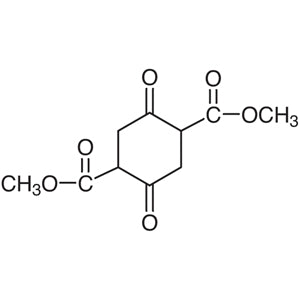
Dimethyl1,4-Cyclohexanedione-2,5-dicarboxylate TCI C1343
Regular price From Rp 717.150,00Regular price -
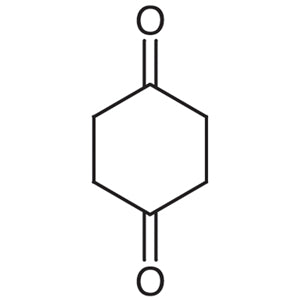
1,4-Cyclohexanedione TCI C0730
Regular price From Rp 1.298.850,00Regular price