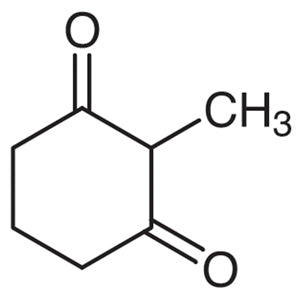
TCI M1133 2-Methyl-1,3-cyclohexanedione is a six-membered cyclic diketone bearing a methyl group on the carbon positioned between the two carbonyl groups. This compound occupies a distinguished place in the history of organic synthesis, serving as a classical starting material for constructing the bicyclic frameworks that form the backbone of many natural molecules, particularly steroids and terpenoids. In the laboratory, it is typically deployed at the earliest stage of a long synthetic route, precisely when the chemist needs to install a quaternary carbon centre while simultaneously providing carbonyl groups for the annulation steps that follow.
The characteristic that makes this building block so valuable is the acidity of the proton situated between the two carbonyl groups, which is far greater than that of an ordinary ketone. As a consequence, the compound is readily deprotonated by weak bases and is immediately prepared to act as a carbon nucleophile in Michael addition and alkylation reactions. The methyl group already in place ensures that the reaction delivers a well-defined quaternary centre rather than a mixture of products, giving the synthetic chemist predictable regiochemical control from the very first bond-forming operation.
In Indonesian laboratories, this reagent is most often encountered in academic and institutional research groups pursuing multi-step syntheses of natural product analogues and bioactive scaffolds. Its crystalline solid form makes accurate weighing straightforward, allows repurification by recrystallisation when required, and permits medium-term storage without the inconvenience of handling volatile liquids. These practical advantages suit shared teaching and research facilities where a single container may serve several projects over an extended period.
Related TCI products
- TCI M0945 4341-24-6 5-Methyl-1,3-cyclohexanedione
- TCI M0752 13706-86-0 5-Methyl-2,3-hexanedione
- TCI H1546 172611-72-2 2-(1-Hydroxy-3-methylbutylidene)-5,5-dimethyl-1,3-cyclohexanedione
- TCI H0573 4437-51-8 3,4-Hexanedione
- TCI D2773 3375-38-0 1,6-Diphenyl-1,6-hexanedione
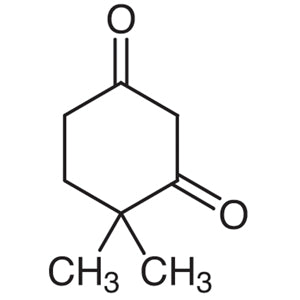
- TCI D2681 562-46-9 4,4-Dimethyl-1,3-cyclohexanedione
- Steroid skeleton construction: serves as the classical starting material for building the bicyclic frameworks that form the structural backbone of steroid natural products in extended synthetic routes.
- Terpenoid total synthesis: provides the early-stage carbon framework and the carbonyl functionality required for the subsequent annulation steps used in assembling terpenoid targets.
- Michael addition chemistry: the highly acidic proton between the two carbonyls is easily removed by weak base, generating a carbon nucleophile ready for conjugate addition.
- Quaternary centre installation: the pre-installed methyl group ensures that alkylation produces one well-defined quaternary carbon centre rather than an unpredictable mixture of isomeric products.
- Annulation precursor preparation: the retained carbonyl groups supply the electrophilic positions needed for ring-forming reactions in the later stages of a long synthesis.
| Brand | TCI |
|---|---|
| CAS number | 1193-55-1 |
| Molecular formula | — |
| Purity | — |
| Category | Chemistry > Building Blocks > Non-Heterocyclic Building Blocks |
| Pack sizes | please refer to the available packaging options for this catalogue item |
| Physical form | crystalline solid |
| Storage | keep in a tightly closed original container in a cool, dry place |
- Chemical name: 2-Methyl-1,3-cyclohexanedione
Store the container tightly closed in a cool, dry and well-ventilated area, away from direct sunlight and from incompatible reagents such as strong bases and strong oxidising agents. The original supplier container is the preferred vessel; where transfer is necessary, use clean, dry, chemically resistant glassware with a secure closure and label it clearly. Weigh and handle the solid inside a fume hood to avoid inhalation of dust, and wear safety glasses, gloves and a laboratory coat throughout. Allow a cold container to equilibrate to room temperature before opening to prevent moisture condensation onto the crystalline material. Always consult the manufacturer's safety data sheet before first use.
—
Produk Terkait
-
5-Methyl-1,3-cyclohexanedione TCI M0945
Regular price From Rp 955.500,00Regular price -
5-Methyl-2,3-hexanedione TCI M0752
Regular price Rp 3.155.250,00Regular price -
2-(1-Hydroxy-3-methylbutylidene)-5,5-dimethyl-1,3-cyclohexanedione TCI H1546
Regular price From Rp 2.121.000,00Regular price -
3,4-Hexanedione TCI H0573
Regular price From Rp 823.200,00Regular price -
1,6-Diphenyl-1,6-hexanedione TCI D2773
Regular price From Rp 3.922.800,00Regular price -
4,4-Dimethyl-1,3-cyclohexanedione TCI D2681
Regular price Rp 2.121.000,00Regular price -
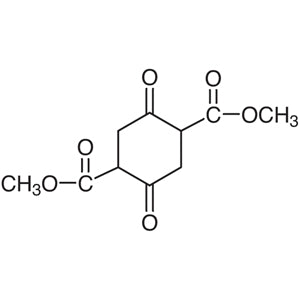
Dimethyl1,4-Cyclohexanedione-2,5-dicarboxylate TCI C1343
Regular price From Rp 717.150,00Regular price -
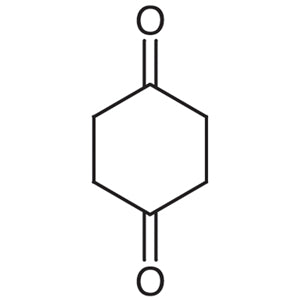
1,4-Cyclohexanedione TCI C0730
Regular price From Rp 1.298.850,00Regular price