TCI M0945 5-Methyl-1,3-cyclohexanedione, bearing CAS number 4341-24-6, is a cyclic 1,3-diketone that carries a methyl group at the fifth position of the cyclohexane ring. Its 1,3-dicarbonyl framework places a carbon atom between two carbonyl groups, making that position strongly acidic and allowing the compound to form a stable enol readily. In the laboratory, this material serves as a versatile building block for the synthesis of fused heterocyclic compounds, multicomponent reaction products, and a wide range of derivatives that require a carbon nucleophile which can be generated easily.
The properties that make this compound a frequent choice begin with the acidity of the position between the two carbonyl groups, which permits enolate formation using only a weak base. Condensation reactions therefore proceed under mild conditions that remain friendly to sensitive functional groups elsewhere in a substrate. The compound also sits in a strong keto-enol equilibrium, giving it dual reactivity both as a carbon nucleophile and as a source of nucleophilic oxygen. The methyl group on the ring adds mild steric hindrance and modifies solubility behaviour without disturbing the reactivity of the dicarbonyl core.
Its solid form is straightforward to weigh out and dissolves in polar solvents such as ethanol and hot water, which suits the practical realities of routine bench work. Laboratories across Indonesia use this building block in synthetic organic chemistry research, in postgraduate and undergraduate research projects, and in method development work where a reliable and easily activated dicarbonyl starting material is needed for constructing more elaborate ring systems.
Related TCI products
- TCI M1133 1193-55-1 2-Methyl-1,3-cyclohexanedione
- TCI M0752 13706-86-0 5-Methyl-2,3-hexanedione
- TCI H1546 172611-72-2 2-(1-Hydroxy-3-methylbutylidene)-5,5-dimethyl-1,3-cyclohexanedione
- TCI H0573 4437-51-8 3,4-Hexanedione
- TCI D2773 3375-38-0 1,6-Diphenyl-1,6-hexanedione
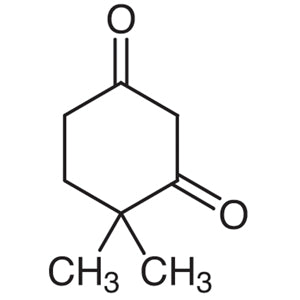
- TCI D2681 562-46-9 4,4-Dimethyl-1,3-cyclohexanedione
- Fused heterocycle synthesis: the acidic central carbon and the enol form together provide the two reactive sites needed to close new rings onto the existing cyclohexanedione skeleton.
- Multicomponent reactions: the compound acts as the readily enolisable carbon component, letting three or more partners combine in a single flask under mild basic conditions.
- Knoevenagel and aldol-type condensations: enolate generation with a weak base allows clean coupling to aldehydes without exposing sensitive functional groups to harsh reagents.
- Preparation of substituted derivatives: the methyl group at position five is carried through transformations intact, giving products a fixed substitution pattern useful for structure-activity comparisons.
- Teaching and method development work: the predictable keto-enol behaviour makes this a dependable substrate for demonstrating dicarbonyl chemistry and for optimising new reaction conditions.
| Brand | TCI |
|---|---|
| CAS number | 4341-24-6 |
| Molecular formula | — |
| Purity | — |
| Category | Chemistry > Building Blocks > Non-Heterocyclic Building Blocks |
| Pack sizes | available in the standard research pack sizes offered by TCI; please confirm the size required when ordering |
| Physical form | solid, soluble in polar solvents such as ethanol and hot water |
| Storage | keep in a tightly closed container in a cool, dry place |
- Catalogue number: M0945
Store the container tightly closed in a cool, dry and well-ventilated area, away from moisture, direct sunlight and sources of heat or ignition. Amber glass or the original manufacturer container is suitable, and the cap should be resealed promptly after each use to limit moisture uptake by the solid. Weigh the material in a fume hood or a well-ventilated area, and wear standard laboratory protective equipment including safety goggles, a laboratory coat and chemically resistant gloves. Avoid generating dust during transfer, keep the compound away from strong bases and strong oxidising agents, and consult the manufacturer safety data sheet before first use. Clean any spilled solid promptly and dispose of residues through the laboratory chemical waste stream.
—
Produk Terkait
-
2-Methyl-1,3-cyclohexanedione TCI M1133
Regular price From Rp 1.618.050,00Regular price -
5-Methyl-2,3-hexanedione TCI M0752
Regular price Rp 3.155.250,00Regular price -
2-(1-Hydroxy-3-methylbutylidene)-5,5-dimethyl-1,3-cyclohexanedione TCI H1546
Regular price From Rp 2.121.000,00Regular price -
3,4-Hexanedione TCI H0573
Regular price From Rp 823.200,00Regular price -
1,6-Diphenyl-1,6-hexanedione TCI D2773
Regular price From Rp 3.922.800,00Regular price -
4,4-Dimethyl-1,3-cyclohexanedione TCI D2681
Regular price Rp 2.121.000,00Regular price -
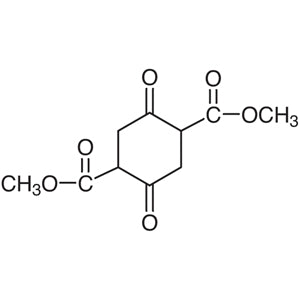
Dimethyl1,4-Cyclohexanedione-2,5-dicarboxylate TCI C1343
Regular price From Rp 717.150,00Regular price -
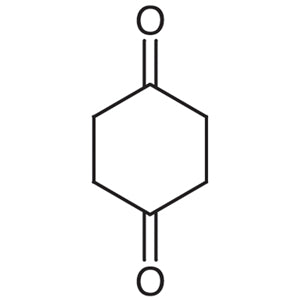
1,4-Cyclohexanedione TCI C0730
Regular price From Rp 1.298.850,00Regular price