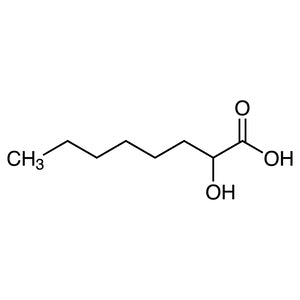
2-Hydroxy-n-octanoic Acid is an eight-carbon fatty acid that carries a hydroxyl group at the alpha position, directly adjacent to the carboxylic acid group. Medium-chain alpha-hydroxy acids of this type attract interest because their structure resembles the natural lipid components found in sphingolipids and cerebrosides. In the laboratory, the compound serves as a synthetic building block, as a reference compound in lipid analysis, and as a test substance in biochemical research examining how fatty acid hydroxylation influences membrane properties and metabolism.
The property that makes this material a preferred choice is the presence of two adjacent functional groups, which opens up a wide range of directed transformations. The carboxylic acid group can be esterified or converted to an amide, while the alpha-hydroxyl group can be protected, oxidized to the corresponding alpha-keto acid, or used as a stereochemical directing element. The proximity of the two groups also permits lactone formation and the creation of chelate complexes with metal ions. The chiral centre at the alpha carbon makes the compound valuable for enantiomer separation studies and the development of chiral chromatography methods. The octanoate chain provides a balance in solubility behaviour.
In Indonesian laboratories, this building block is typically used in university and institutional research settings where organic synthesis, lipid chemistry, and analytical method development are carried out. It is commonly ordered by groups preparing hydroxy acid derivatives, by analytical laboratories establishing chromatographic reference points for lipid work, and by biochemistry laboratories studying fatty acid modification. Its supply as a catalogue building block allows researchers to obtain a defined starting material without preparing it in house.
Related TCI products
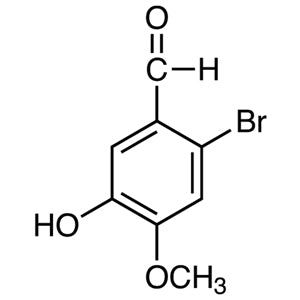
- TCI B4681 2973-59-3 2-Bromo-5-hydroxy-4-methoxybenzaldehyde
- TCI H1578 39604-68-7 2'-Hydroxy-4',6'-dimethoxy-2-(4-methoxyphenyl)acetophenone
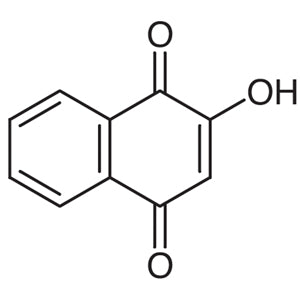
- TCI H0285 83-72-7 2-Hydroxy-1,4-naphthoquinone
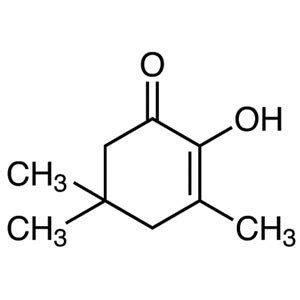
- TCI T2723 4883-60-7 2-Hydroxy-3,5,5-trimethyl-2-cyclohexen-1-one
- TCI B3229 2208-15-3 4-Bromo-3-hydroxy-2-naphthoic Acid
- TCI B3180 1779-11-9 7-Bromo-3-hydroxy-2-naphthoic Acid
- Organic synthesis building block: the dual functionality allows sequential and selective transformations, giving researchers a compact starting point for constructing more elaborate hydroxy acid derivatives.
- Lipid analysis reference compound: as a defined medium-chain alpha-hydroxy fatty acid, it provides an identification and comparison point when characterising hydroxylated lipid species in analytical work.
- Biochemical research into fatty acid hydroxylation: the compound acts as a test substance for studies examining how alpha-hydroxylation alters membrane properties and metabolic handling of fatty acids.
- Chiral chromatography method development: the stereocentre at the alpha carbon makes it a suitable probe substance for developing and validating enantiomer separation procedures on chiral stationary phases.
- Derivatisation and functional group chemistry: esterification, amidation, hydroxyl protection, oxidation to the alpha-keto acid, and lactonisation can all be demonstrated and optimised using this single substrate.
| Brand | TCI |
|---|---|
| CAS number | 617-73-2 |
| Molecular formula | — |
| Purity | — |
| Category | Chemistry > Building Blocks > Non-Heterocyclic Building Blocks |
| Pack sizes | available in standard TCI catalogue pack sizes; please confirm the packaging option when ordering |
| Physical form | — |
| Storage | store according to the conditions stated on the manufacturer label and product documentation |
- Catalogue number: H0592
Store the container tightly closed in a cool, dry, and well ventilated area, away from direct sunlight, heat sources, and incompatible materials such as strong oxidising agents and strong bases. Keep the material in its original manufacturer container, or transfer it to a chemically compatible, clearly labelled container with a secure closure if repackaging is necessary. Handle the compound in a fume hood using appropriate personal protective equipment, including safety glasses, gloves, and a laboratory coat. Avoid contact with skin and eyes and avoid inhalation of dust or vapour. Consult the manufacturer safety data sheet before use, and follow institutional procedures for waste collection and disposal.
—
Product Categories
- Building BlocksNon-Heterocyclic Building BlocksCarbonyl Compounds [Non-Heterocyclic Building Blocks]
- Building BlocksNon-Heterocyclic Building BlocksOxygen Compounds [Non-Heterocyclic Building Blocks]
- Pharmaceutical Development and Drug Discovery Research ReagentsBuilding Blocks for Pharmaceutical Ingredients (for Research and Experimental Use)
Produk Terkait
-
2-Bromo-5-hydroxy-4-methoxybenzaldehyde TCI B4681
Regular price Rp 4.293.450,00Regular price -
2'-Hydroxy-4',6'-dimethoxy-2-(4-methoxyphenyl)acetophenone TCI H1578
Regular price From Rp 1.776.600,00Regular price -
2-Hydroxy-1,4-naphthoquinone TCI H0285
Regular price From Rp 1.538.250,00Regular price -
2-Hydroxy-3,5,5-trimethyl-2-cyclohexen-1-one TCI T2723
Regular price Rp 1.273.650,00Regular price -
4-Bromo-3-hydroxy-2-naphthoicAcid TCI B3229
Regular price From Rp 2.174.550,00Regular price -
7-Bromo-3-hydroxy-2-naphthoicAcid TCI B3180
Regular price From Rp 769.650,00Regular price -
2-Hydroxy-6-methylbenzoicAcid TCI M3737
Regular price From Rp 2.332.050,00Regular price -
Methyl4-Hydroxy-3,5-dimethoxybenzoate TCI M2806
Regular price From Rp 1.193.850,00Regular price