


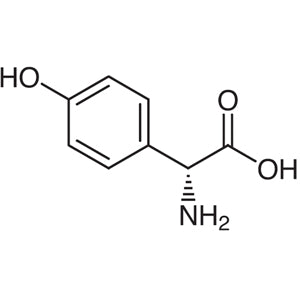
4-Hydroxy-D-(-)-2-phenylglycine is a chemical compound widely used in laboratory experiments across chemical and biochemical research. It is a key component in various synthetic processes, particularly in the development of peptides and amino acid analogs. Its unique molecular structure, featuring a phenyl group and a hydroxyl group, makes it essential for studying molecular interactions and enzymatic mechanisms. This compound plays a crucial role in advancing scientific understanding in both academic and industrial research settings.
The compound is known for its stable chemical structure and favorable reactivity under diverse experimental conditions. Its optical activity is a significant attribute, enabling precise studies of molecular chirality and stereochemistry. The high purity and consistent quality of the product ensure reliable results in sensitive analytical procedures. These characteristics make it a preferred choice for researchers requiring accuracy and reproducibility in their experiments.
In Indonesian laboratories, 4-Hydroxy-D-(-)-2-phenylglycine is commonly used in scientific research and educational institutions. It is particularly valuable in pure chemistry, biochemistry, and pharmaceutical studies. Its application extends to both basic research and applied projects, supporting the development of new compounds and therapeutic agents. Its versatility and reliability make it an essential tool for researchers in various scientific disciplines.
TCI brochures (PDF)
- Amino Acids and Peptide Synthesis Reagents 2025-08-14 · p. 8
Related TCI products
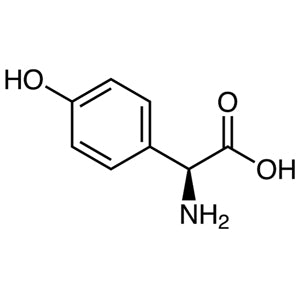
- TCI H1389 32462-30-9 4-Hydroxy-L-(+)-2-phenylglycine
- TCI C2773 26787-75-7 N-Carbobenzoxy-4-hydroxy-D-2-phenylglycine
- TCI B3230 33125-05-2 N-(tert-Butoxycarbonyl)-D-2-phenylglycine
- TCI B3211 2900-27-8 N-(tert-Butoxycarbonyl)-L-2-phenylglycine
- TCI A2687 15962-46-6 N-Acetyl-DL-2-phenylglycine
- TCI F1193 111524-95-9 N-[(9H-Fluoren-9-ylmethoxy)carbonyl]-D-2-phenylglycine
- Peptide Synthesis: This compound is ideal for synthesizing peptides due to its structural similarity to amino acids and its reactivity in peptide bond formation.
- Enzyme Mechanism Studies: Its optical activity and molecular structure make it suitable for investigating enzyme-substrate interactions and catalytic mechanisms.
- Amino Acid Analog Development: It serves as a building block for creating amino acid analogs used in drug development and biochemical research.
- Molecular Interaction Research: The compound is used to study molecular recognition and binding interactions in biochemistry and biophysics.
- Pharmaceutical Research: It supports the development of new pharmaceutical compounds by providing a stable and reactive starting material for synthetic pathways.
| Brand | TCI |
|---|---|
| CAS number | 22818-40-2 |
| Molecular formula | — |
| Purity | — |
| Category | Chemistry > Chemical Biology > Peptide Chemistry |
| Pack sizes | Available in various quantities as per standard laboratory supply |
| Physical form | Solid powder |
| Storage | Store in a cool, dry place away from light and moisture |
This compound should be stored in a cool, dry environment, away from direct light and moisture to maintain its stability and purity. It is recommended to use airtight containers to prevent contamination and degradation. Due to its chemical reactivity, it should be handled with appropriate personal protective equipment, such as gloves and safety goggles. It is important to ensure proper ventilation when working with this compound to avoid inhalation of any airborne particles. The material is not classified as hazardous under standard laboratory conditions, but standard safety protocols should always be followed to ensure safe handling and storage.
—
Product Categories
Produk Terkait
-
4-Hydroxy-L-(+)-2-phenylglycine TCI H1389
Regular price From Rp 2.121.000,00Regular priceRp 1.498.350,00Sale price From Rp 2.121.000,00 -
N-Carbobenzoxy-4-hydroxy-D-2-phenylglycine TCI C2773
Regular price From Rp 1.934.100,00Regular priceRp 1.368.150,00Sale price From Rp 1.934.100,00 -
N-(tert-Butoxycarbonyl)-D-2-phenylglycine TCI B3230
Regular price From Rp 505.050,00Regular priceRp 368.550,00Sale price From Rp 505.050,00 -
N-(tert-Butoxycarbonyl)-L-2-phenylglycine TCI B3211
Regular price From Rp 875.700,00Regular priceRp 627.900,00Sale price From Rp 875.700,00 -
N-Acetyl-DL-2-phenylglycine TCI A2687
Regular price Rp 1.220.100,00Regular priceRp 868.350,00Sale price Rp 1.220.100,00 -
N-[(9H-Fluoren-9-ylmethoxy)carbonyl]-D-2-phenylglycine TCI F1193
Regular price Rp 822.150,00Regular priceRp 590.100,00Sale price Rp 822.150,00 -
N-[(9H-Fluoren-9-ylmethoxy)carbonyl]-L-2-phenylglycine TCI F0669
Regular price From Rp 557.550,00Regular priceRp 405.300,00Sale price From Rp 557.550,00 -
(R)-(-)-N-(3,5-Dinitrobenzoyl)-alpha-phenylglycine TCI D1853
Regular price From Rp 742.350,00Regular priceRp 534.450,00Sale price From Rp 742.350,00



![TCI F1193 111524-95-9 N-[(9H-Fluoren-9-ylmethoxy)carbonyl]-D-2-phenylglycine](http://amiscientific.com/cdn/shop/files/TCI2510F1193_21cbe0d8-fe8d-4b6d-94d7-9c98fd8f7662.jpg?v=1792642651&width=533)
![N-[(9H-Fluoren-9-ylmethoxy)carbonyl]-D-2-phenylglycine (CAS 111524-95-9) - TCI F1193 - AMI Scientific](http://amiscientific.com/cdn/shop/files/TCI2510F1193.jpg?v=1768205447&width=533)
![TCI F0669 102410-65-1 N-[(9H-Fluoren-9-ylmethoxy)carbonyl]-L-2-phenylglycine](http://amiscientific.com/cdn/shop/files/TCI2510F0669_28bb9a08-4231-4188-b2b6-24dbbb078a53.jpg?v=1792642329&width=533)
![N-[(9H-Fluoren-9-ylmethoxy)carbonyl]-L-2-phenylglycine (CAS 102410-65-1) - TCI F0669 - AMI Scientific](http://amiscientific.com/cdn/shop/files/TCI2510F0669.jpg?v=1771058185&width=533)

