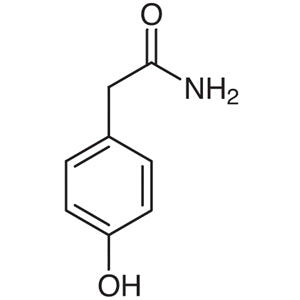
TCI H0853 4-Hydroxyphenylacetamide is a simple aromatic compound that combines two useful functional groups within one compact molecule: a phenol on the benzene ring and a primary amide on the acetyl chain at the para position. As a non-heterocyclic building block, it serves as a starting material that is frequently used in organic synthesis and medicinal chemistry laboratories. The 4-hydroxyphenylacetamide framework is widely recognised as a structural core found in several active pharmaceutical ingredients, which is why this compound appears often in drug development research, synthetic route studies, and advanced undergraduate organic chemistry practical work at universities.
The main reason chemists select this compound is the reactivity of its two groups, which can be differentiated with relative ease. The phenolic hydroxyl group is weakly acidic and can therefore be deprotonated and then alkylated with epoxides or alkyl halides to build ether chains, while the primary amide group is comparatively stable and can be kept intact throughout the course of a reaction, or conversely reduced or dehydrated when required. Its solid nature makes it straightforward to weigh out and to purify by recrystallisation, so bench work proceeds in a practical and uncomplicated manner.
In Indonesian laboratories, this building block is typically found in university organic synthesis groups, pharmaceutical research and development units, and institutional research laboratories working on synthetic route development. It is commonly used in multi-step synthesis planning, in coursework that demonstrates selective functional group manipulation, and in method development where a well-defined bifunctional aromatic starting material is needed as a reliable reference point for further chemical elaboration.
Related TCI products
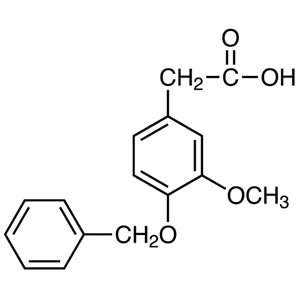
- TCI B4800 29973-91-9 4-Benzyloxy-3-methoxyphenylacetic Acid
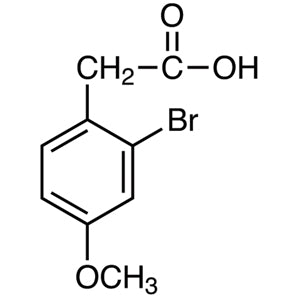
- TCI B4737 66916-99-2 2-Bromo-4-methoxyphenylacetic Acid
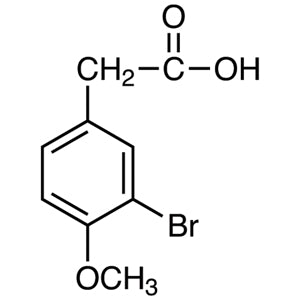
- TCI B4677 774-81-2 3-Bromo-4-methoxyphenylacetic Acid
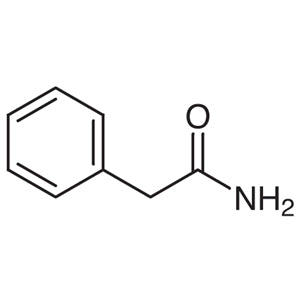
- TCI P0120 103-81-1 2-Phenylacetamide
- TCI M0968 3951-10-8 4-Methoxyphenylacetic Anhydride
- TCI M0858 1798-09-0 3-Methoxyphenylacetic Acid
- Medicinal chemistry research: the 4-hydroxyphenylacetamide framework is recognised as a structural core of several active pharmaceutical ingredients, making it a natural starting point for drug development studies.
- Synthetic route development: the compound allows chemists to map and optimise multi-step pathways because its two functional groups can be addressed at different stages of a sequence.
- Phenolic ether formation: the weakly acidic hydroxyl group can be deprotonated and then alkylated with epoxides or alkyl halides to construct ether side chains.
- Amide group transformation studies: the primary amide can be preserved intact during reactions, or deliberately reduced or dehydrated when the synthetic plan calls for that conversion.
- Advanced organic chemistry teaching: university practical courses use this solid to demonstrate selective functional group reactivity, weighing technique, and purification by recrystallisation.
| Brand | TCI |
|---|---|
| CAS number | 17194-82-0 |
| Molecular formula | — |
| Purity | — |
| Category | Chemistry > Building Blocks > Non-Heterocyclic Building Blocks |
| Pack sizes | available in standard TCI catalogue pack sizes; please confirm the option required for your laboratory |
| Physical form | solid, suitable for weighing and purification by recrystallisation |
| Storage | keep in the closed original container under the conditions stated on the manufacturer label |
Store the container tightly closed in a cool, dry, and well-ventilated chemical storage area, away from direct sunlight and sources of heat, and follow the storage conditions printed on the manufacturer label. The original supplier container is the most suitable primary packaging; if transfer is necessary, use a clean, dry, and clearly labelled chemical-resistant container. Handle the solid in a fume hood or a well-ventilated workspace, and wear a laboratory coat, safety glasses, and suitable gloves. Use clean, dry spatulas when weighing to prevent moisture pickup and cross-contamination, close the container immediately after use, and consult the manufacturer safety data sheet before handling and prior to disposal of any residues.
—
Produk Terkait
-
4-Benzyloxy-3-methoxyphenylaceticAcid TCI B4800
Regular price Rp 2.518.950,00Regular price -
2-Bromo-4-methoxyphenylaceticAcid TCI B4737
Regular price From Rp 848.400,00Regular price -
3-Bromo-4-methoxyphenylaceticAcid TCI B4677
Regular price From Rp 689.850,00Regular price -
2-Phenylacetamide TCI P0120
Regular price From Rp 1.326.150,00Regular price -
4-MethoxyphenylaceticAnhydride TCI M0968
Regular price Rp 1.565.550,00Regular price -
3-MethoxyphenylaceticAcid TCI M0858
Regular price Rp 2.147.250,00Regular price -
DL-alpha-MethoxyphenylaceticAcid TCI M0837
Regular price From Rp 2.466.450,00Regular price -
4-MethoxyphenylaceticAcid TCI M0742
Regular price From Rp 610.050,00Regular price