

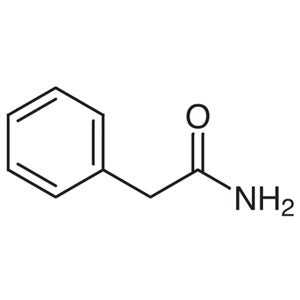
2-Phenylacetamide is a simple aromatic amide made up of a phenyl group attached to an acetamide group through a single methylene carbon. In the chemistry laboratory it works as a versatile non-heterocyclic building block, mainly as a precursor for building molecules that contain a phenylacetyl framework. It is also often used as a model compound for studying amide reactions such as hydrolysis, dehydration, and rearrangement. For this reason it is common in both organic synthesis laboratories and chemistry teaching laboratories.
The main reason researchers choose 2-Phenylacetamide is its primary amide group. This group is fairly stable, yet it can still be turned into other functional groups through well-known reactions. The amide can be dehydrated to a nitrile, hydrolysed to a carboxylic acid, or put through a Hofmann rearrangement to give an amine that is one carbon shorter. Because the compound is a solid, it is easy to weigh accurately. Its simple structure also makes reaction products easy to analyse with standard spectroscopic techniques such as NMR and IR.
In Indonesia, 2-Phenylacetamide suits research laboratories at universities, research institutes, and industrial R&D facilities that work on organic synthesis and functional-group transformations. It is also a good fit for chemistry teaching laboratories that need a dependable model compound to demonstrate classic amide reactions to students. This TCI reagent, supplied by AMI Scientific, gives local laboratories a consistent building block for routine experiments, method development, and practical coursework in organic chemistry.
- Phenylacetyl framework synthesis: 2-Phenylacetamide is a convenient precursor for building target molecules that contain the phenylacetyl unit, because its amide group can be changed into other functional groups when needed.
- Amide dehydration to nitriles: the primary amide group can be dehydrated to form the matching nitrile, so the compound works well for studying and optimising dehydration methods.
- Hydrolysis studies: the amide can be hydrolysed to the matching carboxylic acid, which makes it a clear and easy-to-follow model substrate for studying acidic or basic hydrolysis conditions.
- Hofmann rearrangement experiments: the compound can undergo a Hofmann rearrangement to give an amine one carbon shorter, which makes it a classic substrate for demonstrating and studying this reaction.
- Chemistry teaching and spectroscopic analysis: its simple structure means starting materials and products are easy to identify by NMR and IR, so it is well suited to student practical sessions and analytical training.
| Brand | TCI (product code P0120) |
|---|---|
| CAS number | 103-81-1 |
| Molecular formula | — |
| Purity | — |
| Category | Chemistry > Building Blocks > Non-Heterocyclic Building Blocks |
| Pack sizes | see the pack options available on the product page |
| Physical form | solid |
| Storage | keep in a tightly closed container in a cool, dry place; follow the manufacturer's label and Safety Data Sheet |
Store 2-Phenylacetamide in its original, tightly closed container in a cool, dry, well-ventilated area, away from direct sunlight, heat sources, and incompatible materials such as strong oxidising agents, strong acids, and strong bases. Reseal the container promptly after each use to protect the solid from moisture and contamination. Handle the compound in a well-ventilated area or a fume hood, and avoid creating or breathing in dust. Wear standard personal protective equipment, including a lab coat, safety glasses, and chemical-resistant gloves. Avoid contact with skin and eyes, and wash your hands thoroughly after handling. Before use, always read the manufacturer's Safety Data Sheet for detailed hazard, first-aid, and disposal information, and dispose of waste according to local regulations and your institution's procedures.
—
Produk Terkait
-
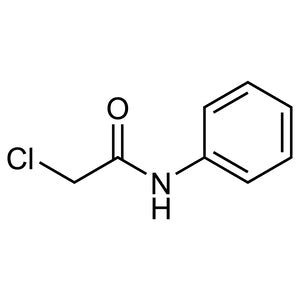
2-Chloro-N-phenylacetamide TCI C4124
Regular price From Rp 1.644.300,00Regular price -
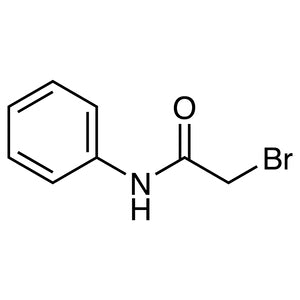
2-Bromo-N-phenylacetamide TCI B6588
Regular price From Rp 1.696.800,00Regular price -
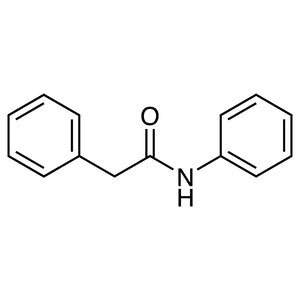
N,2-Diphenylacetamide TCI P3074
Regular price From Rp 2.386.650,00Regular price -
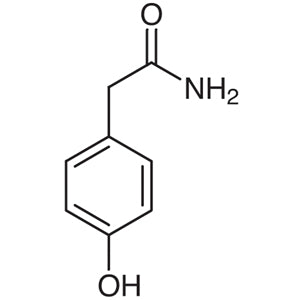
4-Hydroxyphenylacetamide TCI H0853
Regular price From Rp 637.350,00Regular price -
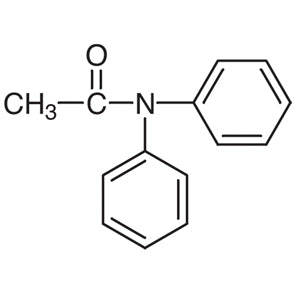
N,N-Diphenylacetamide TCI D0868
Regular price Rp 1.829.100,00Regular price -
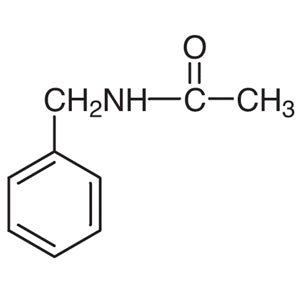
N-Benzylacetamide TCI B0404
Regular price From Rp 2.518.950,00Regular price -
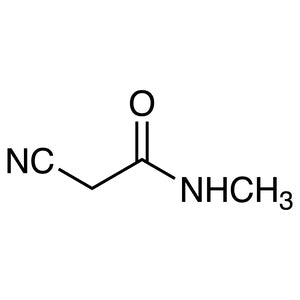
2-Cyano-N-methylacetamide TCI M3781
Regular price From Rp 1.565.550,00Regular price -
N-[3-[3-(Dimethylamino)acryloyl]phenyl]-N-ethylacetamide TCI D4259
Regular price From Rp 637.350,00Regular price
![N-[3-[3-(Dimethylamino)acryloyl]phenyl]-N-ethylacetamide (CAS 96605-66-2) - TCI D4259 - AMI Scientific](http://amiscientific.com/cdn/shop/files/TCI2510D4259.jpg?v=1767107330&width=533)