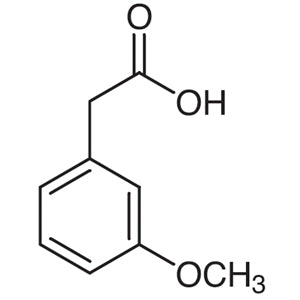
3-Methoxyphenylacetic Acid is a chemical compound widely used in laboratory settings for its versatility in organic synthesis. As a building block, it plays a crucial role in the development of complex molecular structures, including pharmaceuticals and industrial chemicals. Its presence in various chemical reactions makes it an essential tool for researchers aiming to create compounds with specific biological activities. This compound is particularly valuable in the field of medicinal chemistry due to its ability to participate in substitution and condensation reactions, enabling the synthesis of a wide range of functional derivatives.
The compound's favorable solubility in organic solvents such as ethyl acetate and acetone enhances its usability in synthetic processes. Its simple yet adaptable molecular structure allows for easy modification, making it a preferred choice for chemists working on drug development and material synthesis. Additionally, its availability in solid form simplifies handling and storage, which is critical in laboratory environments where precision and consistency are paramount.
In Indonesian laboratories, 3-Methoxyphenylacetic Acid is commonly utilized in organic chemistry research, especially in pharmaceutical and chemical industries. It supports the development of new therapeutic agents and industrial compounds, contributing to scientific advancements in both academic and applied research settings. Its reliability and chemical properties make it a go-to reagent for researchers in Indonesia.
Related TCI products
- TCI V0052 776-99-8 3,4-Dimethoxyphenylacetone
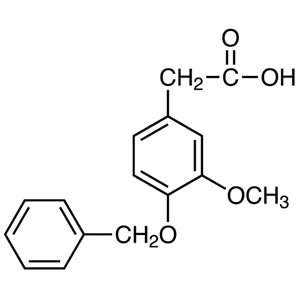
- TCI B4800 29973-91-9 4-Benzyloxy-3-methoxyphenylacetic Acid
- TCI B4742 4547-57-3 4-Butoxyphenylacetic Acid
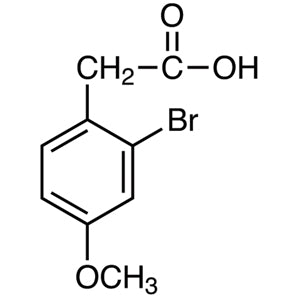
- TCI B4737 66916-99-2 2-Bromo-4-methoxyphenylacetic Acid
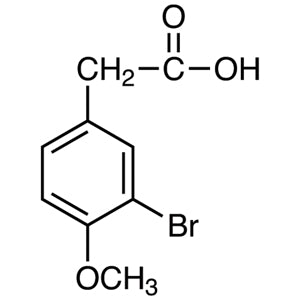
- TCI B4677 774-81-2 3-Bromo-4-methoxyphenylacetic Acid
- TCI B4674 1860-58-8 3-Benzyloxyphenylacetic Acid
- Organic synthesis applications benefit from its role in creating complex molecular structures, supporting the development of pharmaceutical compounds and industrial chemicals.
- Medicinal chemistry research utilizes it for the synthesis of derivatives with specific biological activities, aiding in drug discovery and development.
- Industrial chemical production relies on its versatility in substitution and condensation reactions, enabling the creation of a wide range of functional compounds.
- Academic research in chemistry uses it as a building block for exploring new synthetic pathways and molecular transformations.
- Pharmaceutical development projects incorporate it to design and synthesize compounds with potential therapeutic applications in various medical fields.
| Brand | TCI |
|---|---|
| CAS number | 1798-09-0 |
| Molecular formula | — |
| Purity | — |
| Category | Chemistry > Building Blocks > Non-Heterocyclic Building Blocks |
| Pack sizes | Available in various quantities as per standard laboratory requirements |
| Physical form | Solid |
| Storage | Store in a cool, dry place away from direct sunlight and moisture |
3-Methoxyphenylacetic Acid should be stored in a cool, dry environment to maintain its chemical integrity. It is recommended to keep it in a sealed container to prevent exposure to moisture and air, which can affect its stability. Suitable containers include glass or high-density polyethylene bottles to ensure chemical resistance. In laboratory settings, it should be handled with standard safety precautions, such as using gloves and working in a well-ventilated area. Avoid contact with incompatible substances and ensure proper disposal following local regulations. Its solid form facilitates easy handling and storage, making it a practical choice for routine laboratory use.
—
Produk Terkait
-
3,4-Dimethoxyphenylacetone TCI V0052
Regular price From Rp 1.193.850,00Regular price -
4-Benzyloxy-3-methoxyphenylaceticAcid TCI B4800
Regular price Rp 2.518.950,00Regular price -
4-ButoxyphenylaceticAcid TCI B4742
Regular price From Rp 1.060.500,00Regular price -
2-Bromo-4-methoxyphenylaceticAcid TCI B4737
Regular price From Rp 848.400,00Regular price -
3-Bromo-4-methoxyphenylaceticAcid TCI B4677
Regular price From Rp 689.850,00Regular price -
3-BenzyloxyphenylaceticAcid TCI B4674
Regular price Rp 1.618.050,00Regular price -
4-BenzyloxyphenylaceticAcid TCI B1779
Regular price Rp 2.969.400,00Regular price -
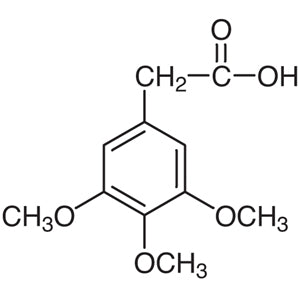
3,4,5-TrimethoxyphenylaceticAcid TCI T1105
Regular price From Rp 1.035.300,00Regular price