4-Benzyloxyphenylacetic Acid is a chemical compound widely used in organic synthesis reactions within laboratory settings. It serves as a key building block for the creation of complex molecules with aromatic structures and carbon chains. This compound is essential in the development of pharmaceuticals and industrial chemicals due to its unique chemical structure. Its role in synthetic chemistry is critical for researchers aiming to design new compounds with specific functional groups and molecular frameworks.
The compound's chemical stability under certain conditions makes it a preferred choice for various synthetic processes. Its high reactivity allows for the formation of complex chemical reactions without the need for extensive modifications. The compound’s resistance to degradation ensures its reliability in laboratory environments. Additionally, its good solubility in organic solvents simplifies purification and isolation steps, making it a versatile material for chemical synthesis.
In Indonesian laboratories, 4-Benzyloxyphenylacetic Acid is commonly used in chemical, pharmaceutical, and materials science research. It is a valuable tool for academic and industrial researchers working on the development of new compounds. Its application spans across multiple disciplines, contributing to the advancement of scientific knowledge and innovation in the region.
Related TCI products
- TCI B4674 1860-58-8 3-Benzyloxyphenylacetic Acid
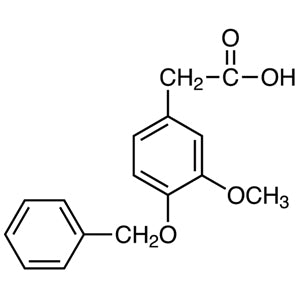
- TCI B4800 29973-91-9 4-Benzyloxy-3-methoxyphenylacetic Acid
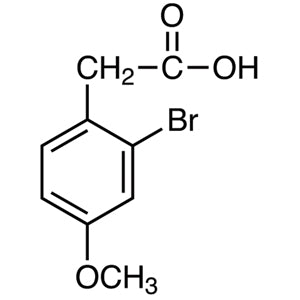
- TCI B4737 66916-99-2 2-Bromo-4-methoxyphenylacetic Acid
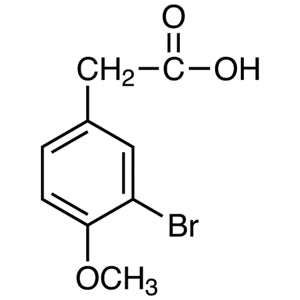
- TCI B4677 774-81-2 3-Bromo-4-methoxyphenylacetic Acid
- TCI M0968 3951-10-8 4-Methoxyphenylacetic Anhydride
- TCI M0858 1798-09-0 3-Methoxyphenylacetic Acid
- Organic synthesis applications benefit from this compound's reactivity and structural versatility, enabling the creation of complex molecules with high precision.
- Pharmaceutical research utilizes it for the development of new drug compounds due to its aromatic structure and functional group compatibility.
- Materials science experiments leverage its chemical stability and solubility to design advanced polymers and composite materials.
- Analytical chemistry procedures use it as a reference standard for spectroscopic and chromatographic analysis due to its well-defined molecular structure.
- Educational institutions incorporate it into teaching labs to demonstrate fundamental organic reaction mechanisms and synthetic strategies.
| Brand | TCI |
|---|---|
| CAS number | 6547-53-1 |
| Molecular formula | — |
| Purity | — |
| Category | Chemistry > Building Blocks > Non-Heterocyclic Building Blocks |
| Pack sizes | Available in various quantities as per supplier specifications |
| Physical form | Solid powder |
| Storage | Store in a cool, dry place away from direct sunlight |
This compound should be stored in a cool, dry environment, away from direct sunlight and sources of heat. It is recommended to use airtight containers to prevent moisture absorption and maintain its chemical integrity. Due to its reactivity, it should be handled in a well-ventilated area, preferably under a fume hood, to ensure safety. Avoid exposure to incompatible substances such as strong oxidizing agents. Proper personal protective equipment, including gloves and safety goggles, should be worn during handling. Regular monitoring of storage conditions ensures the compound remains stable and suitable for use in laboratory applications.
—
Produk Terkait
-
3-BenzyloxyphenylaceticAcid TCI B4674
Regular price Rp 1.670.550,00Regular priceRp 1.183.350,00Sale price Rp 1.670.550,00 -
4-Benzyloxy-3-methoxyphenylaceticAcid TCI B4800
Regular price Rp 2.571.450,00Regular priceRp 1.813.350,00Sale price Rp 2.571.450,00 -
2-Bromo-4-methoxyphenylaceticAcid TCI B4737
Regular price From Rp 900.900,00Regular priceRp 645.750,00Sale price From Rp 900.900,00 -
3-Bromo-4-methoxyphenylaceticAcid TCI B4677
Regular price From Rp 742.350,00Regular priceRp 534.450,00Sale price From Rp 742.350,00 -
4-MethoxyphenylaceticAnhydride TCI M0968
Regular price Rp 1.618.050,00Regular priceRp 1.146.600,00Sale price Rp 1.618.050,00 -
3-MethoxyphenylaceticAcid TCI M0858
Regular price Rp 2.199.750,00Regular priceRp 1.554.000,00Sale price Rp 2.199.750,00 -
DL-alpha-MethoxyphenylaceticAcid TCI M0837
Regular price From Rp 2.518.950,00Regular priceRp 1.776.600,00Sale price From Rp 2.518.950,00 -
4-MethoxyphenylaceticAcid TCI M0742
Regular price From Rp 662.550,00Regular priceRp 478.800,00Sale price From Rp 662.550,00