TCI M0968 4-Methoxyphenylacetic Anhydride is a symmetrical acid anhydride formed from two molecules of 4-methoxyphenylacetic acid. As a non-heterocyclic building block, this compound serves primarily as an acylating reagent that transfers the 4-methoxyphenylacetyl group to nucleophiles such as amines, alcohols, or phenols. Having a ready-to-use anhydride on the bench is a considerable help in the laboratory, because researchers do not need to first activate the carboxylic acid with a coupling reagent or convert it into an acid chloride. The procedure becomes more concise and generates fewer side products that must be separated afterwards.
The properties that make this material a preferred choice are its strong acylating reactivity combined with handling that is easier to control than that of an acid chloride, together with the presence of the methoxy group on the aromatic ring. The methoxy group is electron-donating and imparts a distinctive electronic character to the aryl acetyl fragment being transferred, something frequently required in the design of target molecules. As a solid, the material is straightforward to weigh out and handle. Like all acid anhydrides, however, it is sensitive to moisture and will hydrolyse back to the free acid if exposed to water vapour, so disciplined handling matters.
In Indonesian laboratories, this reagent is typically used in synthetic organic chemistry work at universities and research institutes, as well as in development laboratories that prepare target molecules from defined building blocks. It suits settings where an acylation step must be carried out reliably without the additional stages of separately activating a carboxylic acid, and where the humid ambient conditions common in the region make a solid, easily weighed reagent more practical than a moisture-labile liquid alternative.
Related TCI products
- TCI V0052 776-99-8 3,4-Dimethoxyphenylacetone
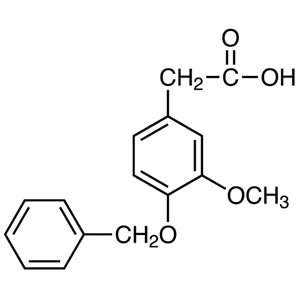
- TCI B4800 29973-91-9 4-Benzyloxy-3-methoxyphenylacetic Acid
- TCI B4742 4547-57-3 4-Butoxyphenylacetic Acid
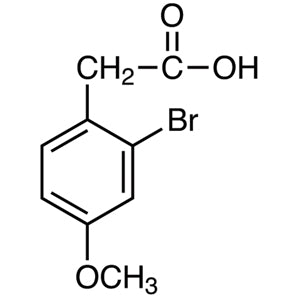
- TCI B4737 66916-99-2 2-Bromo-4-methoxyphenylacetic Acid
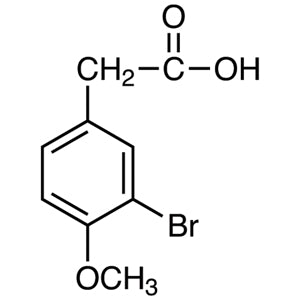
- TCI B4677 774-81-2 3-Bromo-4-methoxyphenylacetic Acid
- TCI B4674 1860-58-8 3-Benzyloxyphenylacetic Acid
- Amide bond formation — the anhydride reacts directly with primary and secondary amines to install the 4-methoxyphenylacetyl group without requiring a separate coupling reagent or activation step.
- Ester synthesis from alcohols and phenols — the compound acylates hydroxyl-bearing nucleophiles cleanly, making it well suited to preparing esters that carry an electron-rich aryl acetyl fragment.
- Building block assembly in multi-step synthesis — as a non-heterocyclic building block it introduces a defined aryl acetyl unit into a growing molecular framework in a single controlled operation.
- Structure-activity studies requiring electron-rich aryl groups — the electron-donating methoxy substituent supplies the specific electronic character often needed when tuning the properties of designed target molecules.
- Route shortening in synthetic method development — using a pre-formed anhydride removes the acid chloride preparation step, shortening the sequence and reducing the number of side products to be separated.
| Brand | TCI |
|---|---|
| CAS number | 3951-10-8 |
| Molecular formula | — |
| Purity | — |
| Category | Chemistry > Building Blocks > Non-Heterocyclic Building Blocks |
| Pack sizes | available in the catalogue pack sizes supplied by TCI for this product |
| Physical form | solid |
| Storage | keep in a tightly closed container, protected from moisture |
Store the product in a tightly closed original container in a dry place, protected from moisture and away from sources of water vapour. Because acid anhydrides hydrolyse back to the free carboxylic acid upon contact with humidity, containers should be resealed immediately after each use and, where possible, weighing performed quickly or under dry conditions. Handle in a fume hood using gloves, safety glasses, and a laboratory coat, and avoid contact with skin, eyes, and inhalation of dust. Keep the material away from incompatible nucleophilic substances such as amines and alcohols outside of the intended reaction, and consult the supplier safety data sheet before use.
—
Produk Terkait
-
3,4-Dimethoxyphenylacetone TCI V0052
Regular price From Rp 1.193.850,00Regular price -
4-Benzyloxy-3-methoxyphenylaceticAcid TCI B4800
Regular price Rp 2.518.950,00Regular price -
4-ButoxyphenylaceticAcid TCI B4742
Regular price From Rp 1.060.500,00Regular price -
2-Bromo-4-methoxyphenylaceticAcid TCI B4737
Regular price From Rp 848.400,00Regular price -
3-Bromo-4-methoxyphenylaceticAcid TCI B4677
Regular price From Rp 689.850,00Regular price -
3-BenzyloxyphenylaceticAcid TCI B4674
Regular price Rp 1.618.050,00Regular price -
4-BenzyloxyphenylaceticAcid TCI B1779
Regular price Rp 2.969.400,00Regular price -
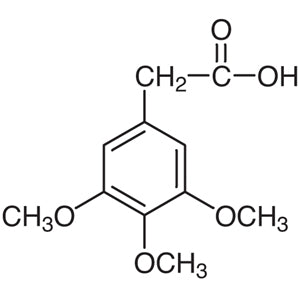
3,4,5-TrimethoxyphenylaceticAcid TCI T1105
Regular price From Rp 1.035.300,00Regular price