TCI T1105 is 3,4,5-Trimethoxyphenylacetic Acid, CAS number 951-82-6, an arylacetic acid whose benzene ring carries three adjacent methoxy groups. In the laboratory it serves as a starting material, or building block, for organic synthesis. Its carboxylic acid group is easily converted into esters, amides, or alcohols. Its electron-rich aromatic ring can also be modified further. In the TCI catalogue the product sits in the Non-Heterocyclic Building Blocks category, a group of materials that form the basic framework of many target molecules in organic and medicinal chemistry research.
What makes this compound attractive to chemists is its combination of functional groups. A single methylene carbon separates the carboxylic acid from the aromatic ring, so its reactivity differs from that of an ordinary benzoic acid. This makes it flexible for amide bond formation and for cyclization reactions. The three methoxy groups give a distinctive substitution pattern that is often found in bioactive molecular scaffolds. That pattern helps researchers who build libraries of derivative compounds, compare the effects of substitution, or explore structure-activity relationships. The TCI brand adds confidence in the quality of the material.
In Indonesian laboratories, this compound is typically used in university research groups, institutional laboratories, and industrial R&D settings that work on organic synthesis and medicinal chemistry. It is usually ordered as a reagent for small-scale synthetic work, where reliable starting materials matter for reproducible results. Researchers often use it to prepare intermediates, test new reaction conditions, or extend a series of related compounds. AMI Scientific supplies this TCI reagent to laboratories that need dependable building blocks for such projects.
Related TCI products
- TCI T4336 25173-72-2 3-(3,4,5-Trimethoxyphenyl)propanoic Acid
- TCI T2651 830-79-5 2,4,6-Trimethoxybenzaldehyde
- TCI T2627 490-64-2 2,4,5-Trimethoxybenzoic Acid
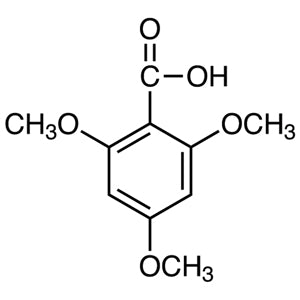
- TCI T2408 570-02-5 2,4,6-Trimethoxybenzoic Acid
- TCI T1563 60241-74-9 2,3,6-Trimethoxybenzoic Acid
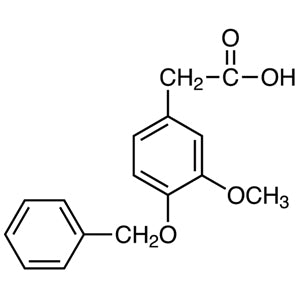
- TCI B4800 29973-91-9 4-Benzyloxy-3-methoxyphenylacetic Acid
- Amide coupling: the carboxylic acid group reacts with amines to form amides, so this compound suits the preparation of amide derivatives for synthetic and medicinal chemistry studies.
- Esterification: the acid group can be converted into esters with a range of alcohols, which makes this material useful for preparing protected or modified intermediates in multistep synthesis.
- Reduction to alcohols: the carboxylic acid can be reduced to the corresponding alcohol, giving researchers a route to further functional group changes starting from a single, well-defined building block.
- Cyclization reactions: the methylene spacer between the acid and the ring gives flexibility for ring-forming steps, so this compound is a suitable precursor when constructing cyclic frameworks.
- Derivative library and structure-activity studies: the characteristic trimethoxy substitution pattern lets researchers assemble series of related compounds and compare how substitution affects activity and properties.
| Brand | TCI |
|---|---|
| CAS number | 951-82-6 |
| Molecular formula | — |
| Purity | — |
| Category | Chemistry > Building Blocks > Non-Heterocyclic Building Blocks |
| Pack sizes | please refer to the available options on the product page |
| Physical form | — |
| Storage | keep tightly closed in a cool, dry place, and follow the supplier's label and safety data sheet |
- Product code: T1105
Store the container tightly closed in a cool, dry, well-ventilated place, away from direct sunlight, heat, moisture, and incompatible materials such as strong oxidizing agents. Keep the material in its original supplier bottle, or transfer it to a clean, dry glass container with a secure cap and a clear label. As with any laboratory chemical, wear suitable personal protective equipment, including safety glasses, gloves, and a laboratory coat. Handle the material in a fume hood or well-ventilated area, avoid creating dust, and prevent contact with skin and eyes. Always consult the safety data sheet before use, and dispose of waste according to institutional and local regulations.
—
Produk Terkait
-
3-(3,4,5-Trimethoxyphenyl)propanoicAcid TCI T4336
Regular price From Rp 1.829.100,00Regular priceRp 1.294.650,00Sale price From Rp 1.829.100,00 -
2,4,6-Trimethoxybenzaldehyde TCI T2651
Regular price From Rp 1.035.300,00Regular priceRp 723.450,00Sale price From Rp 1.035.300,00 -
2,4,5-TrimethoxybenzoicAcid TCI T2627
Regular price From Rp 582.750,00Regular priceRp 423.150,00Sale price From Rp 582.750,00 -
2,4,6-TrimethoxybenzoicAcid TCI T2408
Regular price Rp 7.844.550,00Regular priceRp 5.500.950,00Sale price Rp 7.844.550,00 -
2,3,6-TrimethoxybenzoicAcid TCI T1563
Regular price From Rp 1.483.650,00Regular priceRp 1.053.150,00Sale price From Rp 1.483.650,00 -
4-Benzyloxy-3-methoxyphenylaceticAcid TCI B4800
Regular price Rp 2.571.450,00Regular priceRp 1.813.350,00Sale price Rp 2.571.450,00 -
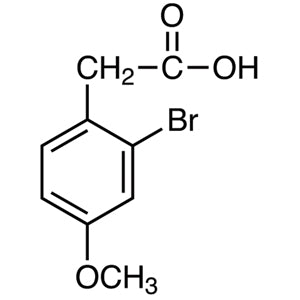
2-Bromo-4-methoxyphenylaceticAcid TCI B4737
Regular price From Rp 900.900,00Regular priceRp 645.750,00Sale price From Rp 900.900,00 -
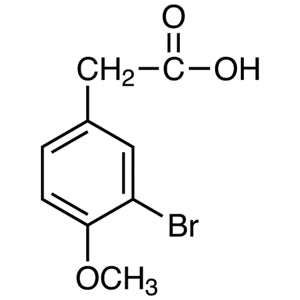
3-Bromo-4-methoxyphenylaceticAcid TCI B4677
Regular price From Rp 742.350,00Regular priceRp 534.450,00Sale price From Rp 742.350,00