3-Bromo-4-methoxyphenylacetic Acid is a chemical compound widely used in organic synthesis as a fundamental building block. It plays a crucial role in laboratory settings where the creation of complex organic molecules is required. This compound is particularly valuable in reactions involving aromatic structures and halogen substitution, making it a versatile reagent in synthetic chemistry. Its presence in various chemical reactions, such as substitution and esterification, highlights its importance in modern laboratory practices.
The compound’s stable chemical structure and controlled reactivity make it a preferred choice for precise chemical reactions. It dissolves well in organic solvents like ethyl acetate and acetone, which simplifies its use in different experimental setups. These properties ensure consistent performance across multiple experiments, making it ideal for both small-scale research and larger chemical processes. Its reliability and predictable behavior are key factors in its widespread use.
In Indonesian laboratories, 3-Bromo-4-methoxyphenylacetic Acid is commonly used in organic chemistry research, especially in universities and research institutions focused on the synthesis of new compounds. It is also frequently found in drug development projects, chemical material research, and industrial chemical applications. Its availability in the local market supports ongoing scientific activities and innovation in the field.
Related TCI products
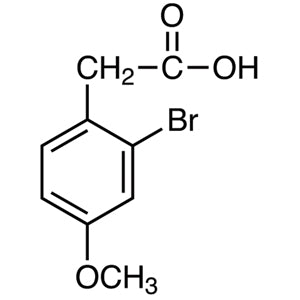
- TCI B4737 66916-99-2 2-Bromo-4-methoxyphenylacetic Acid
- TCI V0052 776-99-8 3,4-Dimethoxyphenylacetone
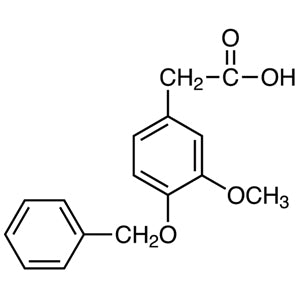
- TCI B4800 29973-91-9 4-Benzyloxy-3-methoxyphenylacetic Acid
- TCI B4742 4547-57-3 4-Butoxyphenylacetic Acid
- TCI B4674 1860-58-8 3-Benzyloxyphenylacetic Acid
- TCI B1779 6547-53-1 4-Benzyloxyphenylacetic Acid
- Organic synthesis projects benefit from this compound due to its role in creating complex aromatic structures with halogen substitution.
- Drug development initiatives use it as a key intermediate in the synthesis of pharmaceutical compounds with specific functional groups.
- Chemical material research incorporates it to develop new polymers and functional materials with tailored properties.
- Industrial chemical applications rely on its reactivity and solubility for large-scale production processes.
- Academic research in universities utilizes it for teaching and experimental purposes in organic chemistry courses.
| Brand | TCI |
|---|---|
| CAS number | 774-81-2 |
| Molecular formula | — |
| Purity | — |
| Category | Chemistry > Building Blocks > Non-Heterocyclic Building Blocks |
| Pack sizes | Available in various quantities as per standard laboratory supply |
| Physical form | Solid or crystalline, depending on the batch |
| Storage | Store in a cool, dry place away from direct sunlight |
This compound should be stored in a cool, dry environment to maintain its chemical stability and prevent degradation. It is recommended to use airtight containers made of glass or polyethylene to protect it from moisture and air exposure. Due to its bromine content, it is important to handle it with care, ensuring proper ventilation in the laboratory. Avoid contact with incompatible materials such as strong oxidizing agents. Always follow standard laboratory safety protocols when handling and using this compound to ensure a safe working environment.
—
Produk Terkait
-
2-Bromo-4-methoxyphenylaceticAcid TCI B4737
Regular price From Rp 900.900,00Regular priceRp 645.750,00Sale price From Rp 900.900,00 -
3,4-Dimethoxyphenylacetone TCI V0052
Regular price From Rp 1.246.350,00Regular priceRp 887.250,00Sale price From Rp 1.246.350,00 -
4-Benzyloxy-3-methoxyphenylaceticAcid TCI B4800
Regular price Rp 2.571.450,00Regular priceRp 1.813.350,00Sale price Rp 2.571.450,00 -
4-ButoxyphenylaceticAcid TCI B4742
Regular price From Rp 1.113.000,00Regular priceRp 793.800,00Sale price From Rp 1.113.000,00 -
3-BenzyloxyphenylaceticAcid TCI B4674
Regular price Rp 1.670.550,00Regular priceRp 1.183.350,00Sale price Rp 1.670.550,00 -
4-BenzyloxyphenylaceticAcid TCI B1779
Regular price Rp 3.021.900,00Regular priceRp 2.128.350,00Sale price Rp 3.021.900,00 -
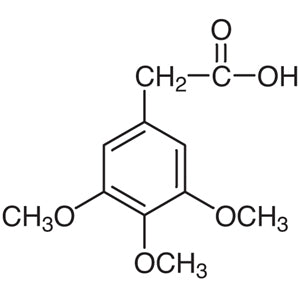
3,4,5-TrimethoxyphenylaceticAcid TCI T1105
Regular price From Rp 1.087.800,00Regular priceRp 775.950,00Sale price From Rp 1.087.800,00 -
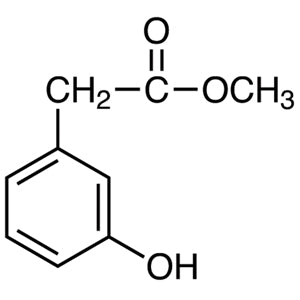
Methyl3-Hydroxyphenylacetate TCI M2925
Regular price From Rp 1.510.950,00Regular priceRp 1.072.050,00Sale price From Rp 1.510.950,00