4-Butoxyphenylacetic Acid is a chemical compound widely used as a foundational building block in the synthesis of complex molecules. It plays a crucial role in organic chemistry laboratories, where it serves as a versatile intermediate for constructing molecular frameworks. This compound is particularly valuable for its ability to participate in various chemical reactions, allowing researchers to modify carbon chains and introduce functional groups with precision. Its stability and predictable chemical behavior make it a reliable choice for synthetic processes.
The compound's chemical properties, including its reactivity and compatibility with a wide range of reagents, contribute to its popularity among researchers. Its availability in different packaging formats ensures flexibility for both small-scale experiments and larger research projects. Additionally, its well-defined structure and consistent performance make it a preferred option for scientists seeking reliable and reproducible results. The ease of handling and the absence of complex side reactions further enhance its appeal in laboratory settings.
In Indonesian laboratories, 4-Butoxyphenylacetic Acid is commonly used in both fundamental and applied chemical research. It is frequently employed in academic institutions and research centers to support experiments that require specific molecular structures. Its availability and quality ensure that it meets the needs of local researchers, making it an essential component in the chemical supply chain within the country.
Related TCI products
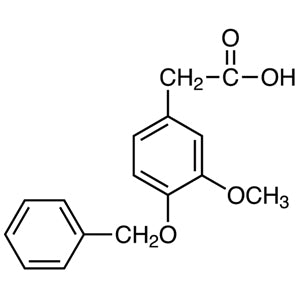
- TCI B4800 29973-91-9 4-Benzyloxy-3-methoxyphenylacetic Acid
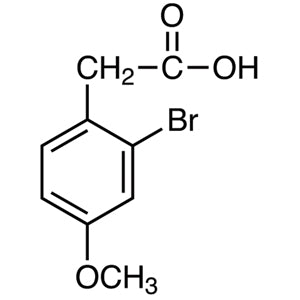
- TCI B4737 66916-99-2 2-Bromo-4-methoxyphenylacetic Acid
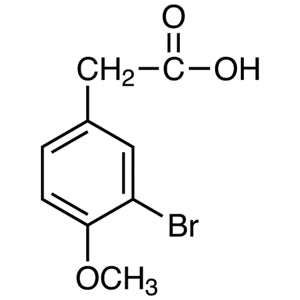
- TCI B4677 774-81-2 3-Bromo-4-methoxyphenylacetic Acid
- TCI M0968 3951-10-8 4-Methoxyphenylacetic Anhydride
- TCI M0858 1798-09-0 3-Methoxyphenylacetic Acid
- TCI M0837 7021-09-2 DL-alpha-Methoxyphenylacetic Acid
- Organic Synthesis: This compound is ideal for constructing complex organic molecules due to its reactivity and structural versatility.
- Functional Group Modification: It enables precise modification of carbon chains, making it suitable for targeted synthetic pathways.
- Research Protocols: Its predictable behavior supports consistent results in experimental procedures requiring chemical intermediates.
- Teaching Laboratories: It is used in educational settings to demonstrate chemical synthesis techniques and molecular structure manipulation.
- Industrial Chemistry: It serves as a key reagent in the development of new chemical products and material formulations.
| Brand | TCI |
|---|---|
| CAS number | 4547-57-3 |
| Molecular formula | — |
| Purity | — |
| Category | Chemistry > Building Blocks > Non-Heterocyclic Building Blocks |
| Pack sizes | Available in various packaging options for different experimental needs |
| Physical form | Solid (exact form may vary depending on manufacturer) |
| Storage | Store in a cool, dry place away from direct sunlight |
This compound should be stored in a cool, dry environment to maintain its chemical stability. It is recommended to keep it in a sealed container to prevent exposure to moisture and air. Avoid direct sunlight and ensure proper ventilation in the storage area. Due to its chemical nature, it should be handled with appropriate personal protective equipment, such as gloves and safety goggles. It is important to store it away from incompatible substances to prevent any potential chemical interactions. Regular inspection of storage conditions ensures the compound remains in optimal condition for laboratory use.
—
Produk Terkait
-
4-Benzyloxy-3-methoxyphenylaceticAcid TCI B4800
Regular price Rp 2.571.450,00Regular priceRp 1.813.350,00Sale price Rp 2.571.450,00 -
2-Bromo-4-methoxyphenylaceticAcid TCI B4737
Regular price From Rp 900.900,00Regular priceRp 645.750,00Sale price From Rp 900.900,00 -
3-Bromo-4-methoxyphenylaceticAcid TCI B4677
Regular price From Rp 742.350,00Regular priceRp 534.450,00Sale price From Rp 742.350,00 -
4-MethoxyphenylaceticAnhydride TCI M0968
Regular price Rp 1.618.050,00Regular priceRp 1.146.600,00Sale price Rp 1.618.050,00 -
3-MethoxyphenylaceticAcid TCI M0858
Regular price Rp 2.199.750,00Regular priceRp 1.554.000,00Sale price Rp 2.199.750,00 -
DL-alpha-MethoxyphenylaceticAcid TCI M0837
Regular price From Rp 2.518.950,00Regular priceRp 1.776.600,00Sale price From Rp 2.518.950,00 -
4-MethoxyphenylaceticAcid TCI M0742
Regular price From Rp 662.550,00Regular priceRp 478.800,00Sale price From Rp 662.550,00 -
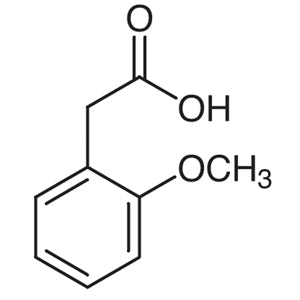
2-MethoxyphenylaceticAcid TCI M0533
Regular price From Rp 637.350,00Regular priceRp 460.950,00Sale price From Rp 637.350,00