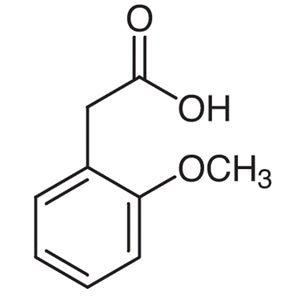
2-Methoxyphenylacetic Acid (2-MPPA) is a chemical compound widely used in synthetic laboratory reactions. As a key building block in organic chemistry, it plays a crucial role in the synthesis of complex molecules, particularly aromatic and heterocyclic compounds. Its simple molecular structure enables it to serve as a versatile intermediate in various chemical transformations. In laboratory settings, 2-MPPA is commonly employed as a reactant or part of a broader synthetic pathway, contributing to the development of new compounds and materials.
The chemical properties of 2-MPPA make it a preferred choice for synthetic chemists. It exhibits good solubility in organic solvents such as ethyl acetate and ethanol, which facilitates its use in reaction mixtures. Its stability under certain conditions allows for controlled chemical processes, while its reactivity ensures efficient participation in a wide range of reactions. These characteristics make it ideal for applications requiring both speed and precision in laboratory synthesis.
In Indonesian laboratories, 2-MPPA is extensively used in educational and research institutions. It is particularly relevant for organic chemistry studies, supporting investigations into molecular structure and reactivity. Its availability enables researchers to conduct experiments efficiently, contributing to advancements in chemical research and development.
Related TCI products
- TCI V0052 776-99-8 3,4-Dimethoxyphenylacetone
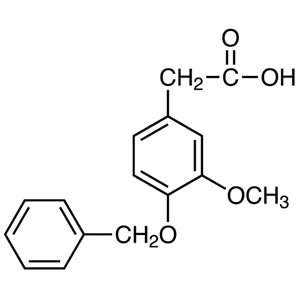
- TCI B4800 29973-91-9 4-Benzyloxy-3-methoxyphenylacetic Acid
- TCI B4742 4547-57-3 4-Butoxyphenylacetic Acid
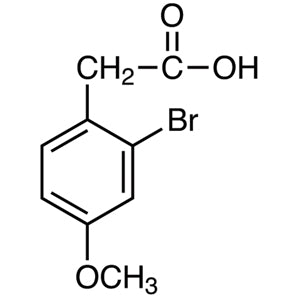
- TCI B4737 66916-99-2 2-Bromo-4-methoxyphenylacetic Acid
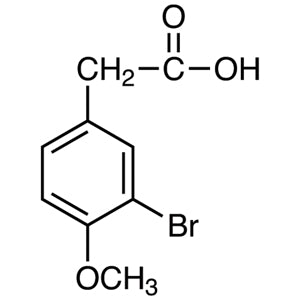
- TCI B4677 774-81-2 3-Bromo-4-methoxyphenylacetic Acid
- TCI B4674 1860-58-8 3-Benzyloxyphenylacetic Acid
- Organic synthesis applications benefit from 2-MPPA due to its reactivity and solubility in organic solvents, making it ideal for creating complex aromatic and heterocyclic compounds.
- It is widely used in research settings for the development of new chemical compounds, supporting studies on molecular structure and functional group transformations.
- Educational institutions utilize 2-MPPA in teaching laboratory courses to demonstrate fundamental principles of organic chemistry and synthetic reactions.
- The compound is suitable for pharmaceutical research, aiding in the synthesis of drug-related molecules and bioactive compounds.
- It supports analytical chemistry applications by serving as a reference standard in qualitative and quantitative analysis procedures.
| Brand | TCI |
|---|---|
| CAS number | 93-25-4 |
| Molecular formula | — |
| Purity | — |
| Category | Chemistry > Building Blocks > Non-Heterocyclic Building Blocks |
| Pack sizes | Available in various quantities as per supplier specifications |
| Physical form | Solid or crystalline, depending on purity and packaging |
| Storage | Store in a cool, dry place away from direct sunlight and incompatible materials |
2-Methoxyphenylacetic Acid should be stored in a cool, dry environment to maintain its chemical stability. It is recommended to keep it in a sealed container to prevent exposure to moisture and air. Due to its organic nature, it should be stored away from strong oxidizing agents and incompatible substances. Proper ventilation is essential when handling the compound to minimize inhalation risks. Laboratory personnel should use appropriate personal protective equipment, such as gloves and safety goggles, when working with this material. Regular monitoring of storage conditions ensures the compound remains in optimal condition for use in synthetic processes.
—
Produk Terkait
-
3,4-Dimethoxyphenylacetone TCI V0052
Regular price From Rp 1.193.850,00Regular price -
4-Benzyloxy-3-methoxyphenylaceticAcid TCI B4800
Regular price Rp 2.518.950,00Regular price -
4-ButoxyphenylaceticAcid TCI B4742
Regular price From Rp 1.060.500,00Regular price -
2-Bromo-4-methoxyphenylaceticAcid TCI B4737
Regular price From Rp 848.400,00Regular price -
3-Bromo-4-methoxyphenylaceticAcid TCI B4677
Regular price From Rp 689.850,00Regular price -
3-BenzyloxyphenylaceticAcid TCI B4674
Regular price Rp 1.618.050,00Regular price -
4-BenzyloxyphenylaceticAcid TCI B1779
Regular price Rp 2.969.400,00Regular price -
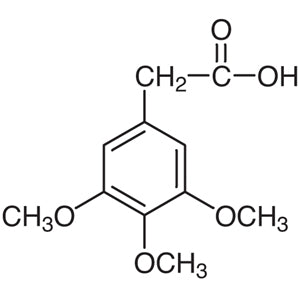
3,4,5-TrimethoxyphenylaceticAcid TCI T1105
Regular price From Rp 1.035.300,00Regular price