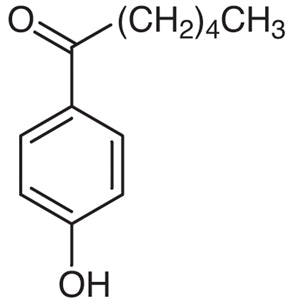
4'-Hydroxyhexanophenone, CAS number 2589-72-2, is an aromatic ketone that combines a phenol ring with a six-carbon acyl chain. This structure places it among the non-heterocyclic building blocks that researchers reach for when a synthetic route calls for an aryl ketone framework together with a phenolic hydroxyl group available for further modification. In the laboratory, compounds of this type commonly serve as starting points for the synthesis of flavonoid derivatives, chalcones, aryl ethers, and intermediates destined for functional materials, because the two reactive groups can be addressed in stages and under controlled conditions.
The property that leads chemists to select this material is the combination of dual reactivity on a single, simple framework. The phenolic hydroxyl group is nucleophilic and readily alkylated or acylated to form ethers and esters, while the carbonyl group can be reduced to a secondary alcohol, condensed with aldehydes, or converted into heterocyclic systems. The pentyl portion of the acyl chain contributes lipophilic character that is useful for tuning the solubility and membrane affinity of target molecules. The para relationship between the hydroxyl group and the carbonyl also creates a conjugated system that influences the compound's ultraviolet absorption behaviour.
In Indonesian laboratories, a building block of this kind is typically handled as a small-scale research chemical rather than a bulk commodity. It suits university and institutional organic synthesis groups, medicinal chemistry programmes exploring substituted aryl ketone scaffolds, and materials research units preparing functional intermediates. Because the compound carries two independently addressable reactive sites, it fits well into multi-step teaching and research syntheses where each transformation is verified before the next step is attempted.
- Flavonoid and chalcone synthesis — the phenolic hydroxyl and the aryl ketone carbonyl together provide the classic substitution pattern needed to build these scaffolds through staged condensation chemistry.
- Aryl ether preparation — the nucleophilic phenolic hydroxyl group is readily alkylated, allowing researchers to install a wide range of side chains while leaving the carbonyl untouched for later work.
- Medicinal chemistry scaffold development — the six-carbon acyl chain supplies lipophilic character that chemists use to adjust solubility and membrane affinity across a series of analogue target molecules.
- Heterocycle construction — the carbonyl group can be condensed with suitable partners or cyclised, making this non-heterocyclic building block a practical precursor to heterocyclic products.
- Reduction and derivatisation studies — the ketone is straightforwardly reduced to the corresponding secondary alcohol, giving a controlled route to further esterification, protection, or coupling chemistry.
| Brand | TCI |
|---|---|
| CAS number | 2589-72-2 |
| Molecular formula | — |
| Purity | — |
| Category | Chemistry > Building Blocks > Non-Heterocyclic Building Blocks |
| Pack sizes | available in the research-scale pack sizes listed by TCI for this catalogue number |
| Physical form | — |
| Storage | store according to the conditions stated on the manufacturer's label and safety data sheet |
- Catalogue number: H0884
Keep the container tightly closed and store it in a cool, dry, well-ventilated place away from direct sunlight, moisture, and sources of ignition, following the storage conditions printed on the manufacturer's label and safety data sheet. Amber glass or the original supplier container is appropriate, since phenolic compounds can be sensitive to prolonged light exposure. Handle the material in a fume hood using gloves, safety glasses, and a laboratory coat, and avoid generating or inhaling dust. Weigh and transfer with clean, dry spatulas to prevent contamination, reseal immediately after use, and label all working solutions clearly. Consult the safety data sheet before first use and dispose of residues through your institution's chemical waste procedures.
—
Produk Terkait
-
Methyl6-Hydroxyhexanoate TCI H1938
Regular price From Rp 1.538.250,00Regular price -
Ethyl6-Hydroxyhexanoate TCI E1305
Regular price From Rp 3.100.650,00Regular price -
Ethyl3-Hydroxyhexanoate TCI E0788
Regular price From Rp 2.545.200,00Regular price -
Hexanophenone TCI H0116
Regular price Rp 2.121.000,00Regular price -
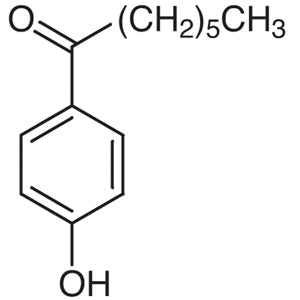
4'-Hydroxyheptanophenone TCI H0864
Regular price From Rp 743.400,00Regular price -
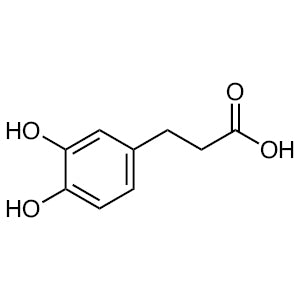
3,4-DihydroxyhydrocinnamicAcid TCI D5901
Regular price From Rp 1.538.250,00Regular price -
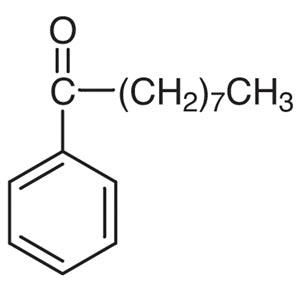
n-Octanophenone TCI O0149
Regular price From Rp 1.724.100,00Regular price -
Nonanophenone TCI N0568
Regular price Rp 3.763.200,00Regular price