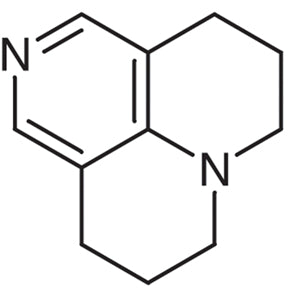
8-Hydroxyjulolidine is a chemical compound widely used in laboratory settings for the synthesis of complex molecules. As a heterocyclic building block, it plays a crucial role in organic chemistry by enabling the formation of compounds with unique structural and functional properties. This compound is particularly valuable in reactions that require the introduction of hydroxyl groups into aromatic systems, making it a versatile reagent in synthetic pathways. Its presence in the chemical toolbox of Indonesian laboratories underscores its importance in advancing research in both academic and industrial contexts.
The compound is known for its stable chemical structure and controlled reactivity, which allows chemists to manipulate its behavior in various reaction conditions. It exhibits good solubility in organic solvents, which simplifies its handling and application in different experimental setups. These properties make 8-Hydroxyjulolidine a preferred choice for researchers aiming to achieve consistent and reliable results in their experiments. Its chemical consistency and predictable performance contribute to its popularity in scientific investigations.
In Indonesian laboratories, 8-Hydroxyjulolidine is frequently utilized in organic chemistry research, especially in the development of pharmaceutical compounds and advanced materials. Its role in synthesizing bioactive molecules and functional materials has made it an essential component in both academic and applied research projects. The compound's reliability and versatility have solidified its position as a key reagent in the chemical research landscape of Indonesia.
- Organic synthesis of bioactive compounds where hydroxyl functionality is required for molecular recognition and biological activity.
- Development of new pharmaceuticals through the construction of complex heterocyclic frameworks with therapeutic potential.
- Preparation of functional materials with specific optical or electronic properties by incorporating hydroxyl groups into aromatic systems.
- Investigation of reaction mechanisms involving heterocyclic compounds and their derivatives in both academic and industrial research settings.
- Exploration of synthetic pathways for the creation of novel organic molecules with applications in material science and chemical engineering.
| Brand | TCI |
|---|---|
| CAS number | 41175-50-2 |
| Molecular formula | — |
| Purity | — |
| Category | Chemistry > Building Blocks > Heterocyclic Building Blocks |
| Pack sizes | As available from supplier |
| Physical form | Solid (may vary depending on supplier) |
| Storage | Store in a cool, dry place away from light and moisture |
8-Hydroxyjulolidine should be stored in a cool, dry environment, away from direct sunlight and sources of heat. It is recommended to keep the compound in a tightly sealed container to prevent exposure to moisture and air, which may affect its stability. Due to its chemical nature, it should be handled with appropriate personal protective equipment, such as gloves and safety goggles, to ensure laboratory safety. The compound is generally non-hazardous under normal conditions but should be stored in a well-ventilated area to minimize any potential risks. Proper labeling of storage containers is essential to ensure safe handling and prevent accidental exposure. Regular monitoring of storage conditions is advised to maintain the compound's integrity and usability in research applications.
—
Produk Terkait
-
8-Hydroxyjulolidine-9-carboxaldehyde TCI H1225
Regular price Rp 2.173.500,00Regular priceRp 1.535.100,00Sale price Rp 2.173.500,00 -
Julolidine TCI J0007
Regular price Rp 2.013.900,00Regular priceRp 1.423.800,00Sale price Rp 2.013.900,00 -
Lilolidine TCI L0274
Regular price Rp 769.650,00Regular priceRp 553.350,00Sale price Rp 769.650,00 -
9-Julolidinecarboxaldehyde TCI J0008
Regular price Rp 5.830.650,00Regular priceRp 4.092.900,00Sale price Rp 5.830.650,00 -
8-Hydroxy-1,1,7,7-tetramethyljulolidine-9-carboxaldehyde TCI H1315
Regular price Rp 2.464.350,00Regular priceRp 1.738.800,00Sale price Rp 2.464.350,00 -
9-Azajulolidine TCI A1854
Regular price Rp 8.320.200,00Regular priceRp 5.833.800,00Sale price Rp 8.320.200,00