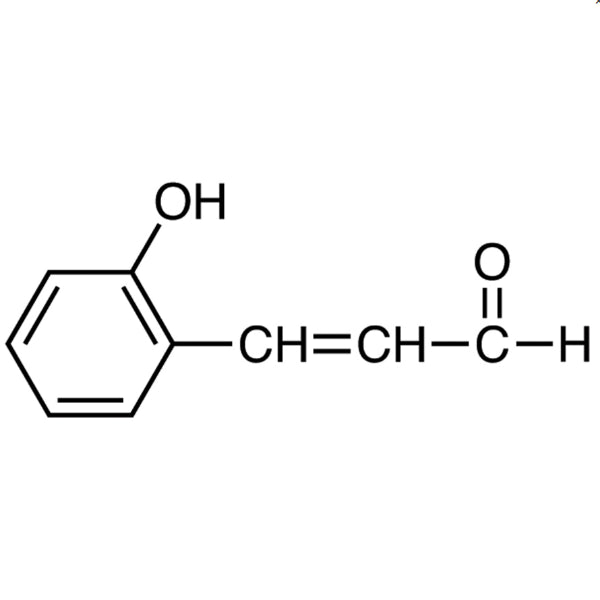
TCI H0952 2-Hydroxycinnamaldehyde is an unsaturated aromatic aldehyde carrying a phenolic hydroxy group at the ortho position relative to the propenal chain. The compound is a derivative of cinnamaldehyde, the characteristic aroma component of cinnamon, and it has attracted researcher attention because of its highly productive chemical arrangement of functional groups. In the laboratory it serves as a non-heterocyclic building block widely used to construct coumarin, chromene, and benzofuran frameworks, as well as a test material in research on bioactive phenylpropanoid derivatives frequently pursued in natural product studies.
The properties that make this compound a preferred choice are rooted in the proximity between the phenolic hydroxy group and the conjugated aldehyde system. This proximity allows intramolecular cyclization reactions to proceed readily, so oxygen-containing heterocyclic rings can be formed in only one or two steps. The aldehyde group is highly reactive toward primary amines and forms stable Schiff bases, so the compound is often used as a ligand precursor in coordination chemistry. The extended conjugated system gives strong ultraviolet absorption while also indicating that the compound is relatively sensitive and should be handled with appropriate care.
In Indonesian laboratories, this material is typically used in university and institutional research settings where synthetic organic chemistry and natural product chemistry are studied side by side. It suits work on phenylpropanoid-derived scaffolds, method development for heterocycle construction, and the preparation of ligand and reference materials for further characterization. The TCI packaging format is convenient for research-scale work, where a single reagent is drawn on across several experiments over an extended period.
Related TCI products
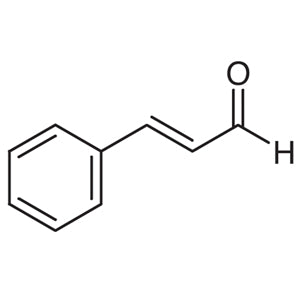
- TCI C0352 14371-10-9 trans-Cinnamaldehyde
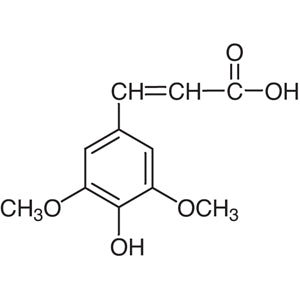
- TCI D1765 530-59-6 3,5-Dimethoxy-4-hydroxycinnamic Acid
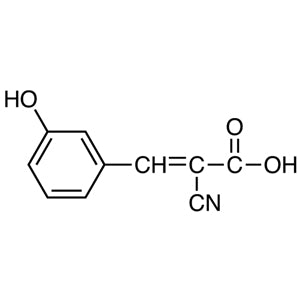
- TCI C2677 54673-07-3 alpha-Cyano-3-hydroxycinnamic Acid
- TCI C1768 28166-41-8 alpha-Cyano-4-hydroxycinnamic Acid
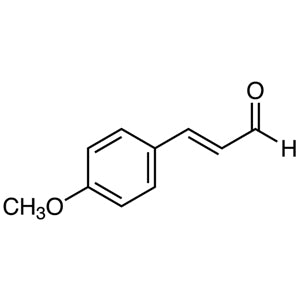
- TCI M1012 24680-50-0 (E)-4-Methoxycinnamaldehyde
- TCI B4337 49678-04-8 trans-4-Bromocinnamaldehyde
- Coumarin framework synthesis: the ortho phenolic hydroxy group and the conjugated aldehyde sit close enough for intramolecular cyclization to close the lactone ring in very few synthetic steps.
- Chromene and benzofuran construction: the same oxygen nucleophile and conjugated acceptor pairing lets researchers build oxygen-containing heterocyclic rings efficiently without additional functional group manipulation beforehand.
- Schiff base and ligand preparation: the aldehyde reacts readily with primary amines to give stable imines, making the compound a practical ligand precursor for coordination chemistry work.
- Bioactive phenylpropanoid research: as a cinnamaldehyde derivative, it serves as a test material in natural product studies examining the activity of phenylpropanoid-derived structures.
- Ultraviolet-based analytical work: the extended conjugated system produces strong ultraviolet absorption, which supports spectroscopic monitoring of reactions and characterization of the compound and its derivatives.
| Brand | TCI |
|---|---|
| CAS number | 3541-42-2 |
| Molecular formula | — |
| Purity | — |
| Category | Chemistry > Building Blocks > Non-Heterocyclic Building Blocks |
| Pack sizes | available in standard TCI research-scale packaging; please confirm the specific size when ordering |
| Physical form | — |
| Storage | store in a tightly closed original container, protected from light and heat |
- Product code: H0952
Store the compound in its original tightly closed container in a cool, dry place away from direct sunlight and heat sources, since the conjugated aldehyde system is relatively sensitive. Amber glass or the supplier's original packaging is suitable for limiting light exposure. Keep the container away from primary amines, strong oxidizing agents, and other incompatible reagents to avoid unintended reaction. Handle in a fume hood using gloves, safety glasses, and a laboratory coat, and weigh or transfer the material promptly to minimize exposure to air and moisture. Close the container immediately after use and follow the institution's standard chemical waste procedures for residues and contaminated materials.
—
Produk Terkait
-
trans-Cinnamaldehyde TCI C0352
Regular price From Rp 477.750,00Regular price -
3,5-Dimethoxy-4-hydroxycinnamicAcid TCI D1765
Regular price From Rp 2.094.750,00Regular price -
alpha-Cyano-3-hydroxycinnamicAcid TCI C2677
Regular price Rp 2.386.650,00Regular price -
alpha-Cyano-4-hydroxycinnamicAcid TCI C1768
Regular price Rp 1.510.950,00Regular price -
(E)-4-Methoxycinnamaldehyde TCI M1012
Regular price From Rp 823.200,00Regular price -
trans-4-Bromocinnamaldehyde TCI B4337
Regular price From Rp 1.060.500,00Regular price -
alpha-Bromocinnamaldehyde TCI B1253
Regular price Rp 980.700,00Regular price -
2-Nitrocinnamaldehyde TCI N0611
Regular price Rp 1.246.350,00Regular price