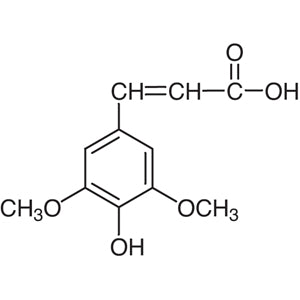
3,5-Dimethoxy-4-hydroxycinnamic Acid is a chemical compound widely used in laboratory settings for its versatility in synthetic chemistry. It serves as a key building block in the synthesis of complex organic molecules and molecular modifications. This compound is particularly valuable for researchers working on the development of new compounds with potential applications in pharmaceuticals, biochemistry, and materials science. Its chemical structure provides a foundation for further functionalization, making it a crucial component in many experimental protocols.
The compound is known for its polar nature and ability to form hydrogen bonds, which are essential for participating in substitution and oxidation reactions. These properties make it a preferred choice for chemists seeking reliable and consistent results in their experiments. Its high purity and molecular consistency ensure that it meets the rigorous standards required for scientific research. This reliability is especially important in reproducible and accurate experimental outcomes.
In Indonesian laboratories, 3,5-Dimethoxy-4-hydroxycinnamic Acid is commonly used in scientific research across various institutions, including universities and research centers. It plays a significant role in organic and biochemical studies, contributing to the development of new compounds with potential therapeutic or industrial applications. Its relevance in these fields continues to grow as researchers explore its properties and potential uses.
TCI brochures (PDF)
- Polyphenols 2024-12-05 · p. 2
- Phytochemicals 2025-12-17 · p. 8
- Organic synthesis applications benefit from this compound's reactivity and structural versatility, enabling the creation of complex molecules with tailored properties.
- Biochemical research utilizes its polar nature and hydrogen bonding capabilities, which are essential for enzyme interactions and molecular recognition processes.
- Pharmaceutical development leverages its potential as a precursor for drug candidates with antioxidant and anti-inflammatory properties.
- Material science experiments use its chemical stability and reactivity to design new polymers and functional materials with specific properties.
- Analytical chemistry applications take advantage of its detectability and reactivity in spectroscopic and chromatographic analyses.
| Brand | TCI |
|---|---|
| CAS number | 530-59-6 |
| Molecular formula | — |
| Purity | — |
| Category | Chemistry > Building Blocks > Non-Heterocyclic Building Blocks |
| Pack sizes | Available in standard laboratory quantities as per supplier specifications |
| Physical form | Solid powder |
| Storage | Store in a cool, dry place away from light and moisture |
This compound should be stored in a cool, dry environment, away from direct light and moisture to maintain its chemical integrity. It is recommended to use airtight containers to prevent exposure to air and humidity, which could affect its stability. Proper labeling of storage containers is essential for safety and traceability. In laboratory settings, it should be handled with appropriate personal protective equipment, such as gloves and safety goggles, to minimize exposure. Due to its polar nature, it is advisable to avoid contact with incompatible substances. Regular inspection of storage conditions ensures that the compound remains in optimal condition for use in experiments.
—
Produk Terkait
-
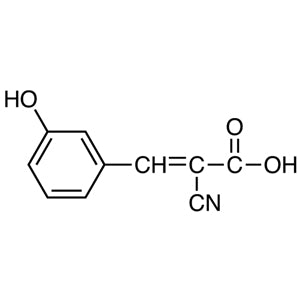
alpha-Cyano-3-hydroxycinnamicAcid TCI C2677
Regular price Rp 2.386.650,00Regular price -
alpha-Cyano-4-hydroxycinnamicAcid TCI C1768
Regular price Rp 1.510.950,00Regular price -
2-Hydroxycinnamaldehyde TCI H0952
Regular price Rp 12.694.500,00Regular price -
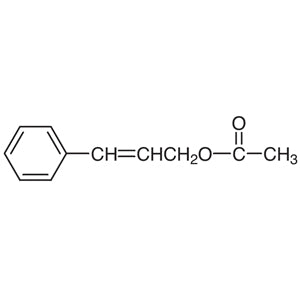
CinnamylAcetate TCI A0901
Regular price From Rp 505.050,00Regular price -
MethylCaffeate TCI M2519
Regular price From Rp 2.439.150,00Regular price -
trans-FerulicAcid TCI H0267
Regular price From Rp 1.881.600,00Regular price -
3,5-Dimethoxy-4-hydroxycinnamicAcid[MatrixforMALDI-TOF/MS] TCI D2932
Regular price Rp 2.597.700,00Regular price -
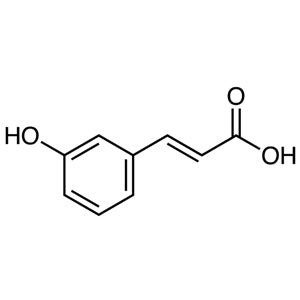
trans-m-CoumaricAcid TCI C0655
Regular price From Rp 795.900,00Regular price




![3,5-Dimethoxy-4-hydroxycinnamic Acid [Matrix for MALDI-TOF/MS] (CAS 530-59-6) - TCI D2932 - AMI Scientific](http://amiscientific.com/cdn/shop/files/TCI2510D2932.jpg?v=1767105574&width=533)