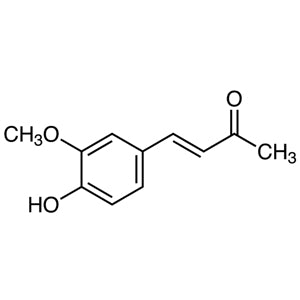
(E)-4-(4-Hydroxy-3-methoxyphenyl)-3-buten-2-one is a chemical compound widely used as a building block in the synthesis of complex organic molecules. This compound plays a crucial role in laboratory settings where the formation of double bonds and substitution reactions are required. Its versatility makes it an essential tool for chemists working in synthetic chemistry and pharmaceutical research. It is commonly employed in the development of new compounds, particularly those with structural complexity and functional group diversity.
The compound is known for its reactive nature and stability, which allows it to interact effectively with various reagents in chemical reactions. Its ability to participate in multiple reaction pathways makes it a preferred choice for researchers aiming to achieve precise molecular modifications. The reactivity of (E)-4-(4-Hydroxy-3-methoxyphenyl)-3-buten-2-one enables it to be a key component in the synthesis of bioactive compounds and pharmaceutical intermediates. Its chemical properties make it suitable for use in both academic and industrial laboratory environments.
In Indonesian laboratories, this compound is extensively used in scientific research and chemical product development. It is a valuable resource for institutions and universities conducting studies on molecular structure and organic reactivity. Its availability ensures that researchers can conduct experiments requiring high-quality starting materials. The compound's role in synthetic processes is vital for advancing chemical knowledge and innovation in the region.
Related TCI products
- TCI M1803 56024-44-3 Methyl 3-(4-Hydroxy-3-methoxyphenyl)propionate
- TCI H1946 6100-74-9 1-(3-Hydroxy-4-methoxyphenyl)ethan-1-one
- TCI H1578 39604-68-7 2'-Hydroxy-4',6'-dimethoxy-2-(4-methoxyphenyl)acetophenone
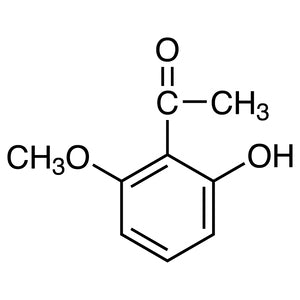
- TCI H1529 703-23-1 1-(2-Hydroxy-6-methoxyphenyl)ethanone
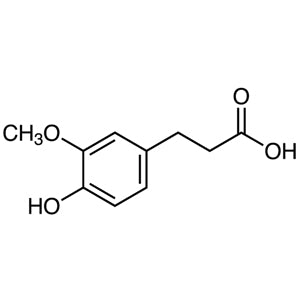
- TCI H1180 1135-23-5 3-(4-Hydroxy-3-methoxyphenyl)propionic Acid
- TCI H0538 77305-02-3 Sodium 3-(4-Hydroxy-3-methoxyphenyl)lactate
- Organic synthesis applications benefit from this compound's ability to form double bonds and participate in substitution reactions, making it ideal for creating complex molecular structures.
- Pharmaceutical research utilizes this compound as an intermediate in the development of bioactive molecules, supporting the design of new drugs and therapeutic agents.
- Academic research in chemistry relies on this compound for studying molecular reactivity and structural modifications, enhancing understanding of organic chemistry principles.
- Industrial chemical production incorporates this compound in the synthesis of specialty chemicals, ensuring the availability of high-quality raw materials for commercial applications.
- Analytical chemistry laboratories use this compound as a reference standard for evaluating reaction mechanisms and chemical behavior under various conditions.
| Brand | TCI |
|---|---|
| CAS number | 22214-42-2 |
| Molecular formula | — |
| Purity | — |
| Category | Chemistry > Building Blocks > Non-Heterocyclic Building Blocks |
| Pack sizes | Available in various quantities as per supplier specifications |
| Physical form | Liquid |
| Storage | Store in a cool, dry place away from light and incompatible materials |
This compound should be stored in a cool, dry environment, away from direct sunlight and sources of heat. It is recommended to keep it in a tightly sealed container to prevent exposure to air and moisture. Due to its reactivity, it should be handled with care, using appropriate personal protective equipment such as gloves and safety goggles. It is important to store it separately from strong oxidizing agents and incompatible substances to avoid potential chemical reactions. In laboratory settings, it should be kept in a well-ventilated area to ensure safe handling and minimize any risk of inhalation. Proper storage and handling practices are essential to maintain the compound's stability and ensure the safety of laboratory personnel.
—
Produk Terkait
-
Methyl3-(4-Hydroxy-3-methoxyphenyl)propionate TCI M1803
Regular price From Rp 4.664.100,00Regular price -
1-(3-Hydroxy-4-methoxyphenyl)ethan-1-one TCI H1946
Regular price From Rp 1.115.100,00Regular price -
2'-Hydroxy-4',6'-dimethoxy-2-(4-methoxyphenyl)acetophenone TCI H1578
Regular price From Rp 1.776.600,00Regular price -
1-(2-Hydroxy-6-methoxyphenyl)ethanone TCI H1529
Regular price From Rp 1.087.800,00Regular price -
3-(4-Hydroxy-3-methoxyphenyl)propionicAcid TCI H1180
Regular price From Rp 2.068.500,00Regular price -
Sodium3-(4-Hydroxy-3-methoxyphenyl)lactate TCI H0538
Regular price From Rp 3.392.550,00Regular price -
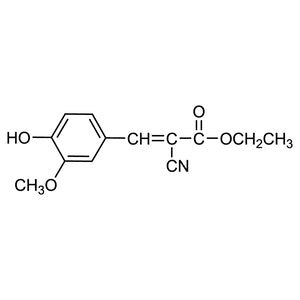
Ethyl2-Cyano-3-(4-hydroxy-3-methoxyphenyl)acrylate TCI E1623
Regular price Rp 2.174.550,00Regular price -
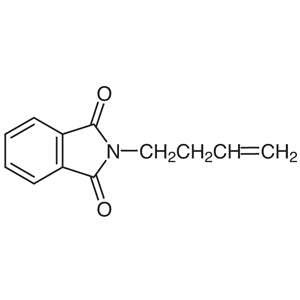
N-(3-Buten-1-yl)phthalimide TCI B1881
Regular price Rp 7.897.050,00Regular price