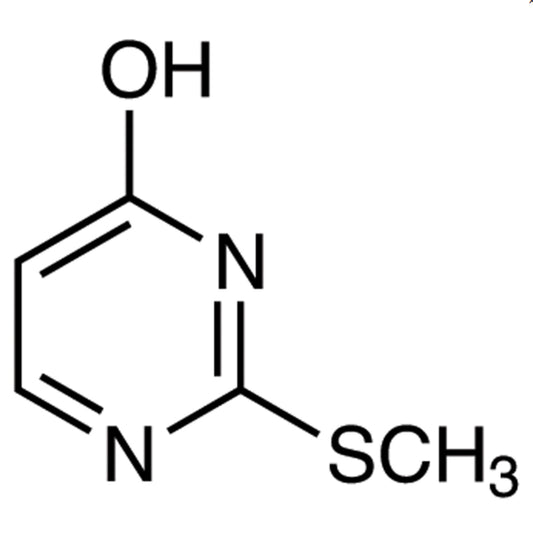
(3H)-Pyrimidinone is a heterocyclic compound widely used in chemical laboratories as a building block for the synthesis of complex molecules. Its unique structure makes it an essential component in organic chemistry, particularly in the development of compounds requiring a pyrimidine ring system. This compound plays a crucial role in the creation of pharmaceuticals, pesticides, and industrial chemicals, offering researchers a versatile tool for molecular design and modification. Due to its stability and controlled reactivity, it is a key ingredient in many synthetic pathways, enabling the formation of diverse functional groups and molecular frameworks.
The chemical properties of (3H)-Pyrimidinone make it a preferred choice for synthetic chemists. It exhibits good solubility in organic solvents such as ethyl acetate and acetone, which simplifies processing and isolation steps in laboratory workflows. Its ability to undergo substitution and ring-opening reactions enhances its utility in a wide range of chemical transformations. These characteristics allow it to be used in both academic and industrial settings, where flexibility and reliability are essential for successful synthesis outcomes.
In Indonesian laboratories, (3H)-Pyrimidinone is commonly used in organic chemistry research, especially in higher education institutions and research centers. Its application spans across various fields, including drug development, agricultural chemistry, and materials science. The compound’s versatility and chemical stability make it a valuable resource for scientists working on complex molecular structures and functional group modifications.
Related TCI products
- TCI M1635 103980-68-3 6-Methyl-5-propyl-4(1H)-pyrimidinone
- TCI E1134 139756-21-1 5-(2-Ethoxyphenyl)-1-methyl-3-propyl-1,6-dihydro-7H-pyrazolo[4,3-d]-7-pyrimidinone
- TCI M2355 5751-20-2 2-Methylthio-4-pyrimidinol
- TCI P0526 1852-17-1 Tetrahydro-2-pyrimidinone
- TCI F0547 1480-96-2 5-Fluoro-2-methoxy-4-pyrimidinone
- TCI D2014 7226-23-5 1,3-Dimethyl-3,4,5,6-tetrahydro-2(1H)-pyrimidinone
- Organic synthesis is a key application where (3H)-Pyrimidinone is used to build complex molecular frameworks due to its reactivity and structural versatility.
- Pharmaceutical research benefits from this compound as it is often used in the development of new drugs requiring pyrimidine-based structures.
- Pesticide formulation relies on (3H)-Pyrimidinone for creating compounds with specific biological activities and chemical stability.
- Industrial chemical production utilizes this compound for the synthesis of various derivatives with tailored properties.
- Academic research in chemistry uses (3H)-Pyrimidinone to explore new synthetic methods and reaction mechanisms in heterocyclic chemistry.
| Brand | TCI |
|---|---|
| CAS number | 4562-27-0 |
| Molecular formula | — |
| Purity | — |
| Category | Chemistry > Building Blocks > Heterocyclic Building Blocks |
| Pack sizes | — |
| Physical form | — |
| Storage | Store in a cool, dry place away from direct sunlight |
(3H)-Pyrimidinone should be stored in a cool, dry environment to maintain its chemical stability and prevent degradation. It is recommended to keep the compound in a tightly sealed container to minimize exposure to moisture and air. Due to its organic nature, it is advisable to use glass or polyethylene containers that are resistant to chemical reactions. Laboratory personnel should handle the compound with care, using appropriate personal protective equipment such as gloves and safety goggles. Proper ventilation should be ensured when working with this compound to avoid inhalation of vapors. Regular monitoring of storage conditions ensures the integrity and usability of the material in research applications.
—
Produk Terkait
-
6-Methyl-5-propyl-4(1H)-pyrimidinone TCI M1635
Regular price Rp 1.326.150,00Regular price -
5-(2-Ethoxyphenyl)-1-methyl-3-propyl-1,6-dihydro-7H-pyrazolo[4,3-d]-7-pyrimidinone TCI E1134
Regular price From Rp 795.900,00Regular price -
2-Methylthio-4-pyrimidinol TCI M2355
Regular price From Rp 530.250,00Regular price -
Tetrahydro-2-pyrimidinone TCI P0526
Regular price From Rp 1.670.550,00Regular price -
5-Fluoro-2-methoxy-4-pyrimidinone TCI F0547
Regular price From Rp 477.750,00Regular price -
1,3-Dimethyl-3,4,5,6-tetrahydro-2(1H)-pyrimidinone TCI D2014
Regular price From Rp 610.050,00Regular price -
6-Trifluoromethyl-4-pyrimidinol TCI T1601
Regular price From Rp 1.538.250,00Regular price -
2-Mercapto-6-(trifluoromethyl)-4-pyrimidinol TCI M2739
Regular price From Rp 477.750,00Regular price

![5-(2-Ethoxyphenyl)-1-methyl-3-propyl-1,6-dihydro-7H-pyrazolo[4,3-d]-7-pyrimidinone (CAS 139756-21-1) - TCI E1134 - AMI Scientific](http://amiscientific.com/cdn/shop/files/TCI2510E1134.jpg?v=1767112405&width=533)