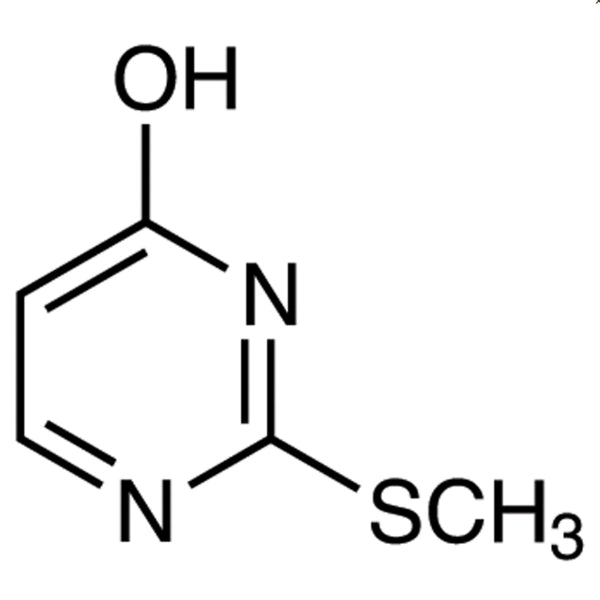
2-Methylthio-4-pyrimidinol is a chemical compound widely used as a building block in the synthesis of heterocyclic compounds. It plays a crucial role in organic chemistry laboratories, where it serves as a key intermediate in the formation of pyrimidine-based structures. These structures are fundamental components of many biologically active molecules, including nucleotides and pharmaceuticals. Its presence in various chemical reactions makes it an essential tool for researchers aiming to develop new compounds with therapeutic or industrial applications.
The compound’s unique reactivity stems from its molecular structure, which includes a methylthio group and a pyrimidine ring. These functional groups enable it to participate in a wide range of chemical transformations, such as substitution reactions and bond formation processes. This versatility makes it a preferred choice for chemists working on complex molecule synthesis. Its ability to interact with different reagents and conditions enhances its utility in both academic and industrial research settings.
In Indonesian laboratories, 2-Methylthio-4-pyrimidinol is commonly used in research projects related to drug development, organic chemistry, and the analysis of complex compounds. Its availability in the local market supports academic institutions and research organizations in conducting advanced chemical studies. The compound’s role in synthesizing bioactive molecules makes it a valuable resource for scientists in Indonesia.
- Drug development research utilizes 2-Methylthio-4-pyrimidinol to synthesize potential therapeutic agents due to its structural similarity to nucleotide bases.
- Organic chemistry experiments benefit from this compound as a versatile building block for creating heterocyclic frameworks essential in pharmaceutical and agrochemical applications.
- Analytical chemistry studies employ it for the synthesis of reference standards used in the identification and quantification of complex organic molecules.
- Bioorganic research leverages its reactivity to explore new synthetic pathways for compounds with biological activity.
- Academic research in Indonesian universities frequently incorporates this compound in teaching and experimental modules focused on heterocyclic chemistry.
| Brand | TCI |
|---|---|
| CAS number | 5751-20-2 |
| Molecular formula | — |
| Purity | — |
| Category | Chemistry > Building Blocks > Heterocyclic Building Blocks |
| Pack sizes | 25 g, 100 g |
| Physical form | Solid |
| Storage | Store in a cool, dry place away from light and moisture |
This compound should be stored in a cool, dry environment, away from direct sunlight and moisture to maintain its chemical integrity. It is recommended to use airtight containers made of glass or high-density polyethylene to prevent contamination and degradation. Due to its reactivity, it should be handled with care in a well-ventilated laboratory setting. Avoid exposure to strong oxidizing agents or incompatible substances. Proper personal protective equipment, such as gloves and safety goggles, should be worn during handling to ensure laboratory safety. Regular monitoring of storage conditions is advised to ensure the compound remains stable and suitable for use in chemical experiments.
—
Produk Terkait
-
TCI B5774 5,10-Bis(4,4,5,5-tetramethyl-1,3,2-dioxaborolan-2-yl)naphtho[1,2-c:5,6-c']bis([1,2,5]oxadiazole)
Regular price Rp 10.255.350,00Regular price -
Dihydroiodide TCI B6569
Regular price From Rp 1.936.200,00Regular price -
Trifluoromethanesulfonate TCI B7003
Regular price From Rp 1.936.200,00Regular price
![5,10-Bis(4,4,5,5-tetramethyl-1,3,2-dioxaborolan-2-yl)naphtho[1,2-c:5,6-c']bis([1,2,5]oxadiazole) - TCI B5774 - AMI Scientific](http://amiscientific.com/cdn/shop/files/TCI2510B5774.jpg?v=1769180228&width=533)