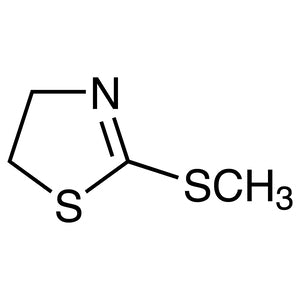
2-(Methylthio)-2-thiazoline is a heterocyclic chemical compound widely used in laboratory settings for its structural versatility and reactivity. As a building block in organic and pharmaceutical research, it plays a key role in the synthesis of complex molecules with biological activity. Its unique sulfur and nitrogen-containing ring structure makes it an essential component in the development of new drugs and chemical compounds. This compound is particularly valued for its ability to participate in various chemical reactions such as substitution, reduction, and oxidation, making it a flexible tool for synthetic chemists.
The chemical properties of 2-(Methylthio)-2-thiazoline, including its stability under controlled conditions, make it a preferred choice for laboratory applications. However, it is sensitive to moisture and air exposure, requiring careful handling and storage. Its reactivity and structural complexity allow researchers to tailor its behavior in different synthetic pathways. This adaptability ensures that it remains a valuable resource in both academic and industrial research environments.
In Indonesian laboratories, 2-(Methylthio)-2-thiazoline is commonly used in organic chemistry and pharmacology research. Local scientists and researchers rely on this compound to develop new compounds with potential therapeutic applications. Its presence in scientific studies underscores its importance in advancing chemical and pharmaceutical knowledge in the region.
- Organic synthesis applications benefit from this compound due to its heterocyclic structure and reactivity, enabling the creation of complex molecules with biological activity.
- Pharmaceutical research utilizes this compound as a building block for developing new drug candidates with targeted therapeutic effects.
- Heterocyclic compound studies often incorporate this material to explore its chemical behavior and potential for structural modifications.
- Chemical reaction testing relies on its ability to participate in substitution, reduction, and oxidation reactions, providing valuable data for synthetic pathways.
- Structural analysis in research laboratories uses this compound to investigate the properties of sulfur and nitrogen-containing ring systems.
| Brand | TCI |
|---|---|
| CAS number | 19975-56-5 |
| Molecular formula | — |
| Purity | — |
| Category | Chemistry > Building Blocks > Heterocyclic Building Blocks |
| Pack sizes | — |
| Physical form | — |
| Storage | Requires protection from moisture and air exposure |
This compound should be stored in a cool, dry place away from moisture and air exposure to maintain its chemical integrity. It is recommended to use airtight containers made of glass or high-density polyethylene to prevent degradation. Due to its sensitivity, it should be handled in a controlled environment with proper ventilation. Laboratory personnel should wear appropriate personal protective equipment, such as gloves and safety goggles, when working with this material. Regular monitoring of storage conditions is essential to ensure the compound remains stable and usable for research purposes.
—
Produk Terkait
-
2-Acetyl-2-thiazoline TCI A3264
Regular price From Rp 1.829.100,00Regular price -
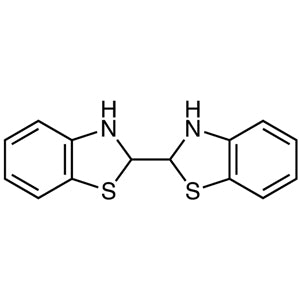
2,2'-Bibenzothiazoline TCI B0377
Regular price From Rp 1.008.000,00Regular price -
2-AminothiazolineHydrochloride TCI A0936
Regular price From Rp 1.431.150,00Regular price -
2-Methyl-4-ethylthiazoline TCI M0689
Regular price Rp 5.432.700,00Regular price -
3-Methyl-4-phenylthiazoline-2-thione TCI M0355
Regular price Rp 9.223.200,00Regular price -
2-Methylthiazoline TCI M0285
Regular price From Rp 3.100.650,00Regular price -
2-Mercaptothiazoline TCI M0065
Regular price From Rp 769.650,00Regular price -
4,5-Bis(methylthio)-1,3-dithiole-2-thione TCI B1778
Regular price Rp 3.605.700,00Regular price