

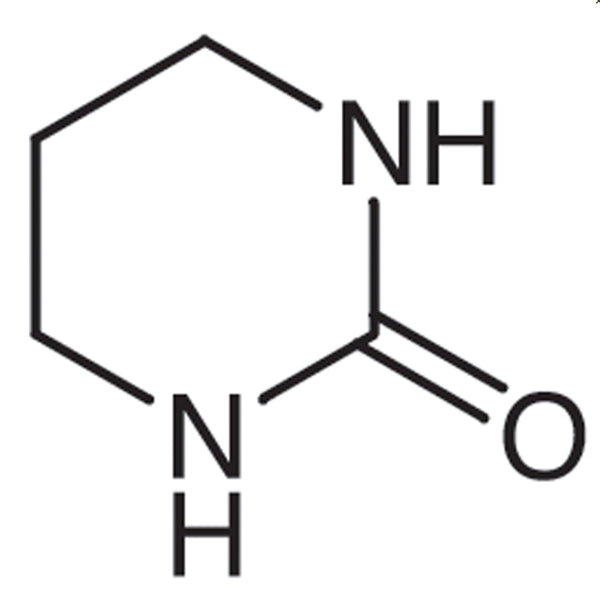
Tetrahydro-2-pyrimidinone (THP) is a chemical compound widely used in organic synthesis as a building block. It plays a crucial role in the formation of complex molecular structures required in various chemical reactions. THP is a versatile reagent that supports the development of heterocyclic compounds and their derivatives. Its stable chemical structure makes it a reliable choice for laboratory applications. THP is known for its excellent chemical properties, including appropriate reactivity for different reaction conditions. It is non-corrosive and relatively easy to obtain in the chemical market. These characteristics make THP a popular material among scientists and researchers.
THP is preferred due to its chemical stability and reactivity. It exhibits good solubility in common organic solvents, which facilitates its use in various synthetic processes. Its inert nature allows it to be compatible with a wide range of reagents and catalysts. The compound is also resistant to environmental factors, making it suitable for long-term storage and consistent performance. These properties ensure that THP remains a reliable and efficient component in laboratory workflows. Its ability to participate in multiple reaction types further enhances its value in chemical research.
In Indonesian laboratories, THP is extensively used in organic chemistry research, particularly in the synthesis of heterocyclic compounds. It is also commonly applied in pharmacological and food chemistry studies. Due to its reliability and adaptability, THP is a fundamental material in many research projects. Its widespread use highlights its importance in both academic and industrial chemical applications.
Related TCI products
- TCI D2014 7226-23-5 1,3-Dimethyl-3,4,5,6-tetrahydro-2(1H)-pyrimidinone
- TCI T4069 4424-80-0 1,3,4,5-Tetrahydro-2H-1-benzazepin-2-one
- TCI T2635 19576-08-0 2,3,7,7a-Tetrahydro-7a-methyl-1H-indene-1,5(6H)-dione
- TCI T2376 35308-68-0 1,5,6,7-Tetrahydro-2-methyl-4H-indol-4-one
- TCI T1347 826-73-3 6,7,8,9-Tetrahydro-5H-benzocyclohepten-5-one
- TCI B6346 4534-73-0 Tetrahydro[3,3'-bifuran]-2,2',5,5'-tetrone
- Organic synthesis is a primary application for THP, as it serves as a key building block in the creation of complex molecular structures.
- Heterocyclic compound development benefits from THP's stability and reactivity, enabling the formation of diverse chemical frameworks.
- Pharmaceutical research utilizes THP in the synthesis of drug-related compounds, contributing to the development of new therapeutic agents.
- Food chemistry applications involve THP in the study of flavor compounds and food additives, supporting nutritional and sensory research.
- Analytical chemistry uses THP as a standard reference material for calibration and quality control in chemical analysis procedures.
| Brand | TCI |
|---|---|
| CAS number | 1852-17-1 |
| Molecular formula | — |
| Purity | — |
| Category | Chemistry > Building Blocks > Non-Heterocyclic Building Blocks |
| Pack sizes | Available in various quantities as per supplier specifications |
| Physical form | Solid or liquid, depending on the specific product formulation |
| Storage | Store in a cool, dry place away from direct sunlight and moisture |
THP should be stored in a cool, dry environment to maintain its chemical integrity. It is recommended to keep it in airtight containers to prevent exposure to moisture and air. Since THP is non-corrosive, it is compatible with standard laboratory storage conditions. However, it should be handled with care to avoid contamination. Proper labeling and secure storage are essential to ensure safety and prevent accidental use. Regular inspection of storage conditions is advised to maintain the quality and usability of the compound.
—
Produk Terkait
-
1,3-Dimethyl-3,4,5,6-tetrahydro-2(1H)-pyrimidinone TCI D2014
Regular price From Rp 610.050,00Regular price -
1,3,4,5-Tetrahydro-2H-1-benzazepin-2-one TCI T4069
Regular price From Rp 1.696.800,00Regular price -
2,3,7,7a-Tetrahydro-7a-methyl-1H-indene-1,5(6H)-dione TCI T2635
Regular price From Rp 2.306.850,00Regular price -
1,5,6,7-Tetrahydro-2-methyl-4H-indol-4-one TCI T2376
Regular price From Rp 1.405.950,00Regular price -
6,7,8,9-Tetrahydro-5H-benzocyclohepten-5-one TCI T1347
Regular price From Rp 2.094.750,00Regular price -
Tetrahydro[3,3'-bifuran]-2,2',5,5'-tetrone TCI B6346
Regular price From Rp 875.700,00Regular price -
6-Methyl-5-propyl-4(1H)-pyrimidinone TCI M1635
Regular price Rp 1.326.150,00Regular price -
4(3H)-Pyrimidinone TCI H1000
Regular price From Rp 795.900,00Regular price




![Tetrahydro[3,3'-bifuran]-2,2',5,5'-tetrone (CAS 4534-73-0) - TCI B6346 - AMI Scientific](http://amiscientific.com/cdn/shop/files/TCI2510B6346.jpg?v=1768193651&width=533)

