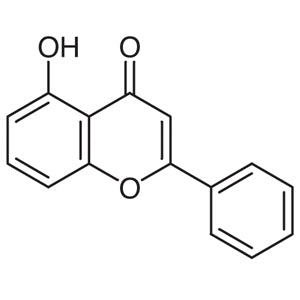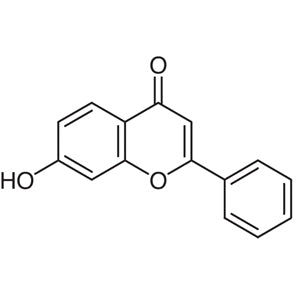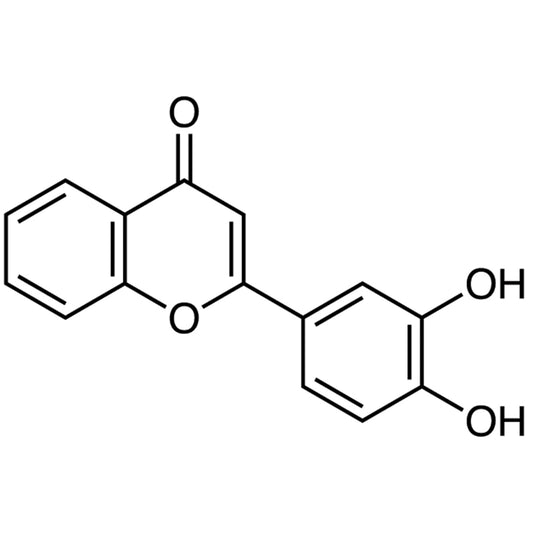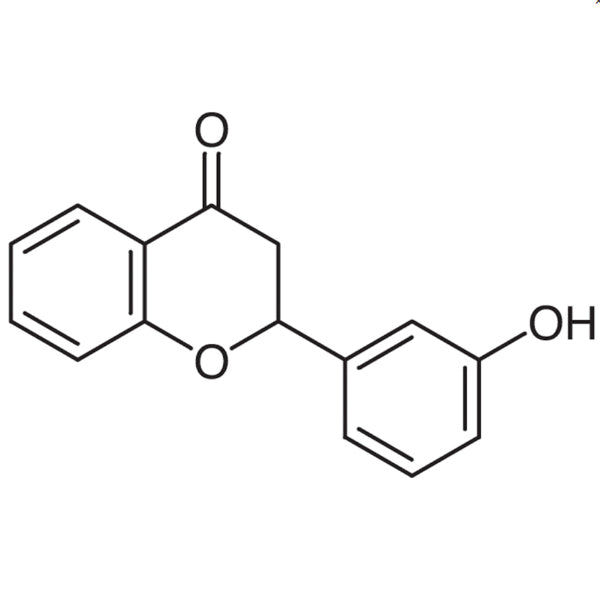
3'-Hydroxyflavanone is a chemical compound belonging to the flavanone family, which is a subset of phenylpropanoids. It plays a crucial role in biochemical and pharmacological research due to its ability to interact with various enzymes and proteins. This compound is widely used in laboratories for its versatility and chemical stability, making it an essential tool for researchers exploring biological activity and molecular mechanisms. Its presence in natural sources also makes it valuable for studies on plant metabolism and secondary metabolite biosynthesis.
One of the key properties that make 3'-Hydroxyflavanone a preferred choice is its molecular structure, which allows for diverse chemical reactions and modifications. Its solubility in organic solvents enhances its usability in analytical methods and synthetic processes. Additionally, its stability under various experimental conditions ensures consistent results, making it reliable for both qualitative and quantitative studies. These characteristics make it a favored reagent in both academic and industrial research settings.
In Indonesian laboratories, 3'-Hydroxyflavanone is commonly used in biomedical and environmental research. It is integral to experiments aimed at developing new drugs, understanding disease mechanisms, and assessing the impact of pollutants on biological systems. Its role in antioxidant and anti-inflammatory activity studies further underscores its importance in the scientific community. Researchers in Indonesia rely on this compound for its reliability and applicability across multiple research domains.
- Biochemical Research: 3'-Hydroxyflavanone is used to study enzyme interactions and protein binding due to its chemical stability and reactivity.
- Drug Development: It serves as a building block for synthesizing bioactive compounds, supporting pharmaceutical research and compound screening.
- Anti-inflammatory Studies: Its potential to modulate inflammatory pathways makes it ideal for evaluating anti-inflammatory activity in biological systems.
- Environmental Toxicology: It is used to assess the impact of pollutants on cellular and molecular processes, aiding in environmental risk assessment.
- Spectroscopic Analysis: Its complex molecular structure allows for detailed spectroscopic studies, supporting structural elucidation and molecular characterization.
| Brand | TCI |
|---|---|
| CAS number | 92496-65-6 |
| Molecular formula | — |
| Purity | — |
| Category | Life Science > Biochemicals and Reagents > Phenylpropanoids, Aromatic Polyketides |
| Pack sizes | Available in various quantities as per standard laboratory requirements |
| Physical form | Solid or crystalline, depending on the specific formulation |
| Storage | Store in a cool, dry place away from light and moisture |
3'-Hydroxyflavanone should be stored in a cool, dry environment, away from direct sunlight and moisture. It is recommended to use airtight containers to prevent exposure to air and humidity, which can affect its stability. When handling, ensure proper ventilation to avoid inhalation of vapors. Avoid contact with skin and eyes, and use appropriate personal protective equipment such as gloves and safety goggles. It is important to keep the compound away from incompatible substances such as strong oxidizing agents. Proper labeling and storage conditions are essential to maintain its integrity and ensure safe usage in laboratory settings.
—
Produk Terkait
-
6-Hydroxyflavanone TCI H1027
Regular price From Rp 1.298.850,00Regular price -
4'-Hydroxyflavanone TCI H1026
Regular price Rp 3.578.400,00Regular price -
7-Hydroxyflavanone TCI H1006
Regular price Rp 1.776.600,00Regular price -
5-Hydroxyflavone TCI H1238
Regular price Rp 5.089.350,00Regular price -
7-Hydroxyflavone TCI H0852
Regular price From Rp 903.000,00Regular price -
6-Hydroxyflavone TCI H0851
Regular price From Rp 505.050,00Regular price -
3-Hydroxyflavone TCI H0379
Regular price From Rp 1.140.300,00Regular price -
3',4'-Dihydroxyflavone TCI D4884
Regular price From Rp 2.359.350,00Regular price