Hexaphenylbenzene is an aromatic hydrocarbon built around a central benzene ring bearing a phenyl group at each of its six positions. Because the six peripheral rings cannot lie coplanar with the core owing to steric repulsion, the molecule adopts a highly distinctive propeller shape and has become a classic teaching example in discussions of molecular packing and hindered rotation. In the laboratory it serves as an important starting material on the route to large polycyclic aromatic hydrocarbons, and as a model molecule in organic materials chemistry research.
The properties that make this compound a preferred choice are its high thermal stability, its rigid molecular framework, and its ability to undergo Scholl-type cyclodehydrogenation to form extended aromatic systems such as hexa-peri-hexabenzocoronene. The propeller geometry with six phenyl arms also makes it a versatile core for constructing molecular rotors, dendrimers, and organic porous materials. Its non-polar character and limited solubility in common solvents are a direct consequence of the large aromatic framework, and these traits are in fact exploited during purification by recrystallization or selective precipitation.
In Indonesian laboratories, hexaphenylbenzene is typically encountered in university and institutional research groups working on organic synthesis, materials chemistry, and nanographene precursors. It is handled as a research-scale building block rather than a bulk commodity, drawn on for multi-step synthetic sequences, method development, and graduate-level work where a well-defined, rigid aromatic scaffold is required. Its stability makes it convenient to store and weigh out under ordinary laboratory conditions typical of the region.
TCI brochures (PDF)
- Nanocarbon Materials 2026-09-30 · p. 9
- Building Blocks for Organic Semiconductor 2026-03-24 · p. 34
Related TCI products
- TCI P2693 1165-53-3 1,2,4-Triphenylbenzene
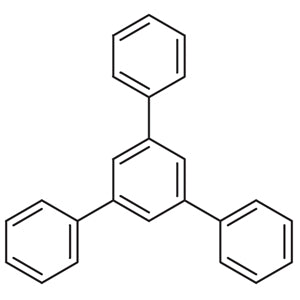
- TCI T0509 612-71-5 1,3,5-Triphenylbenzene
- TCI B6284 259-79-0 Biphenylene
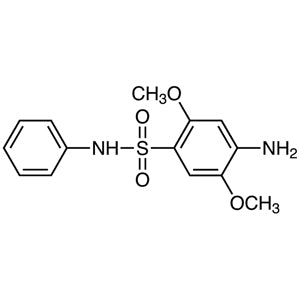
- TCI A1987 52298-44-9 4-Amino-2,5-dimethoxy-N-phenylbenzenesulfonamide
- TCI T3689 185690-39-5 N1-(Naphthalen-1-yl)-N4,N4-bis(4-(naphthalen-1-yl(phenyl)amino)phenyl)-N1-phenylbenzene-1,4-diamine
- TCI N0298 1081-77-2 Nonylbenzene
- Precursor to polycyclic aromatic hydrocarbons: the six phenyl arms provide exactly the carbon framework needed for oxidative ring closure into extended fused aromatic systems.
- Scholl-type cyclodehydrogenation studies: it is the textbook substrate for this transformation, allowing reaction conditions and catalysts to be benchmarked against a well-characterized conversion.
- Synthesis of hexa-peri-hexabenzocoronene: the compound is the direct starting material for this nanographene target, widely studied in organic electronics and materials research.
- Molecular rotor and dendrimer construction: the rigid propeller core with six substitutable arms serves as a versatile central scaffold for building larger branched architectures.
- Organic porous material development: the non-planar, sterically congested geometry resists close packing, which researchers exploit when designing frameworks with intrinsic free volume.
| Brand | TCI |
|---|---|
| CAS number | 992-04-1 |
| Molecular formula | — |
| Purity | — |
| Category | Chemistry > Building Blocks > Non-Heterocyclic Building Blocks |
| Pack sizes | available in standard research-scale packaging; please refer to the current catalogue listing for the sizes offered |
| Physical form | solid aromatic hydrocarbon |
| Storage | keep in a cool, dry place in a tightly closed container |
Store the container tightly closed in a cool, dry, well-ventilated area away from direct sunlight, strong oxidizing agents, and sources of ignition. Amber glass bottles or the original supplier packaging are suitable, and the container should be resealed promptly after each use to limit moisture uptake and contamination. Handle the solid in a fume hood when weighing or transferring, since fine powders can become airborne. Wear safety glasses, gloves, and a laboratory coat, and avoid inhalation of dust or contact with skin and eyes. Consult the manufacturer's safety data sheet before use, and dispose of residues and contaminated materials through the laboratory's established chemical waste channels.
—
Product Categories
Produk Terkait
-
1,2,4-Triphenylbenzene TCI P2693
Regular price From Rp 1.378.650,00Regular price -
1,3,5-Triphenylbenzene TCI T0509
Regular price Rp 1.881.600,00Regular price -
Biphenylene TCI B6284
Regular price From Rp 2.782.500,00Regular price -
4-Amino-2,5-dimethoxy-N-phenylbenzenesulfonamide TCI A1987
Regular price Rp 3.446.100,00Regular price -
N1-(Naphthalen-1-yl)-N4,N4-bis(4-(naphthalen-1-yl(phenyl)amino)phenyl)-N1-phenylbenzene-1,4-diamine TCI T3689
Regular price Rp 5.990.250,00Regular price -
Nonylbenzene TCI N0298
Regular price Rp 2.147.250,00Regular price -
Anthracene TCI A0495
Regular price From Rp 584.850,00Regular price -
Acenaphthylene TCI A0005
Regular price From Rp 769.650,00Regular price