

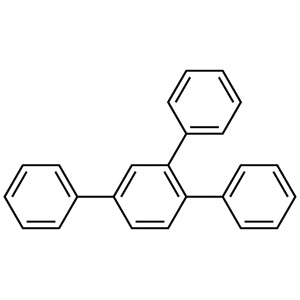
1,2,4-Triphenylbenzene is an organic compound widely used in various chemical reactions and the synthesis of complex molecules. It is a key building block in organic chemistry, offering versatility in experimental setups. This compound is commonly found in laboratory environments where researchers are engaged in the development of new chemical entities, including pharmaceuticals and industrial chemicals. Its unique structure, consisting of a benzene ring substituted with three phenyl groups at positions 1, 2, and 4, makes it a valuable resource for chemists seeking to explore molecular transformations.
The compound’s stable chemical structure and controlled reactivity make it a preferred choice for laboratory applications. It exhibits chemical inertness, which allows for long-term storage and use without significant degradation. This stability ensures consistent results in experiments, making it a reliable material for synthetic processes. Additionally, its ability to participate in substitution, oxidation, and catalytic reactions enhances its utility in a wide range of chemical operations. Its neutral physical properties and compatibility with various functional groups further increase its applicability in diverse chemical contexts.
In Indonesian laboratories, 1,2,4-Triphenylbenzene is frequently used in organic chemistry research, particularly in the synthesis of complex compounds. It is a common reagent in academic and industrial settings where the development of new chemical structures is essential. Its availability and reliability make it a staple in laboratories conducting advanced chemical studies and drug discovery projects. Its role in supporting scientific innovation is vital to the growth of chemical research in Indonesia.
Related TCI products
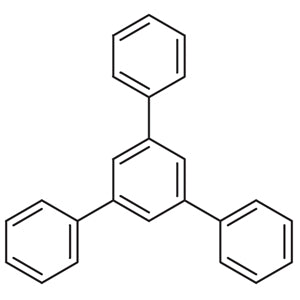
- TCI T0509 612-71-5 1,3,5-Triphenylbenzene
- TCI H1412 992-04-1 Hexaphenylbenzene
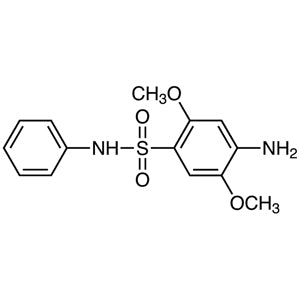
- TCI A1987 52298-44-9 4-Amino-2,5-dimethoxy-N-phenylbenzenesulfonamide
- TCI D0878 531-91-9 N,N'-Diphenylbenzidine
- TCI T3689 185690-39-5 N1-(Naphthalen-1-yl)-N4,N4-bis(4-(naphthalen-1-yl(phenyl)amino)phenyl)-N1-phenylbenzene-1,4-diamine
- TCI N0298 1081-77-2 Nonylbenzene
- Organic synthesis is a primary application where 1,2,4-Triphenylbenzene serves as a versatile building block for creating complex molecular structures.
- Pharmaceutical research benefits from its use in the development of new drugs, as it can act as a precursor or intermediate in synthetic pathways.
- Industrial chemical production often incorporates this compound due to its stability and compatibility with various reaction conditions.
- Analytical chemistry applications utilize it as a standard or reference material for spectroscopic and chromatographic analyses.
- Polymer science research employs it in the synthesis of specialty polymers, where its aromatic structure contributes to desired material properties.
| Brand | TCI |
|---|---|
| CAS number | 1165-53-3 |
| Molecular formula | — |
| Purity | — |
| Category | Chemistry > Building Blocks > Non-Heterocyclic Building Blocks |
| Pack sizes | Available in various quantities as per standard laboratory supply |
| Physical form | Solid, crystalline |
| Storage | Store in a cool, dry place away from direct sunlight |
1,2,4-Triphenylbenzene should be stored in a cool, dry environment to maintain its chemical stability and prevent degradation. It is recommended to keep it in a sealed container to minimize exposure to moisture and air. The compound is generally non-hazardous under normal conditions but should be handled with care to avoid direct contact with skin or inhalation. Suitable storage containers include glass or high-density polyethylene vessels that are resistant to chemical interactions. In laboratory settings, it is advisable to store it in a well-ventilated area and away from incompatible substances. Proper labeling and safe handling practices are essential to ensure the safety of laboratory personnel and the integrity of the compound.
—
Product Categories
Produk Terkait
-
1,3,5-Triphenylbenzene TCI T0509
Regular price Rp 1.881.600,00Regular price -
Hexaphenylbenzene TCI H1412
Regular price From Rp 1.749.300,00Regular price -
4-Amino-2,5-dimethoxy-N-phenylbenzenesulfonamide TCI A1987
Regular price Rp 3.446.100,00Regular price -
N,N'-Diphenylbenzidine TCI D0878
Regular price From Rp 1.326.150,00Regular price -
N1-(Naphthalen-1-yl)-N4,N4-bis(4-(naphthalen-1-yl(phenyl)amino)phenyl)-N1-phenylbenzene-1,4-diamine TCI T3689
Regular price Rp 5.990.250,00Regular price -
Nonylbenzene TCI N0298
Regular price Rp 2.147.250,00Regular price -
N,N,N'-Triphenylbenzidine TCI T2891
Regular price From Rp 2.386.650,00Regular price -
N,N'-Bis[4-(diphenylamino)phenyl]-N,N'-diphenylbenzidine TCI B5117
Regular price From Rp 1.696.800,00Regular price



![209980-53-0 N,N'-Bis[4-(diphenylamino)phenyl]-N,N'-diphenylbenzidine - AMI Scientific](http://amiscientific.com/cdn/shop/files/TCI2510B5117.jpg?v=1768815748&width=533)