4-Amino-2,5-dimethoxy-N-phenylbenzenesulfonamide is a chemical compound widely used in synthetic reactions to produce complex molecules with heterocyclic structures. As a building block in organic chemistry, it serves as a versatile intermediate that can be modified through various chemical reactions to yield more intricate compounds. This compound is particularly valuable in laboratory settings where the synthesis of bioactive or psychoactive substances is required. Its molecular structure provides a stable foundation for further chemical transformations, making it a key component in advanced synthetic pathways.
The compound’s reactivity and stability under controlled conditions make it a preferred choice for chemists. It can undergo substitution and coupling reactions with a range of reagents, including alkyl halides, acids, and bases. These properties allow it to be integrated into diverse synthetic strategies, enhancing its utility in both academic and industrial research. Its ability to participate in multiple reaction types without compromising structural integrity ensures its effectiveness in producing a wide array of target molecules.
In Indonesian laboratories, this compound is commonly used for scientific research, drug development, and the study of bioactive substances. Researchers in educational institutions and research organizations rely on it for experiments that require a reactive yet stable starting material. Its application in the synthesis of alkaloids and other pharmacologically active compounds underscores its importance in both basic and applied chemical research.
Related TCI products
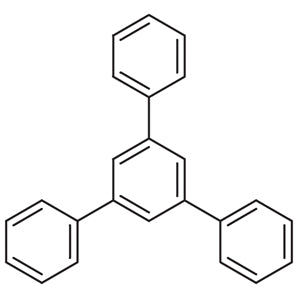
- TCI T0509 612-71-5 1,3,5-Triphenylbenzene
- TCI P2693 1165-53-3 1,2,4-Triphenylbenzene
- TCI H1412 992-04-1 Hexaphenylbenzene
- TCI A0279 6258-06-6 1-Amino-4-bromoanthraquinone-2-sulfonic Acid Sodium Salt
- TCI A0287 88-53-9 5-Amino-2-chlorotoluene-4-sulfonic Acid
- TCI A0337 842-15-9 Monopotassium 7-Amino-1,3-naphthalenedisulfonate Hydrate
- Synthetic chemistry for the preparation of heterocyclic compounds due to its versatile functional groups and reactivity.
- Drug development research as a building block for the synthesis of bioactive and psychoactive substances.
- Organic synthesis in academic laboratories for teaching and experimental purposes involving complex molecule formation.
- Pharmacological studies to explore the chemical properties of compounds with potential therapeutic applications.
- Bioactive compound research for the investigation of molecular structures with biological activity and pharmaceutical relevance.
| Brand | TCI |
|---|---|
| CAS number | 52298-44-9 |
| Molecular formula | — |
| Purity | — |
| Category | Chemistry > Building Blocks > Non-Heterocyclic Building Blocks |
| Pack sizes | Available in standard laboratory quantities as per supplier specifications |
| Physical form | Solid (as per typical chemical compound form) |
| Storage | Store in a cool, dry place away from direct sunlight and moisture |
This compound should be stored in a cool, dry environment to maintain its stability and prevent degradation. It is recommended to keep it in a sealed container to minimize exposure to moisture and air. Due to its reactivity, it should be handled with care, using appropriate personal protective equipment such as gloves and safety goggles. It is advisable to store it in a well-ventilated area to avoid any potential hazards associated with its chemical nature. Proper labeling of containers is essential for safe handling and to ensure that it is easily identifiable in a laboratory setting. Regular inspection of storage conditions is recommended to ensure the compound remains in optimal condition for use.
—
Produk Terkait
-
1,3,5-Triphenylbenzene TCI T0509
Regular price Rp 1.881.600,00Regular priceRp 1.315.650,00Sale price Rp 1.881.600,00 -
1,2,4-Triphenylbenzene TCI P2693
Regular price From Rp 1.378.650,00Regular priceRp 963.900,00Sale price From Rp 1.378.650,00 -
Hexaphenylbenzene TCI H1412
Regular price From Rp 1.749.300,00Regular priceRp 1.223.250,00Sale price From Rp 1.749.300,00 -
1-Amino-4-bromoanthraquinone-2-sulfonicAcidSodiumSalt TCI A0279
Regular price From Rp 822.150,00Regular priceRp 590.100,00Sale price From Rp 822.150,00 -
5-Amino-2-chlorotoluene-4-sulfonicAcid TCI A0287
Regular price From Rp 637.350,00Regular priceRp 445.200,00Sale price From Rp 637.350,00 -
Monopotassium7-Amino-1,3-naphthalenedisulfonateHydrate TCI A0337
Regular price From Rp 903.000,00Regular priceRp 631.050,00Sale price From Rp 903.000,00 -
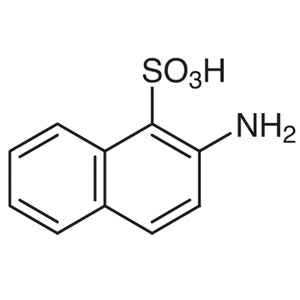
2-Amino-1-naphthalenesulfonicAcid TCI A0343
Regular price From Rp 477.750,00Regular priceRp 333.900,00Sale price From Rp 477.750,00 -
5-Amino-2-naphthalenesulfonicAcid TCI A0346
Regular price From Rp 717.150,00Regular priceRp 500.850,00Sale price From Rp 717.150,00