1,3,5-Triphenylbenzene is an organic chemical compound widely used as a building block in various chemical reactions and the synthesis of complex molecules. This compound is a key component in organic chemistry research, particularly in the development of heterocyclic compounds. Its stable aromatic structure makes it a reliable and versatile material for laboratory applications. In the lab, it serves as a foundational element that can be modified through substitution reactions or other chemical processes to create more complex functional compounds.
The compound's non-polar nature, along with its relatively high melting and boiling points, makes it suitable for applications requiring thermal stability. Its symmetric molecular structure and lack of heterocyclic components allow for predictable chemical behavior, making it ideal for precise and consistent research. These characteristics ensure that it remains a preferred choice for scientists aiming for reproducibility and accuracy in their experiments.
In Indonesian laboratories, 1,3,5-Triphenylbenzene is commonly used in scientific research, especially in organic chemistry and the synthesis of complex compounds. It is frequently found in university laboratories and research institutions focused on chemical development. Its reliability and versatility make it an essential material for a wide range of chemical studies and experiments.
TCI brochures (PDF)
- Nanocarbon Materials 2026-09-30 · p. 9
Related TCI products
- TCI P2693 1165-53-3 1,2,4-Triphenylbenzene
- TCI H1412 992-04-1 Hexaphenylbenzene
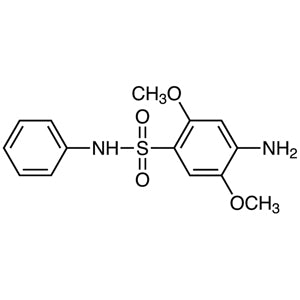
- TCI A1987 52298-44-9 4-Amino-2,5-dimethoxy-N-phenylbenzenesulfonamide
- TCI T3689 185690-39-5 N1-(Naphthalen-1-yl)-N4,N4-bis(4-(naphthalen-1-yl(phenyl)amino)phenyl)-N1-phenylbenzene-1,4-diamine
- TCI N0298 1081-77-2 Nonylbenzene
- TCI D0878 531-91-9 N,N'-Diphenylbenzidine
- Organic synthesis research utilizes 1,3,5-Triphenylbenzene as a building block due to its stable aromatic structure and predictable chemical behavior.
- Heterocyclic compound development benefits from this compound’s non-polar nature and symmetric molecular structure, enabling controlled chemical modifications.
- Thermal stability applications rely on its high melting and boiling points, making it suitable for reactions requiring elevated temperatures.
- Precise chemical reactions require the compound’s consistent performance and reproducibility, ensuring accurate experimental outcomes.
- Complex molecule synthesis leverages its versatility, allowing for substitution reactions to create a wide range of functional compounds.
| Brand | TCI |
|---|---|
| CAS number | 612-71-5 |
| Molecular formula | — |
| Purity | — |
| Category | Chemistry > Building Blocks > Non-Heterocyclic Building Blocks |
| Pack sizes | Available in various sizes as per standard laboratory supply |
| Physical form | Solid |
| Storage | Store in a cool, dry place away from direct sunlight |
This compound should be stored in a cool, dry environment, away from direct sunlight and sources of heat. It is recommended to use sealed containers made of materials resistant to chemical reactions, such as glass or high-density polyethylene. Due to its non-polar nature, it is important to handle it with appropriate personal protective equipment to avoid skin contact. In laboratory settings, it should be kept in a well-ventilated area to minimize exposure. Proper labeling and storage conditions ensure safety and maintain the compound’s chemical integrity over time.
—
Produk Terkait
-
1,2,4-Triphenylbenzene TCI P2693
Regular price From Rp 1.378.650,00Regular priceRp 963.900,00Sale price From Rp 1.378.650,00 -
Hexaphenylbenzene TCI H1412
Regular price From Rp 1.749.300,00Regular priceRp 1.223.250,00Sale price From Rp 1.749.300,00 -
4-Amino-2,5-dimethoxy-N-phenylbenzenesulfonamide TCI A1987
Regular price Rp 3.498.600,00Regular priceRp 2.462.250,00Sale price Rp 3.498.600,00 -
N1-(Naphthalen-1-yl)-N4,N4-bis(4-(naphthalen-1-yl(phenyl)amino)phenyl)-N1-phenylbenzene-1,4-diamine TCI T3689
Regular price Rp 6.042.750,00Regular priceRp 4.240.950,00Sale price Rp 6.042.750,00 -
Nonylbenzene TCI N0298
Regular price Rp 2.147.250,00Regular priceRp 1.501.500,00Sale price Rp 2.147.250,00 -
N,N'-Diphenylbenzidine TCI D0878
Regular price From Rp 1.378.650,00Regular priceRp 979.650,00Sale price From Rp 1.378.650,00 -
N,N,N'-Triphenylbenzidine TCI T2891
Regular price From Rp 2.439.150,00Regular priceRp 1.720.950,00Sale price From Rp 2.439.150,00 -
N,N'-Bis[4-(diphenylamino)phenyl]-N,N'-diphenylbenzidine TCI B5117
Regular price From Rp 1.749.300,00Regular priceRp 1.239.000,00Sale price From Rp 1.749.300,00