4-Hexylthiophene-2-carboxaldehyde is an organic compound widely used in semiconductor and materials research. It serves as a fundamental building block for creating organic materials with unique optical and electronic properties. Its molecular structure combines a long carbon chain with a thiophene group, which plays a key role in forming conjugated systems essential for semiconductor functionality. This compound is particularly valuable for its ability to participate in complex chemical reactions that lead to the development of advanced materials.
The compound's reactivity and capacity to form intricate molecular structures make it a preferred choice in the synthesis of organic semiconductors. Its chemical stability under controlled conditions allows for reliable experimental outcomes, while its sensitivity to moisture and air necessitates careful handling. These properties make it a versatile tool in the hands of researchers aiming to innovate in the field of optoelectronics and advanced material science.
In Indonesian laboratories, 4-Hexylthiophene-2-carboxaldehyde is commonly used in research focused on organic light-emitting diodes (OLEDs) and other optoelectronic devices. Its role in developing materials with high conductivity and light-emission properties is critical for advancing technology in both academic and industrial settings. Researchers in Indonesia rely on this compound for its consistent performance and adaptability in various synthetic processes.
TCI brochures (PDF)
- Thiophenes 2026-06-29 · p. 3
- Building Blocks for Organic Semiconductor 2026-03-24 · p. 26
Related TCI products
- Organic Semiconductor Synthesis: This compound is ideal for creating conjugated organic materials due to its thiophene group, which enhances electronic conductivity and optical properties.
- OLED Material Development: Its ability to form complex molecular structures makes it a key component in the development of organic light-emitting diodes.
- Thin Film Fabrication: It is used in the synthesis of thin films for optoelectronic applications, offering tunable electronic and optical characteristics.
- Material Characterization Studies: Researchers use it to study the behavior of organic materials under different conditions, aiding in the design of advanced semiconductors.
- Photovoltaic Research: Its unique optical properties make it suitable for photovoltaic applications, where efficient light absorption and charge transport are essential.
| Brand | TCI |
|---|---|
| CAS number | 222554-30-5 |
| Molecular formula | — |
| Purity | — |
| Category | Materials Science > Material Building Blocks > Small Molecule Semiconductor Building Blocks |
| Pack sizes | Available in various quantities as per standard laboratory supply |
| Physical form | Solid |
| Storage | Requires storage in a dry, cool, and dark environment to prevent degradation |
This compound should be stored in a dry, cool, and dark environment to prevent moisture absorption and degradation. It is recommended to use airtight containers made of glass or high-density polyethylene to minimize exposure to air and humidity. Due to its sensitivity, it should be handled in a controlled laboratory environment with proper ventilation. Researchers should wear appropriate personal protective equipment, such as gloves and safety goggles, when working with this material. Avoid direct contact with skin and eyes, and ensure that spillage is promptly cleaned with suitable solvents. Proper storage and handling are essential to maintain the compound's integrity and ensure safe usage in laboratory settings.
—
Produk Terkait
-
2-Bromo-3-cyclohexylthiophene TCI B5420
Regular price From Rp 3.763.200,00Regular price -
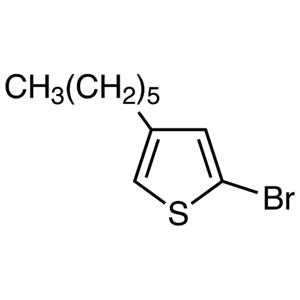
2-Bromo-4-hexylthiophene TCI B3985
Regular price Rp 4.240.950,00Regular price -
2-Bromo-5-hexylthiophene TCI B3812
Regular price Rp 4.028.850,00Regular price -
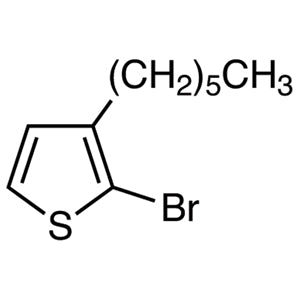
2-Bromo-3-hexylthiophene TCI B3507
Regular price From Rp 2.704.800,00Regular price -
2,5-Dibromo-3-cyclohexylthiophene TCI D5247
Regular price Rp 6.679.050,00Regular price -
3-Cyclohexylthiophene TCI C3400
Regular price From Rp 1.936.200,00Regular price -
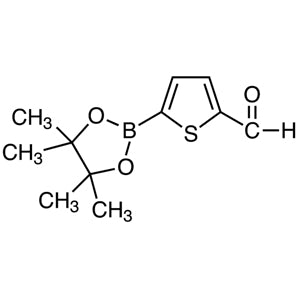
5-(4,4,5,5-Tetramethyl-1,3,2-dioxaborolan-2-yl)thiophene-2-carboxaldehyde TCI T3485
Regular price Rp 1.961.400,00Regular price -
2,2':5',2''-Terthiophene-5-carboxaldehyde TCI T1805
Regular price Rp 5.141.850,00Regular price