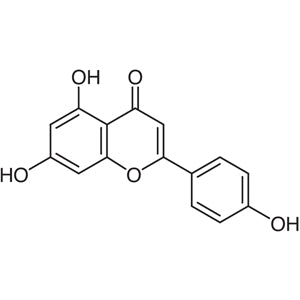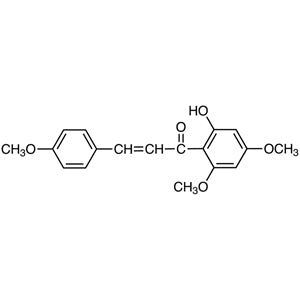
Flavokawain A is a chemical compound widely used in pharmacological and biochemical research. As a key reagent in experimental studies, it plays a critical role in investigating the biological effects of compounds on cells and tissues. This compound is commonly found in extracts from specific plant sources and is valued for its diverse biological activities, including antioxidant and anti-inflammatory properties. Its presence in natural extracts makes it a valuable tool for researchers exploring the potential of natural compounds in drug development.
Flavokawain A is preferred due to its high purity and consistent production, ensuring reliable results in laboratory experiments. Its complex molecular structure allows for interactions with various biological targets, making it ideal for studies requiring specific compound activity. The compound's stability and reproducibility further enhance its suitability for research applications. Its versatility supports a wide range of experimental designs, from basic biochemical assays to advanced pharmaceutical research.
In Indonesian laboratories, Flavokawain A is commonly used in pharmacology, biochemistry, and health sciences. It is frequently employed in studies examining the impact of natural compounds on chronic diseases and metabolic disorders. Researchers rely on its availability in various packaging formats to meet the needs of different experimental scales. Its relevance in both academic and industrial research underscores its importance in the scientific community.
TCI brochures (PDF)
- Phytochemicals 2025-12-17 · p. 13
- Antimicrobials and Antitumor Agents for Research and Experimental Use 2025-04-24 · p. 19
- Pharmaceutical Ingredients for Research and Experimental Use 2026-03-09 · p. 19
- Reagents for Biological Research 2025-03-11 · p. 35
- Pharmacological research: Flavokawain A is used to study the effects of natural compounds on cellular responses and disease mechanisms.
- Biochemical assays: It supports experiments analyzing antioxidant and anti-inflammatory properties of plant-derived compounds.
- Drug development: The compound is integral to the screening of potential therapeutic agents for chronic and metabolic conditions.
- Natural product analysis: It aids in the identification and characterization of bioactive compounds from plant extracts.
- Toxicological studies: Flavokawain A helps in evaluating the safety and biological impact of compounds on living systems.
| Brand | TCI |
|---|---|
| CAS number | 3420-72-2 |
| Molecular formula | — |
| Purity | — |
| Category | Life Science > Biochemicals and Reagents > Pharmaceutical Research Reagents |
| Pack sizes | Available in multiple packaging options for different experimental needs |
| Physical form | Solid (if applicable, based on standard product description) |
| Storage | Store in a cool, dry place away from light and moisture |
Flavokawain A should be stored in a cool, dry environment to maintain its stability and prevent degradation. It is recommended to keep the compound in airtight containers to avoid exposure to moisture and light, which can affect its integrity. Laboratory personnel should handle the material with care, using appropriate personal protective equipment such as gloves and safety goggles. Due to its chemical nature, it should be stored away from incompatible substances to ensure safety. Regular monitoring of storage conditions is essential to maintain the quality of the reagent for reliable experimental outcomes.
—
Product Categories
- Biochemicals and ReagentsPharmaceutical Research Reagents (for Experimental Use)Antitumor Research Reagents (for Experimental Use)
- Biochemicals and ReagentsPhenylpropanoids, Aromatic PolyketidesAromatic Polyketides
- Cell BiologyApoptosisApoptosis Inducers
- Cell BiologyCell Signaling and NeuroscienceKinase/Phosphatase Biology
- Cell BiologyNutrition ResearchPhytochemicals
- Pharmaceutical Development and Drug Discovery ResearchPharmaceutical Research Reagents (for Experimental Use)Antitumor Research Reagents (for Experimental Use)
Produk Terkait
-
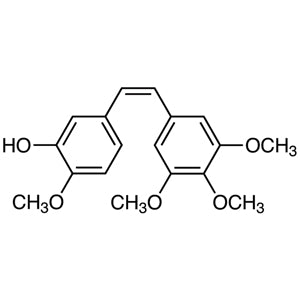
CombretastatinA4 TCI C2520
Regular price Rp 18.893.700,00Regular price -
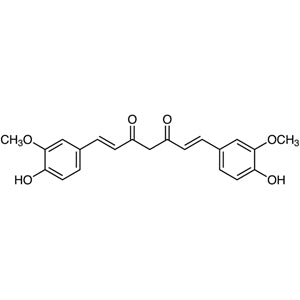
Curcumin(Synthetic) TCI C2302
Regular price From Rp 1.193.850,00Regular price -
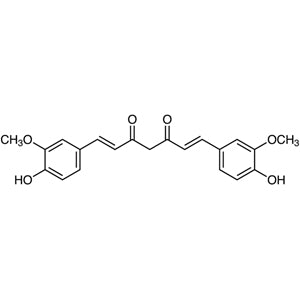
Curcumin(Natural) TCI C0434
Regular price From Rp 637.350,00Regular price -
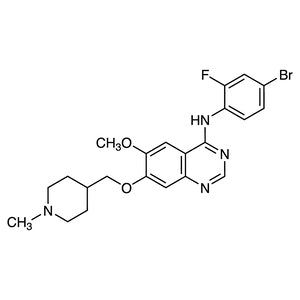
Vandetanib TCI V0199
Regular price From Rp 2.121.000,00Regular price -
Butein TCI B3803
Regular price From Rp 3.048.150,00Regular price -
5-Aminoimidazole-4-carboxamide1-beta-D-Ribofuranoside TCI A2528
Regular price Rp 2.545.200,00Regular price -
Apigenin TCI A1514
Regular price Rp 5.778.150,00Regular price -
Piperlongumine TCI P2361
Regular price Rp 2.041.200,00Regular price