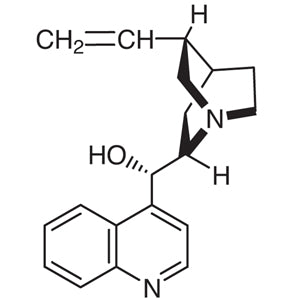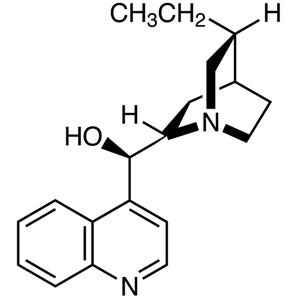
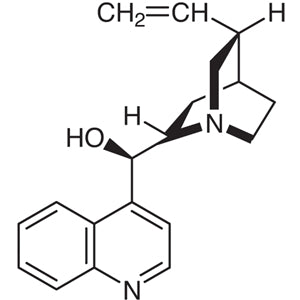
Hydrocinchonidine is a chemical compound classified under organocatalysts, widely used in laboratory settings to accelerate chemical reactions without directly participating in the chemical process. As an organocatalyst, it plays a crucial role in catalysis by lowering the activation energy required for reactions to proceed efficiently. This compound is particularly valuable in synthetic chemistry, where it helps achieve higher reaction yields and selectivity. Its application spans various fields, including organic synthesis and inorganic chemistry, making it a versatile tool for researchers.
One of the key properties that make Hydrocinchonidine a preferred choice is its molecular structure, which allows for effective interaction with a wide range of substrates. This versatility enables it to be used in multiple reaction types, including asymmetric syntheses, where precise control over product stereochemistry is essential. Additionally, Hydrocinchonidine exhibits good stability under diverse chemical conditions, which enhances its reliability in laboratory experiments. Its relatively low toxicity also contributes to a safer working environment, reducing potential risks for laboratory personnel.
In Indonesian laboratories, Hydrocinchonidine is commonly used in chemical research, especially in catalysis and organic synthesis. It is particularly relevant for academic institutions and industrial research centers that focus on developing new chemical processes and materials. Its effectiveness and safety profile make it a go-to choice for many researchers in the field of chemistry.
TCI brochures (PDF)
- Asymmetric Organocatalysts 2025-06-12 · p. 8
- Asymmetric synthesis: Hydrocinchonidine is ideal for asymmetric reactions due to its ability to control stereochemistry, making it suitable for complex organic molecule synthesis.
- Organic catalysis: It is widely used in organic chemistry for its catalytic efficiency and stability, enabling efficient reaction pathways in various synthetic processes.
- Inorganic chemistry research: Hydrocinchonidine supports catalytic processes in inorganic reactions, offering a reliable alternative to traditional metal-based catalysts.
- Green chemistry initiatives: Its low toxicity and environmental safety make it a preferred choice for sustainable and eco-friendly chemical processes.
- Teaching and research laboratories: It is commonly used in educational and research settings to demonstrate catalytic mechanisms and reaction optimization.
| Brand | TCI |
|---|---|
| CAS number | 485-64-3 |
| Molecular formula | — |
| Purity | — |
| Category | Chemistry > Catalysis and Inorganic Chemistry > Organocatalysts [Catalysis] |
| Pack sizes | Available in various quantities as per supplier specifications |
| Physical form | Solid or powder, depending on the specific product variant |
| Storage | Store in a cool, dry place away from direct sunlight and moisture |
Hydrocinchonidine should be stored in a cool, dry environment to maintain its chemical stability and prevent degradation. It is recommended to use airtight containers made of glass or high-density polyethylene to avoid contamination and exposure to moisture. Due to its relatively low toxicity, handling precautions are generally less stringent than with other organic catalysts, but gloves and proper ventilation should still be used when working with the compound. It is important to keep the material away from incompatible substances such as strong oxidizers or acids. Regular inspection of storage conditions ensures the compound remains effective and safe for use in laboratory applications.
—
Produk Terkait
-
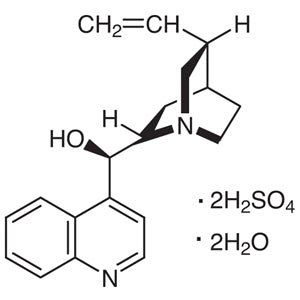
CinchonidineSulfateDihydrate TCI C0349
Regular price Rp 1.273.650,00Regular price -
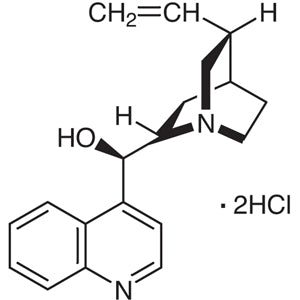
CinchonidineDihydrochloride TCI C0348
Regular price Rp 1.458.450,00Regular price -
Cinchonidine TCI C0347
Regular price From Rp 2.386.650,00Regular price -
Hydrocinchonine TCI H1701
Regular price From Rp 3.710.700,00Regular price -
N-BenzylcinchonidiniumChloride[ChiralPhase-TransferCatalyst] TCI B1683
Regular price Rp 3.922.800,00Regular price -
Cinchonine TCI C0350
Regular price From Rp 1.538.250,00Regular price -
H-DL-Tic-OH TCI T4195
Regular price Rp 2.359.350,00Regular price -
N-(2-Thiophenesulfonyl)-L-prolinamide TCI T3080
Regular price Rp 3.155.250,00Regular price

![69257-04-1 N-Benzylcinchonidinium Chloride [Chiral Phase-Transfer Catalyst] - AMI Scientific](http://amiscientific.com/cdn/shop/files/TCI2510B1683.jpg?v=1767087605&width=533)