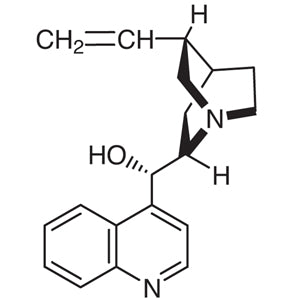
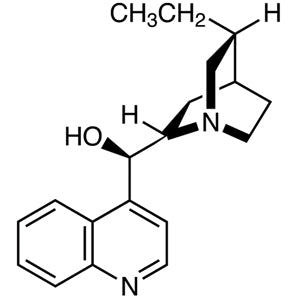
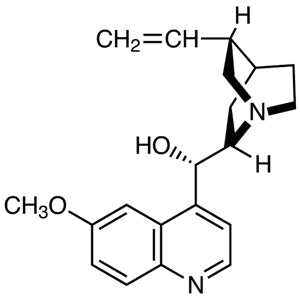
Hydrocinchonine, with the CAS number 485-65-4, is a chemical compound classified under organocatalysts, playing a vital role in catalytic reactions within the laboratory setting. It is widely used in chemical synthesis to accelerate reaction processes without becoming part of the final product. This compound is particularly valuable in organic and inorganic chemistry due to its ability to interact with substrates and lower the activation energy required for reactions to occur. Its application spans various fields, including asymmetric catalysis and substitution reactions, making it an essential tool for researchers aiming to improve reaction efficiency and sustainability.
One of the key properties that make Hydrocinchonine a preferred choice is its chemical stability and environmental friendliness. Unlike some traditional catalysts, it does not produce harmful byproducts or toxic waste, aligning with modern green chemistry principles. Additionally, its thermal stability allows it to function effectively under a wide range of reaction conditions, enhancing its versatility in laboratory settings. These characteristics make it a reliable and sustainable option for both academic and industrial research.
In Indonesian laboratories, Hydrocinchonine is commonly used in research focused on organic and inorganic chemistry, especially in studies involving catalytic processes. Its role in promoting efficient and eco-friendly chemical reactions makes it a popular choice among scientists and researchers. The compound is also used in the development of new synthetic methods and in the optimization of existing chemical processes, contributing to the advancement of scientific knowledge and innovation.
TCI brochures (PDF)
- Asymmetric Organocatalysts 2025-06-12 · p. 8
- Alkaloids 2025-10-10 · p. 5
- Asymmetric Catalysis: Hydrocinchonine is ideal for asymmetric reactions due to its ability to selectively influence reaction pathways, enabling the synthesis of chiral compounds with high enantiomeric purity.
- Substitution Reactions: Its capacity to interact with substrates makes it effective in substitution reactions, where it facilitates the replacement of functional groups in organic molecules.
- Green Chemistry Initiatives: The compound's non-toxic nature and lack of harmful byproducts make it a preferred choice for environmentally sustainable chemical processes.
- Organic Synthesis Optimization: Hydrocinchonine helps reduce reaction times and improve yields, making it valuable in the development of efficient synthetic routes.
- Inorganic Chemistry Research: It is used in studies involving inorganic reactions, where its stability and reactivity contribute to the exploration of new chemical mechanisms.
| Brand | TCI |
|---|---|
| CAS number | 485-65-4 |
| Molecular formula | — |
| Purity | — |
| Category | Chemistry > Catalysis and Inorganic Chemistry > Organocatalysts [Catalysis] |
| Pack sizes | Available in various quantities as per standard laboratory supply |
| Physical form | Solid or liquid, depending on the specific product variant |
| Storage | Store in a cool, dry place away from direct sunlight and moisture |
Hydrocinchonine should be stored in a cool, dry environment to maintain its chemical stability and prevent degradation. It is recommended to use airtight containers to protect it from moisture and contaminants. Due to its chemical nature, it should be handled with care, using appropriate personal protective equipment such as gloves and safety goggles. Avoid exposure to high temperatures and direct sunlight to ensure long-term usability. In laboratory settings, proper ventilation is essential when working with this compound to minimize any potential inhalation risks. Always follow standard safety protocols to ensure safe handling and storage practices.
—
Produk Terkait
-
Cinchonine TCI C0350
Regular price From Rp 1.590.750,00Regular priceRp 1.127.700,00Sale price From Rp 1.590.750,00 -
CinchonineSulfateDihydrate TCI C0791
Regular price Rp 1.113.000,00Regular priceRp 793.800,00Sale price Rp 1.113.000,00 -
Hydrocinchonidine TCI H1702
Regular price From Rp 2.597.700,00Regular priceRp 1.832.250,00Sale price From Rp 2.597.700,00 -
QuinineHydrochlorideDihydrate TCI Q0030
Regular price Rp 1.670.550,00Regular priceRp 1.183.350,00Sale price Rp 1.670.550,00 -
Quinine TCI Q0028
Regular price From Rp 3.232.950,00Regular priceRp 2.276.400,00Sale price From Rp 3.232.950,00 -
QuinidineSulfateDihydrate TCI Q0010
Regular price From Rp 848.400,00Regular priceRp 609.000,00Sale price From Rp 848.400,00 -
Quinidine TCI Q0006
Regular price From Rp 1.538.250,00Regular priceRp 1.090.950,00Sale price From Rp 1.538.250,00 -
(8alpha,9S)-6'-Methoxycinchonan-9-amineTrihydrochloride TCI M3873
Regular price Rp 3.153.150,00Regular priceRp 2.220.750,00Sale price Rp 3.153.150,00