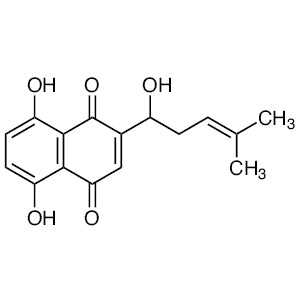
(+/-)-Shikonin is a naturally occurring compound derived from the plant *Lithospermum erythrorhizon*, commonly known as *Shikon*. This compound plays a vital role in biochemical and pharmacological research due to its diverse biological activities. It is widely used in laboratories to investigate the mechanisms of drug action, develop new drug candidates, and study the biological effects of natural compounds. Its presence in research settings contributes to the advancement of pharmaceutical and biomedical sciences, particularly in the exploration of plant-derived compounds for therapeutic applications.
The compound is valued for its stable chemical and physical properties, which make it suitable for various analytical techniques such as spectroscopy, chromatography, and biological activity assays. Its complex molecular structure allows it to interact with multiple molecular targets within cells, including proteins, enzymes, and DNA. This versatility enhances its utility in experimental studies, enabling researchers to explore its potential in both therapeutic and experimental contexts. Additionally, its resistance to degradation ensures consistent performance across different experimental conditions.
In Indonesian laboratories, (+/-)-Shikonin is frequently utilized in pharmaceutical, biomedical, and ecological research. It serves as a key tool for expanding understanding of natural compounds from local flora and for developing locally based pharmaceutical products. Its application supports both academic and industrial research, contributing to the broader scientific community's knowledge of plant-derived compounds and their potential applications.
TCI brochures (PDF)
- Cancer Research Reagents 2025-04-01 · p. 7
- Reagents for Biological Research 2025-03-11 · p. 35
- Drug Discovery and Development: (+/-)-Shikonin is ideal for studying its anti-inflammatory, antioxidant, and antitumor properties, aiding in the identification of potential therapeutic agents.
- Biochemical Research: Its ability to interact with various molecular targets makes it suitable for investigating cellular mechanisms and enzyme activity in controlled environments.
- Pharmacological Studies: The compound is used to evaluate its biological effects, including its impact on cell signaling pathways and DNA interactions, in experimental models.
- Analytical Chemistry: Its stable chemical properties make it compatible with spectroscopic and chromatographic techniques for accurate compound identification and quantification.
- Natural Product Research: It is widely used to explore the pharmacological potential of plant-derived compounds, supporting the development of new drugs from indigenous flora.
| Brand | TCI |
|---|---|
| CAS number | 54952-43-1 |
| Molecular formula | — |
| Purity | — |
| Category | Life Science > Biochemicals and Reagents > Crude Medicine Ingredients for Research and Experimental Use |
| Pack sizes | Available in standard research quantities as per supplier specifications |
| Physical form | Solid powder |
| Storage | Store in a cool, dry place away from light and moisture |
(+/-)-Shikonin should be stored in a cool, dry environment, away from direct light and moisture to maintain its chemical stability. It is recommended to use airtight containers to prevent exposure to humidity and contaminants. Due to its potential reactivity with certain substances, it should be handled with care in a well-ventilated laboratory setting. Researchers should wear appropriate personal protective equipment, such as gloves and safety goggles, when handling the compound. Proper labeling of storage containers is essential to ensure safe handling and prevent accidental exposure. Regular monitoring of storage conditions is advised to maintain the integrity of the compound throughout its shelf life.
—
Product Categories
- Biochemicals and ReagentsCrude Medicine Ingredients for Research and Experimental Use
- Cell BiologyApoptosisApoptosis Inducers
- Cell BiologyCancer ResearchAngiogenesis [Cancer Research]
- Cell BiologyCancer ResearchAntitumor Agents for Research
- Cell BiologyCancer ResearchCancer Metabolism
- Cell BiologyCancer ResearchChemopreventive Agents [Cancer Research]
- Pharmaceutical Development and Drug Discovery ResearchCrude Medicine Ingredients for Research and Experimental Use
Produk Terkait
-
Embelin TCI E1547
Regular price Rp 7.844.550,00Regular price -
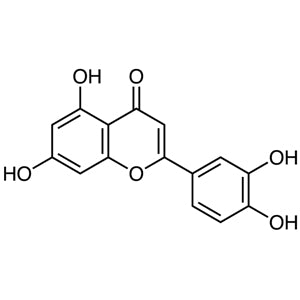
3',4',5,7-Tetrahydroxyflavone TCI T2682
Regular price From Rp 1.565.550,00Regular price -
5-Aminoimidazole-4-carboxamide1-beta-D-Ribofuranoside TCI A2528
Regular price Rp 2.545.200,00Regular price -
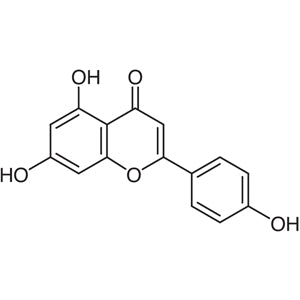
Apigenin TCI A1514
Regular price Rp 5.778.150,00Regular price -
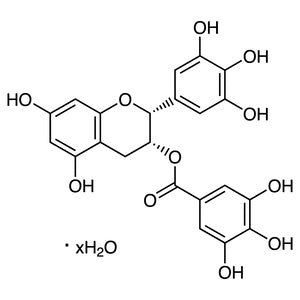
(-)-EpigallocatechinGallateHydrate TCI E0694
Regular price From Rp 2.121.000,00Regular price -
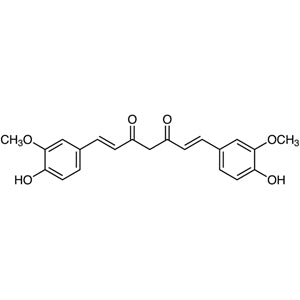
Curcumin(Synthetic) TCI C2302
Regular price From Rp 1.193.850,00Regular price -
Curcumin(Natural) TCI C0434
Regular price From Rp 637.350,00Regular price -
2-Methoxy-beta-estradiol TCI M2530
Regular price From Rp 1.908.900,00Regular price