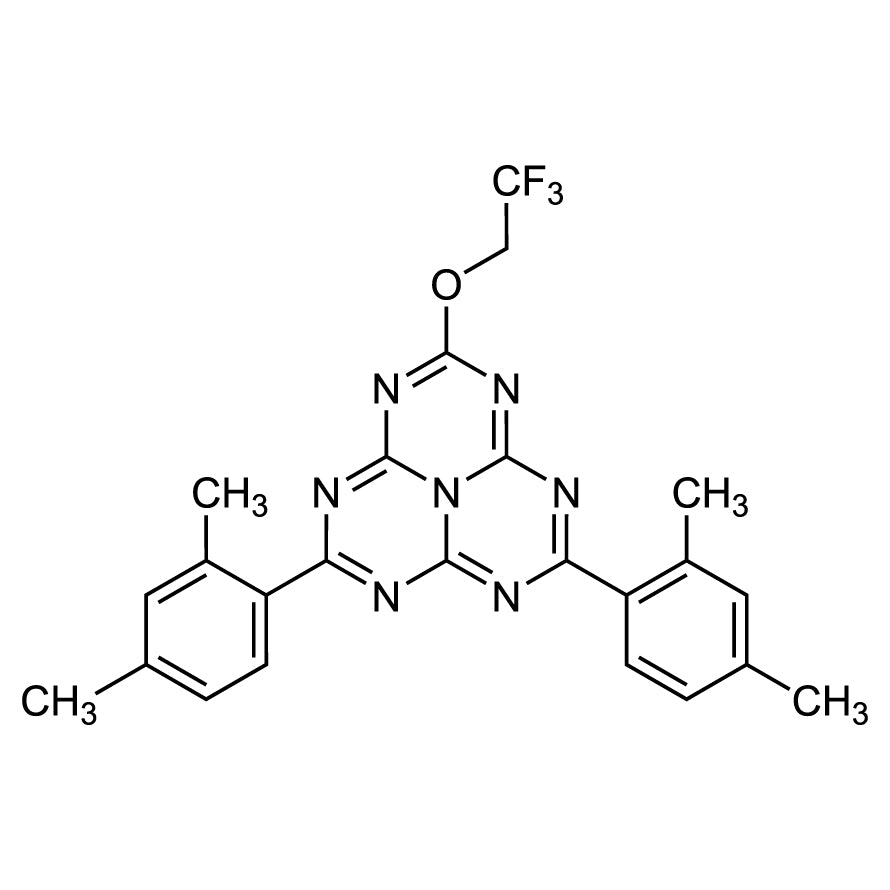
TCI H1933 is a complex organic compound used in advanced electronic material research, particularly in the development of OLED (Organic Light-Emitting Diode) materials. This compound is essential for creating high-performance OLED devices due to its unique molecular structure, which includes nitrogen and fluorine atoms. In the laboratory, it serves as an active component in the fabrication of OLEDs, contributing to the efficiency and longevity of light-emitting devices. Its role is critical in the field of optoelectronics, where precise material properties are required for innovative applications in display and lighting technologies.
The compound is favored for its excellent chemical stability, electron transport capabilities, and light-emitting properties under specific conditions. These characteristics make it a preferred choice for researchers aiming to develop next-generation OLED materials with enhanced performance. Its thermal stability ensures that it maintains its structural integrity under various experimental conditions, making it reliable for use in laboratory settings. Additionally, its compatibility with other organic materials allows for the creation of complex and functional OLED structures.
In Indonesian laboratories, TCI H1933 is widely utilized by researchers in educational and research institutions. It plays a key role in the development of display technologies, advanced lighting systems, and optoelectronic devices. Its application supports ongoing efforts to innovate in the field of materials science, particularly in the pursuit of more efficient and sustainable light-emitting technologies.
Advantages (TCI brochure)
- Emits delayed fluorescence from inverted singlet and triplet excited states (DFIST).
- Blue light emission with peak top at 449 nm and 74% PLQY.
- HOMO: -6.3 eV (by ultraviolet photoelectron yield spectroscopy).
TCI brochures (PDF)
- Heptazine-Bearing Light-Emitting Material with Negative ΔEST HzTFEX2 2024-10-11 · p. 1
- Organic Light-Emitting Diode (OLED) Materials 2026-08-18 · p. 7
Related TCI products
- TCI T4145 6710-92-5 2,5,8-Trichloro-1,3,4,6,7,9,9b-heptaazaphenalene
- TCI T3505 160969-03-9 2-[2-(2,2,2-Trifluoroethoxy)phenoxy]ethyl Methanesulfonate
- TCI B3227 35480-52-5 2,5-Bis(2,2,2-trifluoroethoxy)benzoic Acid
- TCI B4399 2725-22-6 2,4-Bis(2,4-dimethylphenyl)-6-(2-hydroxy-4-n-octyloxyphenyl)-1,3,5-triazine
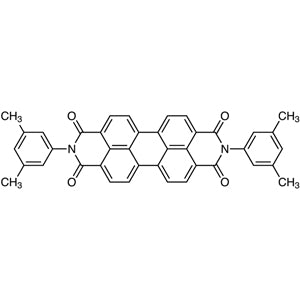
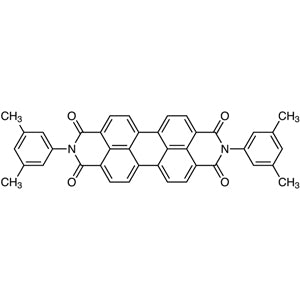
- TCI B4231 4948-15-6 N,N'-Bis(3,5-dimethylphenyl)-3,4,9,10-perylenetetracarboxylic Diimide
- TCI B2776 (1S,2S)-1,2-Bis(3,5-dimethylphenyl)-1,2-ethylenediamine Phosphate
- OLED Material Development: This compound is ideal for creating high-efficiency OLEDs due to its electron transport and light-emitting properties, enabling researchers to design advanced display technologies.
- Optoelectronic Device Fabrication: Its chemical stability and compatibility with other organic materials make it suitable for the production of optoelectronic components used in lighting and display systems.
- Research in Display Technologies: It is extensively used in studies aimed at improving the performance and longevity of OLED-based displays, supporting innovation in the electronics industry.
- Thermal Stability Testing: The compound’s thermal stability allows it to be used in experiments that require materials to maintain their properties under varying temperature conditions.
- Material Compatibility Studies: Its structure and properties make it a valuable tool for investigating how different organic materials interact in OLED applications.
From the TCI brochure
- Light-emitting material
| Brand | TCI |
|---|---|
| CAS number | 2756369-67-0 |
| Molecular formula | — |
| Purity | — |
| Category | Materials Science > Electronic Materials > Organic Light-Emitting Diode (OLED) Materials |
| Pack sizes | Available in various quantities as per standard laboratory supply practices |
| Physical form | Solid, as per typical organic compound characteristics |
| Storage | — |
Data from the TCI brochure
| λPL | 449 nm, 476 nm |
|---|---|
| ΦPL | 74% |
| τDF | 217 ns |
| kISC | 2.3 × 10^7 s-1 |
| kRISC | 4.2 × 10^7 s-1 |
| ΔEST | -11 meV |
| HOMO | -6.3 eV (by ultraviolet photoelectron yield spectroscopy) |
Source: TCI brochure FF192 (2024-10-11)
This compound should be stored in a cool, dry, and well-ventilated area away from direct sunlight and sources of heat. It is recommended to use sealed containers made of materials compatible with organic compounds to prevent contamination and degradation. Due to its chemical nature, it should be handled with appropriate personal protective equipment, including gloves and safety goggles, to ensure laboratory safety. Avoid exposure to moisture and ensure proper ventilation when working with the compound. Regular monitoring of storage conditions is advised to maintain its integrity and effectiveness for research applications.
—
Produk Terkait
-
2,5,8-Trichloro-1,3,4,6,7,9,9b-heptaazaphenalene TCI T4145
Regular price Rp 8.453.550,00Regular price -
2-[2-(2,2,2-Trifluoroethoxy)phenoxy]ethylMethanesulfonate TCI T3505
Regular price From Rp 637.350,00Regular price -
2,5-Bis(2,2,2-trifluoroethoxy)benzoicAcid TCI B3227
Regular price From Rp 530.250,00Regular price -
2,4-Bis(2,4-dimethylphenyl)-6-(2-hydroxy-4-n-octyloxyphenyl)-1,3,5-triazine TCI B4399
Regular price From Rp 3.075.450,00Regular price -
N,N'-Bis(3,5-dimethylphenyl)-3,4,9,10-perylenetetracarboxylicDiimide TCI B4231
Regular price From Rp 2.466.450,00Regular price -
(1S,2S)-1,2-Bis(3,5-dimethylphenyl)-1,2-ethylenediaminePhosphate TCI B2776
Regular price Rp 3.232.950,00Regular price -
(1R,2R)-1,2-Bis(3,5-dimethylphenyl)-1,2-ethylenediaminePhosphate TCI B2775
Regular price Rp 3.127.950,00Regular price -
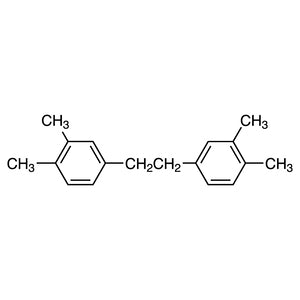
1,2-Bis(3,4-dimethylphenyl)ethane TCI B1851
Regular price Rp 1.167.600,00Regular price

![160969-03-9 2-[2-(2,2,2-Trifluoroethoxy)phenoxy]ethyl Methanesulfonate - AMI Scientific](http://amiscientific.com/cdn/shop/files/TCI2510T3505.jpg?v=1767144182&width=533)