Inosine 5'-Monophosphate Disodium Salt Hydrate, commonly abbreviated as IMP disodium, is the salt form of a purine nucleotide built from a hypoxanthine base, a ribose sugar, and a single phosphate group at the 5' position. This compound occupies a central position in purine metabolism, since IMP is the branch point at which the cell determines whether it will form adenosine monophosphate or guanosine monophosphate. In the laboratory, IMP is used as a substrate, as a standard, and as a medium component across a wide range of studies in biochemistry, enzymology, cell culture, and food science.
The property that makes this disodium salt form the preferred choice is its far better solubility in water compared with the free acid form, so that stock solutions of adequate concentration can be prepared quickly for enzyme assays as well as for chromatographic analysis. The hydrate form indicates the presence of water molecules within its crystal lattice, so concentration calculations need to account for the molecular weight of the hydrated form as stated on the product label. This material is a solid that is hygroscopic in nature, dissolves well in aqueous buffers, and is commonly used as a standard in nucleotide analysis by high performance liquid chromatography.
In Indonesia, this reagent is typically found in university biochemistry and molecular biology laboratories, in research institute facilities, and in food science and quality control units where nucleotide profiles are examined. It is supplied by AMI Scientific under the TCI brand for laboratories that require a well characterised nucleotide reference material for routine assay work, method development, and teaching practicals involving purine metabolism and chromatographic separation of nucleotides.
TCI brochures (PDF)
- Nucleosides, Nucleotides, Nucleic Acids and Related Reagents 2026-03-23 · p. 7
Related TCI products
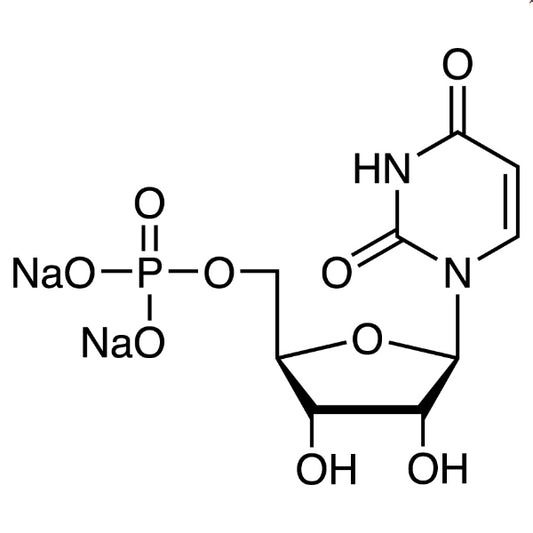
- TCI U0021 3387-36-8 Uridine 5'-Monophosphate Disodium Salt
- TCI A2117 4578-31-8 Adenosine 5'-Monophosphate Disodium Salt
- TCI T0845 33430-62-5 Thymidine 5'-Monophosphate Disodium Salt
- TCI G0601 5550-12-9 Guanosine 5'-Monophosphate Disodium Salt
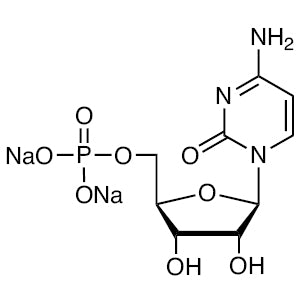
- TCI C0524 6757-06-8 Cytidine 5'-Monophosphate Disodium Salt
- TCI I0038 35908-31-7 Inosine 5'-Triphosphate Trisodium Salt
- Enzyme assay substrate studies: IMP serves as the natural substrate for enzymes of the purine pathway, allowing kinetic measurements to be run directly in aqueous buffer without an additional solubilisation step.
- HPLC reference standard preparation: the compound is commonly used as a standard in nucleotide analysis by high performance liquid chromatography, giving analysts a defined peak for identification and calibration of sample chromatograms.
- Purine metabolism research: because IMP is the branch point between adenosine monophosphate and guanosine monophosphate formation, it is central to experiments tracing how cells direct flux along either purine branch.
- Cell culture medium supplementation: IMP is used as a medium component in cell culture work, where its good aqueous solubility allows accurate addition of a nucleotide source to defined formulations.
- Food science investigations: nucleotide work in food science uses IMP as a reference and test compound, supporting studies of nucleotide content and related biochemical characterisation of food samples.
| Brand | TCI, product code I0036 |
|---|---|
| CAS number | 352195-40-5 |
| Molecular formula | — |
| Purity | — |
| Category | Life Science > Biochemicals and Reagents > Nucleosides, Nucleotides, Oligonucleotides |
| Pack sizes | available in the catalogue pack sizes offered by TCI for this product code; please refer to the listing for the size required |
| Physical form | solid, hygroscopic, soluble in aqueous buffers |
| Storage | store according to the conditions stated on the product label and certificate of analysis |
Because this material is hygroscopic, it should be kept tightly closed in its original container and protected from atmospheric moisture, since absorbed water alters the effective weight of the solid and affects concentration calculations. Allow the container to reach room temperature before opening to limit condensation on the cold solid. Weigh the material promptly and use tightly sealed vials or amber glass containers for prepared stock solutions. Handle the compound in a clean, dry area, using standard laboratory practice: wear a laboratory coat, safety glasses, and gloves, use clean dry spatulas to avoid cross contamination, and consult the safety data sheet supplied with the product before use. Concentration calculations must take into account the molecular weight of the hydrated form stated on the product label.
—
Produk Terkait
-
Uridine5'-MonophosphateDisodiumSalt TCI U0021
Regular price From Rp 2.093.700,00Regular priceRp 1.479.450,00Sale price From Rp 2.093.700,00 -
Adenosine5'-MonophosphateDisodiumSalt TCI A2117
Regular price Rp 1.988.700,00Regular priceRp 1.405.950,00Sale price Rp 1.988.700,00 -
Thymidine5'-MonophosphateDisodiumSalt TCI T0845
Regular price Rp 2.306.850,00Regular priceRp 1.628.550,00Sale price Rp 2.306.850,00 -
Guanosine5'-MonophosphateDisodiumSalt TCI G0601
Regular price From Rp 2.068.500,00Regular priceRp 1.461.600,00Sale price From Rp 2.068.500,00 -
Cytidine5'-MonophosphateDisodiumSalt TCI C0524
Regular price From Rp 689.850,00Regular priceRp 497.700,00Sale price From Rp 689.850,00 -
Inosine5'-TriphosphateTrisodiumSalt TCI I0038
Regular price Rp 2.597.700,00Regular priceRp 1.832.250,00Sale price Rp 2.597.700,00 -
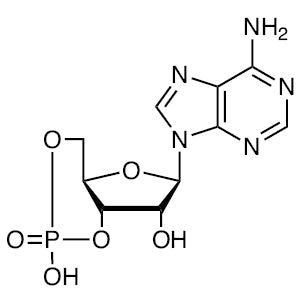
Adenosine3',5'-CyclicMonophosphate TCI A2381
Regular price From Rp 2.757.300,00Regular priceRp 1.943.550,00Sale price From Rp 2.757.300,00 -
Adenosine3',5'-CyclicMonophosphateSodiumSalt TCI A2112
Regular price Rp 1.643.250,00Regular priceRp 1.164.450,00Sale price Rp 1.643.250,00