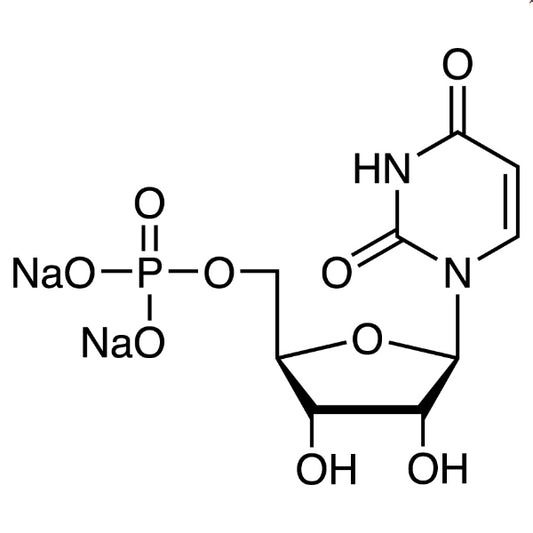
Adenosine 3',5'-Cyclic Monophosphate (cAMP) is a vital chemical compound widely used in biochemical and molecular biology experiments. As a cyclic molecule, it functions as a key signaling molecule within cells, regulating processes such as cell differentiation, hormone secretion, and immune responses. Its role in intracellular signal transduction makes it essential for studying cellular communication pathways. In laboratory settings, cAMP is frequently employed as a substrate or agonist in enzymatic reactions, providing a reliable tool for investigating biochemical mechanisms.
The chemical properties of cAMP, including its stability under controlled conditions and sensitivity to temperature and humidity, make it a preferred choice for research applications. Its molecular structure allows for interactions with proteins such as protein kinase, enabling precise control over cellular activities. This makes cAMP a versatile reagent for a variety of experimental setups, particularly in biomedical research. Its specificity and broad utility ensure that it remains a critical component in many scientific investigations.
In Indonesian laboratories, cAMP is commonly used in research related to hormone effects, drug development, and disease mechanism analysis. It is also utilized in educational settings to teach students about cellular signaling and biochemical processes. Its widespread application underscores its importance in both academic and industrial research environments.
TCI brochures (PDF)
- Nucleosides, Nucleotides, Nucleic Acids and Related Reagents 2026-03-23 · p. 7
Related TCI products
- TCI A2117 4578-31-8 Adenosine 5'-Monophosphate Disodium Salt
- TCI A2112 37839-81-9 Adenosine 3',5'-Cyclic Monophosphate Sodium Salt
- TCI A0626 16178-48-6 Adenosine 5'-Diphosphate Disodium Salt
- TCI U0021 3387-36-8 Uridine 5'-Monophosphate Disodium Salt
- TCI T0845 33430-62-5 Thymidine 5'-Monophosphate Disodium Salt
- TCI I0036 352195-40-5 Inosine 5'-Monophosphate Disodium Salt Hydrate
- Hormone effect studies benefit from cAMP as it mimics natural signaling pathways involved in hormone responses.
- Drug development research utilizes cAMP to test how compounds interact with cellular signaling mechanisms.
- Disease mechanism analysis relies on cAMP to understand how disruptions in signaling pathways contribute to pathologies.
- Cellular differentiation studies use cAMP to investigate its role in guiding cell fate decisions.
- Educational experiments incorporate cAMP to demonstrate fundamental concepts in biochemistry and molecular biology.
| Brand | TCI |
|---|---|
| CAS number | 60-92-4 |
| Molecular formula | — |
| Purity | — |
| Category | Life Science > Biochemicals and Reagents > Crude Medicine Ingredients for Research and Experimental Use |
| Pack sizes | Available in various quantities as per standard supplier offerings |
| Physical form | Solid powder |
| Storage | Store in a cool, dry place away from light and moisture |
cAMP should be stored in a cool, dry environment to maintain its chemical stability. It is recommended to keep the material in airtight containers to prevent exposure to moisture and humidity, which can degrade its properties. Due to its sensitivity, it is important to avoid extreme temperatures and direct sunlight. When handling cAMP, laboratory personnel should follow standard safety protocols, including the use of protective gloves and eyewear. Proper labeling of storage containers is essential to ensure safe access and prevent accidental contamination. Regular monitoring of storage conditions ensures the integrity of the compound remains intact for reliable experimental results.
—
Product Categories
- Biochemicals and ReagentsCrude Medicine Ingredients for Research and Experimental Use
- Biochemicals and ReagentsNucleosides, Nucleotides, OligonucleotidesNucleotide Analogs
- Biochemicals and ReagentsNucleosides, Nucleotides, OligonucleotidesNucleotides
- Pharmaceutical Development and Drug Discovery ResearchCrude Medicine Ingredients for Research and Experimental Use
Produk Terkait
-
Adenosine5'-MonophosphateDisodiumSalt TCI A2117
Regular price Rp 1.988.700,00Regular priceRp 1.405.950,00Sale price Rp 1.988.700,00 -
Adenosine3',5'-CyclicMonophosphateSodiumSalt TCI A2112
Regular price Rp 1.643.250,00Regular priceRp 1.164.450,00Sale price Rp 1.643.250,00 -
Adenosine5'-DiphosphateDisodiumSalt TCI A0626
Regular price From Rp 822.150,00Regular priceRp 590.100,00Sale price From Rp 822.150,00 -
Uridine5'-MonophosphateDisodiumSalt TCI U0021
Regular price From Rp 2.093.700,00Regular priceRp 1.479.450,00Sale price From Rp 2.093.700,00 -
Thymidine5'-MonophosphateDisodiumSalt TCI T0845
Regular price Rp 2.306.850,00Regular priceRp 1.628.550,00Sale price Rp 2.306.850,00 -
Inosine5'-MonophosphateDisodiumSaltHydrate TCI I0036
Regular price From Rp 505.050,00Regular priceRp 368.550,00Sale price From Rp 505.050,00 -
Guanosine5'-MonophosphateDisodiumSalt TCI G0601
Regular price From Rp 2.068.500,00Regular priceRp 1.461.600,00Sale price From Rp 2.068.500,00 -
2'-Deoxycytidine5'-MonophosphateHydrate TCI D3673
Regular price From Rp 1.192.800,00Regular priceRp 849.450,00Sale price From Rp 1.192.800,00