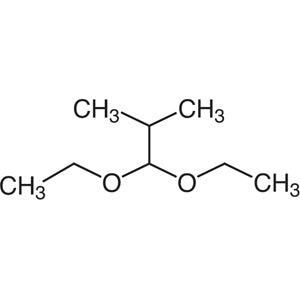
Isobutyraldehyde Diethyl Acetal (IDDA), with the CAS number 1741-41-9, is a chemical compound widely used in laboratory settings for its versatility in organic synthesis. As a building block in chemical reactions, it plays a crucial role in the development of various organic compounds, including heterocyclic and aromatic structures. Its molecular structure allows for substitution and reduction reactions, making it an essential component in the creation of complex chemical systems. IDDA is particularly valued in research and development for its ability to participate in multiple reaction pathways, contributing to the synthesis of pharmaceuticals and industrial chemicals.
The unique properties of IDDA, such as its volatility and flammability, require careful handling, but these characteristics also make it an effective reagent in chemical transformations. Its stability under certain conditions ensures reliable performance in experimental processes, while its reactivity supports the formation of new compounds. These attributes make IDDA a preferred choice for chemists seeking to explore diverse synthetic routes and achieve desired chemical outcomes in their experiments.
In Indonesian laboratories, IDDA is commonly used in chemical research, especially in the synthesis of pharmaceutical compounds and industrial materials. Its broad applicability across different scientific fields, including chemistry, pharmacy, and industrial chemistry, highlights its importance in both academic and applied research settings. The compound’s flexibility and effectiveness make it a staple in many laboratory environments, supporting innovation and discovery in chemical science.
Related TCI products
- TCI B3822 75148-49-1 3-Bromobenzaldehyde Diethyl Acetal
- TCI B3800 35822-58-3 2-Bromobenzaldehyde Diethyl Acetal
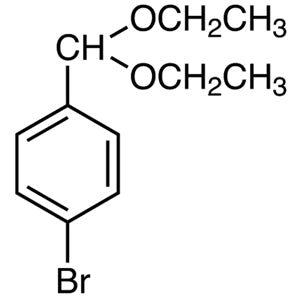
- TCI B2845 34421-94-8 4-Bromobenzaldehyde Diethyl Acetal
- TCI B1893 774-48-1 Benzaldehyde Diethyl Acetal
- TCI B0957 2032-35-1 Bromoacetaldehyde Diethyl Acetal
- TCI A0640 3054-95-3 Acrolein Diethyl Acetal
- Synthesis of heterocyclic compounds for pharmaceutical development due to its reactivity and structural versatility.
- Organic chemistry research where substitution and reduction reactions are required for compound modification.
- Industrial chemical production involving complex reaction sequences that benefit from IDDA’s chemical properties.
- Pharmaceutical research for the creation of new drug molecules through controlled chemical transformations.
- Chemical analysis and testing in laboratories requiring reliable and consistent reagents for experimental accuracy.
| Brand | TCI |
|---|---|
| CAS number | 1741-41-9 |
| Molecular formula | — |
| Purity | — |
| Category | Chemistry > Building Blocks > Non-Heterocyclic Building Blocks |
| Pack sizes | Available in standard laboratory quantities as per supplier specifications |
| Physical form | Liquid |
| Storage | Store in a cool, dry, and well-ventilated area away from heat and direct sunlight |
Isobutyraldehyde Diethyl Acetal should be stored in a cool, dry, and well-ventilated area, away from heat and direct sunlight. It is recommended to use sealed, airtight containers to prevent evaporation and contamination. Due to its volatility and flammability, it should be kept away from open flames and potential ignition sources. Proper personal protective equipment, such as gloves and safety goggles, should be worn during handling to ensure safety. Regular monitoring of storage conditions is essential to maintain the compound's stability and effectiveness in laboratory applications.
—
Produk Terkait
-
3-BromobenzaldehydeDiethylAcetal TCI B3822
Regular price Rp 2.625.000,00Regular price -
2-BromobenzaldehydeDiethylAcetal TCI B3800
Regular price Rp 2.121.000,00Regular price -
4-BromobenzaldehydeDiethylAcetal TCI B2845
Regular price Rp 3.419.850,00Regular price -
BenzaldehydeDiethylAcetal TCI B1893
Regular price Rp 1.776.600,00Regular price -
BromoacetaldehydeDiethylAcetal TCI B0957
Regular price From Rp 848.400,00Regular price -
AcroleinDiethylAcetal TCI A0640
Regular price From Rp 2.147.250,00Regular price -
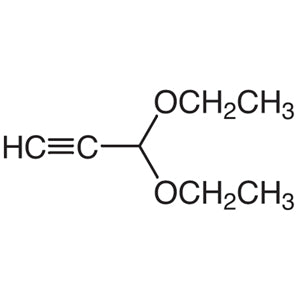
PropargylaldehydeDiethylAcetal TCI P1173
Regular price From Rp 955.500,00Regular price -
PropionaldehydeDiethylAcetal TCI P0781
Regular price From Rp 505.050,00Regular price