

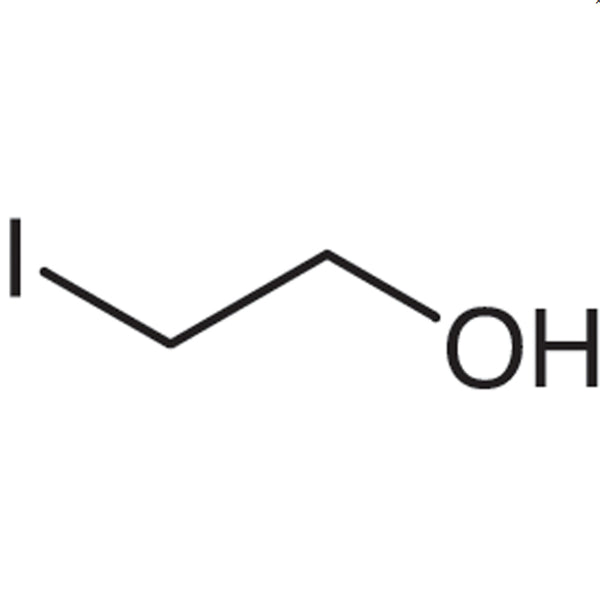
2-Iodoethanol (stabilized with Copper chip) is a chemical compound widely used in laboratory settings for its versatility in organic synthesis. This compound serves as a key building block in various chemical reactions, particularly in substitution and alkylation processes. Its molecular structure enables it to participate in nucleophilic substitution reactions, making it a valuable reagent for chemists. In Indonesian laboratories, it is commonly used for the development of new organic compounds and the study of reaction mechanisms. Its role in the laboratory is essential for researchers aiming to create complex molecules from simpler precursors.
The chemical properties of 2-Iodoethanol make it a preferred choice for many applications. The presence of a reactive iodine atom allows for efficient substitution reactions, which are fundamental in synthetic chemistry. Stabilization with a copper chip enhances its shelf life and ensures consistent performance during experiments. This stabilization also minimizes degradation, providing researchers with a reliable reagent for their work. The compound’s stability in terms of boiling and melting points further contributes to its reliability in different experimental conditions.
In Indonesian laboratories, 2-Iodoethanol is frequently used in organic chemistry research, especially in the synthesis of new compounds. Its availability and reactivity make it a popular choice among researchers. It is often utilized in academic and industrial settings where the creation of novel chemical structures is required. The compound’s ability to participate in a wide range of reactions makes it an essential tool for chemical experimentation and innovation.
Related TCI products
- TCI I0382 529-28-2 2-Iodoanisole (stabilized with Copper chip)
- TCI D0187 96-21-9 1,3-Dibromo-2-propanol (stabilized with Copper chip)
- TCI B1905 3814-34-4 1-Bromo-2-ethylbutane (stabilized with Copper chip)
- TCI B1412 13294-71-8 2-Bromo-2-butene (stabilized with Copper chip)
- TCI B1289 3377-87-5 3-Bromohexane (contains 2-Bromohexane) (stabilized with Copper chip)
- TCI B1235 3377-86-4 2-Bromohexane (contains 3-Bromohexane) (stabilized with Copper chip)
- Organic Synthesis: 2-Iodoethanol is ideal for organic synthesis due to its reactivity and ability to participate in nucleophilic substitution reactions, making it a key reagent in the creation of complex organic molecules.
- Alkylation Reactions: This compound is commonly used in alkylation processes, where it serves as a versatile alkylating agent, enabling the formation of various organic derivatives.
- Nucleophilic Substitution Studies: Its iodine group makes it suitable for studying nucleophilic substitution mechanisms, providing valuable insights into reaction pathways and kinetics.
- Catalyst Testing: The stabilization with a copper chip makes it useful for testing the effectiveness of copper-based catalysts in various chemical processes.
- Teaching and Research Labs: It is widely used in both academic and research laboratories in Indonesia for teaching purposes and for conducting advanced chemical experiments.
| Brand | TCI |
|---|---|
| CAS number | 624-76-0 |
| Molecular formula | — |
| Purity | — |
| Category | Chemistry > Building Blocks > Non-Heterocyclic Building Blocks |
| Pack sizes | Available in various quantities as per standard laboratory supply |
| Physical form | Liquid |
| Storage | Store in a cool, dark place away from moisture and direct sunlight |
2-Iodoethanol should be stored in a cool, dark place, away from moisture and direct sunlight to maintain its stability and prevent degradation. It is recommended to use airtight containers made of glass or high-density polyethylene to ensure the compound remains uncontaminated. Due to its reactivity, it should be handled in a well-ventilated area, and appropriate personal protective equipment, such as gloves and goggles, should be worn. Avoid contact with incompatible materials, and ensure proper disposal according to local regulations. Regular monitoring of storage conditions is advised to maintain the integrity of the compound throughout its shelf life.
—
Produk Terkait
-
2-Iodoanisole(stabilizedwithCopperchip) TCI I0382
Regular price From Rp 1.696.800,00Regular price -
1,3-Dibromo-2-propanol(stabilizedwithCopperchip) TCI D0187
Regular price From Rp 2.625.000,00Regular price -
1-Bromo-2-ethylbutane(stabilizedwithCopperchip) TCI B1905
Regular price From Rp 1.035.300,00Regular price -
2-Bromo-2-butene(stabilizedwithCopperchip) TCI B1412
Regular price From Rp 1.724.100,00Regular price -
3-Bromohexane(contains2-Bromohexane)(stabilizedwithCopperchip) TCI B1289
Regular price Rp 7.023.450,00Regular price -
2-Bromohexane(contains3-Bromohexane)(stabilizedwithCopperchip) TCI B1235
Regular price Rp 3.763.200,00Regular price -
2-Iodobutane(stabilizedwithCopperchip) TCI B1093
Regular price Rp 980.700,00Regular price -
2-Iodo-2-methylpropane(stabilizedwithCopperchip) TCI B1072
Regular price Rp 2.332.050,00Regular price


