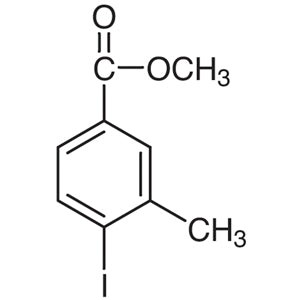
Methyl 4-Iodo-3-methylbenzoate is an aromatic compound belonging to the benzoate ester family, carrying two important substituents on its benzene ring — an iodine atom and a methyl group — alongside the methyl ester function itself. This arrangement of three groups on a single ring is precisely what makes it one of the non-heterocyclic building blocks most sought after by organic synthesis laboratories. On the bench, the compound serves as a starting framework that is already prepared for further modification, whether through transformations at the ester group or through replacement of the iodine atom with whatever molecular fragment the researcher intends to install.
The principal appeal of this compound lies in the reactivity of its carbon–iodine bond, which is generally easier to activate than the corresponding carbon–bromine or carbon–chlorine bonds at an equivalent aromatic position. That property makes it an accommodating reaction partner in a wide range of transition-metal-assisted reactions, even under relatively mild conditions. The methyl ester, for its part, provides a second handle that can be hydrolysed to the carboxylic acid or converted into an amide, while the ring methyl group contributes steric and electronic influence that helps direct the outcome of subsequent steps and gives the chemist a further degree of control over regiochemistry.
In Indonesian laboratories, this building block is typically encountered in university research groups, institutional synthesis facilities and industrial R&D units engaged in the preparation of more elaborate target molecules. It is usually ordered in research-scale quantities for multi-step route development, method optimisation and the assembly of compound libraries, where a reliably sourced, well-defined intermediate saves considerable time compared with preparing the same scaffold in-house. Supply as a catalogue item from an established chemical manufacturer supports the consistency that such sequential work requires.
Related TCI products
- Transition-metal-catalysed cross-coupling chemistry — the activated carbon–iodine bond engages readily with catalyst systems, allowing new carbon–carbon or carbon–heteroatom bonds to be formed under comparatively mild laboratory conditions.
- Multi-step organic synthesis route development — the compound supplies a pre-functionalised aromatic core with two independent reactive handles, shortening a synthetic sequence and reducing the number of preparative steps required beforehand.
- Compound library construction for screening programmes — the iodine position can be varied systematically across parallel reactions, generating a related series of analogues from a single common and readily available starting scaffold.
- Carboxylic acid and amide intermediate preparation — the methyl ester is straightforwardly hydrolysed to the free acid or converted to amide derivatives, giving access to further families of downstream functionalised products.
- Academic and industrial research and development work — as a defined catalogue building block it supports reproducible method studies, teaching-level synthesis exercises and exploratory chemistry where consistent material quality genuinely matters.
| Brand | TCI |
|---|---|
| CAS number | 5471-81-8 |
| Molecular formula | — |
| Purity | — |
| Category | Chemistry > Building Blocks > Non-Heterocyclic Building Blocks |
| Pack sizes | available in standard research-scale catalogue pack sizes; please refer to the ordering options on this page |
| Physical form | — |
| Storage | keep in a tightly closed container, following the conditions stated on the manufacturer's label |
- Catalogue number: I0601
- Chemical name: Methyl 4-Iodo-3-methylbenzoate
Store the container tightly closed in a cool, dry and well-ventilated place, away from direct sunlight, heat sources and incompatible materials. Organoiodine compounds are generally kept protected from light, so retain the material in its original container or transfer it to an equivalent light-resistant, chemically compatible vessel that is clearly labelled. Handle the substance in a fume hood using appropriate personal protective equipment, including safety goggles, gloves and a laboratory coat, and avoid inhalation of dust or contact with skin and eyes. Always consult the manufacturer's safety data sheet before use, and dispose of residues and contaminated materials in accordance with applicable chemical waste regulations.
—
Produk Terkait
-
tert-Butyl4-Formylbenzoate TCI B5414
Regular price From Rp 4.797.450,00Regular price -
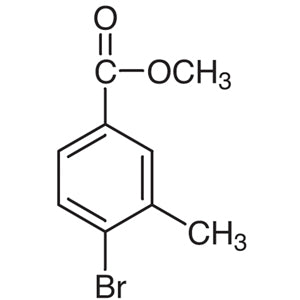
Methyl4-Bromo-3-methylbenzoate TCI B2256
Regular price From Rp 903.000,00Regular price -
Methyl2-Benzoylbenzoate TCI B1231
Regular price From Rp 903.000,00Regular price -
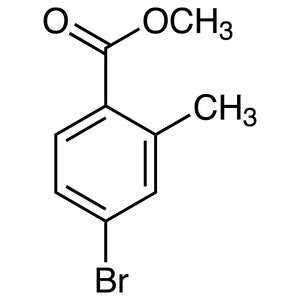
Methyl4-Bromo-2-methylbenzoate TCI M3630
Regular price From Rp 1.936.200,00Regular price -
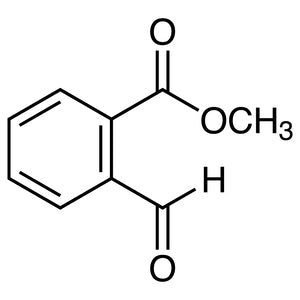
Methyl2-Formylbenzoate TCI M3552
Regular price From Rp 3.392.550,00Regular price -
Methyl3-Formylbenzoate TCI M3500
Regular price From Rp 1.829.100,00Regular price -
Methyl4-Isopropylbenzoate TCI M3307
Regular price From Rp 1.803.900,00Regular price -
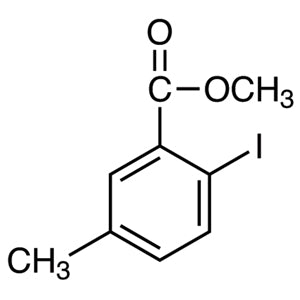
Methyl2-Iodo-5-methylbenzoate TCI M3019
Regular price From Rp 1.510.950,00Regular price