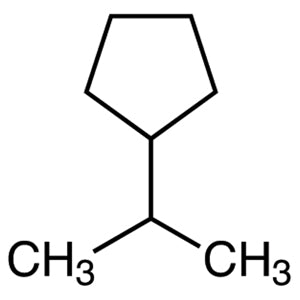
Isopropylcyclopentane is a saturated hydrocarbon consisting of a cyclopentane ring bearing an attached isopropyl group. The compound belongs to the naphthene family — saturated cyclic hydrocarbons that occur naturally in crude petroleum and in a range of fuel fractions. In the laboratory, a pure compound of this kind serves principally as an analytical reference material and as a model compound. Access to a pure standard becomes essential whenever an analyst needs to confirm the identity of a chromatographic peak or quantify the concentration of a specific component within a sample of complicated composition.
The characteristics that give this compound its value are its purity and the simplicity of its structure. As a saturated hydrocarbon carrying no functional groups, isopropylcyclopentane is nonpolar, insoluble in water, chemically stable, and not readily reactive under ordinary storage conditions. These properties make its retention time on gas chromatography columns highly reproducible and its fragmentation pattern in mass spectrometry straightforward to recognise. The branched substituent attached to a five-membered ring also holds interest for researchers examining the relationship between molecular shape and octane rating, combustion behaviour, or catalytic performance.
In Indonesian laboratories, material of this type is typically held by petroleum and fuel testing facilities, by university research groups working on hydrocarbon chemistry, and by analytical service laboratories that must characterise complex hydrocarbon mixtures. It is used where chromatographic identification must be anchored to a genuine reference substance rather than to a literature value alone, and where reproducible instrument calibration underpins the reliability of the reported result.
Related TCI products
- Gas chromatography reference standard — its reproducible retention time on GC columns allows analysts to anchor peak identification in petroleum and fuel fraction samples with confidence rather than relying on literature data alone.
- Mass spectrometry identification work — the recognisable fragmentation pattern of this simple saturated hydrocarbon provides a dependable comparison spectrum when confirming the presence of naphthenic components in complex sample matrices.
- Quantitative determination of hydrocarbon components — a pure standard of known identity enables analysts to calculate the concentration of specific constituents within samples whose overall composition is complicated and difficult to resolve.
- Octane rating and combustion research — the branched isopropyl substituent on a five-membered ring makes this compound a useful model for studying how molecular shape governs combustion behaviour and fuel performance.
- Catalyst behaviour studies — as a structurally simple, chemically stable naphthene without interfering functional groups, it serves as a clean model substrate for investigating catalytic conversion of cyclic hydrocarbons.
| Brand | TCI |
|---|---|
| CAS number | 3875-51-2 |
| Molecular formula | — |
| Purity | — |
| Category | Chemistry > Building Blocks > Non-Heterocyclic Building Blocks |
| Pack sizes | available in the standard packaging offered by the manufacturer; please confirm the required size when ordering |
| Physical form | — |
| Storage | keep in a cool, well-ventilated place away from sources of ignition |
- Catalogue number: I0647
- Chemical character: saturated cyclic hydrocarbon (naphthene), nonpolar and water-insoluble
Store the container tightly closed in a cool, dry, well-ventilated area, away from open flame, sparks, and other sources of ignition. Amber glass bottles with solvent-resistant caps are appropriate, as they limit evaporative loss and protect the contents during storage. Handle the material inside a fume hood and avoid breathing vapour. Wear safety goggles, chemical-resistant gloves, and a laboratory coat throughout handling. Because the compound is nonpolar and insoluble in water, spills should be absorbed with an inert dry medium and collected in a labelled waste container rather than washed to the drain. Always consult the manufacturer's safety data sheet before use.
—
Produk Terkait
-
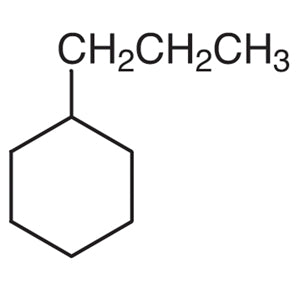
Propylcyclohexane TCI P0681
Regular price Rp 2.625.000,00Regular price -
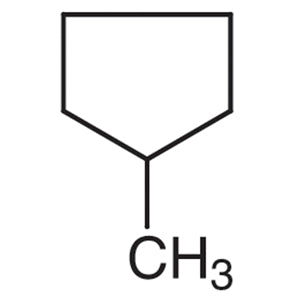
Methylcyclopentane TCI M0203
Regular price From Rp 530.250,00Regular price -
Isopropylcyclohexane TCI I0161
Regular price From Rp 1.220.100,00Regular price -
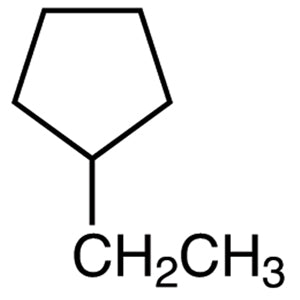
Ethylcyclopentane TCI E0211
Regular price From Rp 1.538.250,00Regular price -
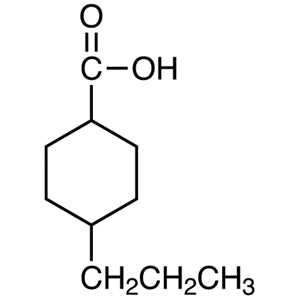
4-PropylcyclohexanecarboxylicAcid(cis-andtrans-mixture) TCI P1656
Regular price From Rp 2.466.450,00Regular price -
trans-4-PropylcyclohexanecarboxylicAcid TCI P0943
Regular price From Rp 530.250,00Regular price -
Pentylcyclopentane TCI P0784
Regular price Rp 7.659.750,00Regular price -
1-Methoxy-4-(trans-4-propylcyclohexyl)benzene TCI M3152
Regular price From Rp 689.850,00Regular price