

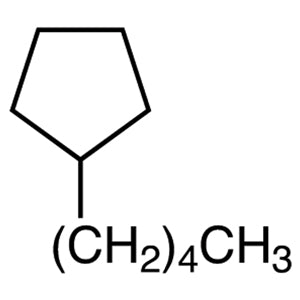
Pentylcyclopentane is a chemical compound widely used as a foundational material in various laboratory reactions. It belongs to the category of non-heterocyclic building blocks, which are essential for the synthesis of more complex organic compounds. This compound serves as a key intermediate in the production of aromatic and aliphatic substances, making it a versatile tool for chemists. Its role in the laboratory extends beyond mere reactivity; it is often used as a solvent or a reactant in multi-step synthetic processes. Due to its stability and predictable behavior, Pentylcyclopentane is a reliable choice for both research and educational settings.
One of the main reasons Pentylcyclopentane is preferred is its chemical stability and low reactivity with other substances. This characteristic allows for easier handling and storage, reducing the risk of unintended side reactions. Additionally, its well-defined boiling and melting points make it suitable for purification and separation techniques such as distillation and crystallization. These properties contribute to its effectiveness in laboratory workflows, ensuring consistency and reproducibility in experimental results. The compound’s non-toxic nature also enhances its safety profile, making it a favorable option for use in both academic and industrial laboratories.
In Indonesian laboratories, Pentylcyclopentane is commonly used in chemical research, particularly in organic synthesis and the development of new materials. It is a staple in university research labs and industrial research centers, supporting a wide range of experimental applications. Its availability and reliability make it an essential component for scientists working on complex chemical structures and innovative material development. The compound’s role in advancing chemical knowledge and practical applications is significant in the scientific community of Indonesia.
Related TCI products
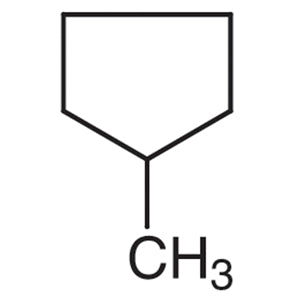
- TCI M0203 96-37-7 Methylcyclopentane
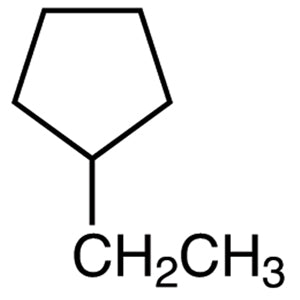
- TCI E0211 1640-89-7 Ethylcyclopentane
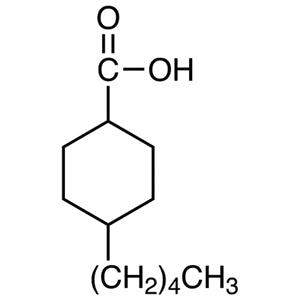
- TCI P2045 38792-89-1 4-Pentylcyclohexanecarboxylic Acid (cis- and trans- mixture)
- TCI P0944 38289-29-1 trans-4-Pentylcyclohexanecarboxylic Acid
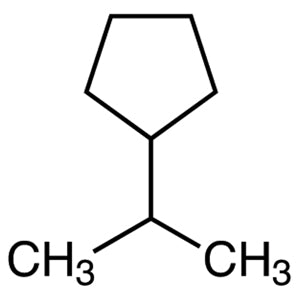
- TCI I0647 3875-51-2 Isopropylcyclopentane
- TCI E1367 84540-32-9 1-Ethoxy-4-(trans-4-pentylcyclohexyl)benzene
- Organic synthesis is a primary application where Pentylcyclopentane serves as a building block for creating complex molecules due to its stable structure and predictable reactivity.
- Material development benefits from its use in the synthesis of polymers and other advanced materials, offering a reliable intermediate for chemical modifications.
- Analytical chemistry utilizes its well-defined physical properties for separation techniques like distillation and chromatography, ensuring accurate identification and purification.
- Educational research in chemistry laboratories relies on its non-toxic nature and stability, making it suitable for teaching and student experiments.
- Industrial research applications leverage its versatility in producing aromatic and aliphatic compounds, supporting innovation in chemical manufacturing.
| Brand | TCI |
|---|---|
| CAS number | 3741-00-2 |
| Molecular formula | — |
| Purity | — |
| Category | Chemistry > Building Blocks > Non-Heterocyclic Building Blocks |
| Pack sizes | Available in various quantities as per standard laboratory supply |
| Physical form | Liquid |
| Storage | Store in a cool, dry place away from direct sunlight and incompatible materials |
Pentylcyclopentane should be stored in a cool, dry environment to maintain its chemical stability. It is recommended to use sealed containers made of materials that are chemically inert, such as glass or polyethylene, to prevent any unwanted reactions. The compound should be kept away from heat sources and incompatible substances to ensure safety. In laboratory settings, it is important to handle the material with appropriate personal protective equipment, including gloves and safety goggles, to minimize exposure. Regular monitoring of storage conditions is advised to maintain the integrity of the compound and ensure safe usage in all experimental procedures.
—
Produk Terkait
-
Methylcyclopentane TCI M0203
Regular price From Rp 530.250,00Regular price -
Ethylcyclopentane TCI E0211
Regular price From Rp 1.538.250,00Regular price -
4-PentylcyclohexanecarboxylicAcid(cis-andtrans-mixture) TCI P2045
Regular price Rp 5.619.600,00Regular price -
trans-4-PentylcyclohexanecarboxylicAcid TCI P0944
Regular price From Rp 1.193.850,00Regular price -
Isopropylcyclopentane TCI I0647
Regular price Rp 7.817.250,00Regular price -
1-Ethoxy-4-(trans-4-pentylcyclohexyl)benzene TCI E1367
Regular price From Rp 1.353.450,00Regular price -
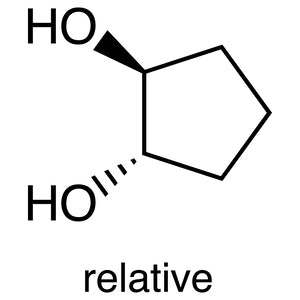
(+/-)-trans-Cyclopentane-1,2-diol TCI C3885
Regular price From Rp 1.618.050,00Regular price -
4-(trans-4-Pentylcyclohexyl)phenyl(trans,trans)-4'-Propyl-[1,1'-bi(cyclohexane)]-4-carboxylate TCI P2696
Regular price From Rp 1.458.450,00Regular price


![131790-57-3 4-(trans-4-Pentylcyclohexyl)phenyl (trans,trans)-4'-Propyl-[1,1'-bi(cyclohexane)]-4-carboxylate - AMI Scientific](http://amiscientific.com/cdn/shop/files/TCI2510P2696.jpg?v=1768819400&width=533)