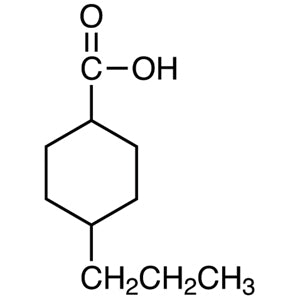
4-Propylcyclohexanecarboxylic Acid (cis- and trans- mixture) is a versatile organic compound widely used in laboratory settings for its ability to participate in various chemical reactions. As a building block in organic synthesis, it serves as a foundational material for the development of more complex molecules. Its unique molecular structure, consisting of a cyclohexane ring connected to a propyl group at the carboxylic acid position, makes it a valuable resource in chemical research. This compound is commonly found in research laboratories where scientists aim to create new compounds with specific functional properties.
The compound's chemical stability under normal conditions, along with its reactivity in esterification, hydrolysis, and substitution reactions, makes it a preferred choice for chemists. Its ability to undergo various transformations allows for the synthesis of a wide range of derivatives, which are essential in pharmaceutical and industrial applications. The cis- and trans- isomer mixture provides additional structural diversity, enhancing its utility in synthetic pathways. This flexibility is particularly important in the development of new drugs and specialty chemicals.
In Indonesian laboratories, 4-Propylcyclohexanecarboxylic Acid is frequently used in organic chemistry research, especially in projects focused on the synthesis of complex molecules. Its availability and chemical properties make it a reliable material for academic and industrial research. It is often employed in studies related to drug development, material science, and chemical engineering, where precise control over molecular structure is essential.
Related TCI products
- TCI P0943 38289-27-9 trans-4-Propylcyclohexanecarboxylic Acid
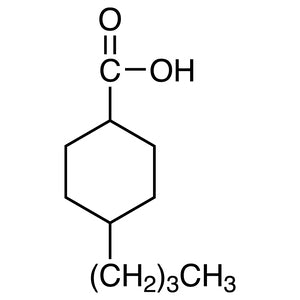
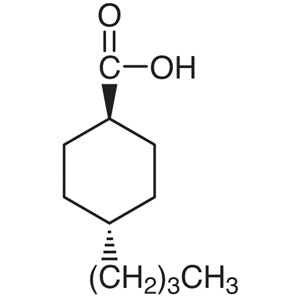
- TCI B2986 71101-89-8 4-Butylcyclohexanecarboxylic Acid (cis- and trans- mixture)
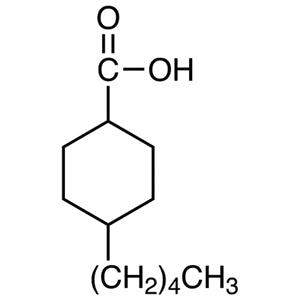
- TCI P2045 38792-89-1 4-Pentylcyclohexanecarboxylic Acid (cis- and trans- mixture)
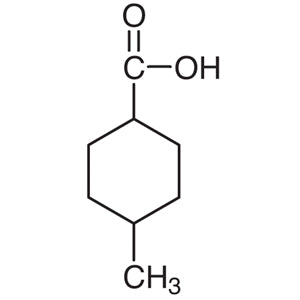
- TCI M1621 4331-54-8 4-Methylcyclohexanecarboxylic Acid (cis- and trans- mixture)
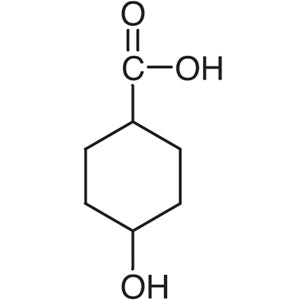
- TCI H0960 17419-81-7 4-Hydroxycyclohexanecarboxylic Acid (cis- and trans- mixture)
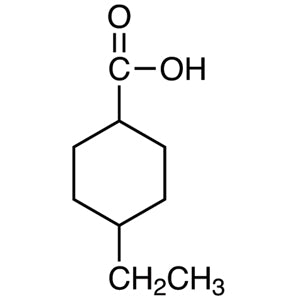
- TCI E0966 91328-77-7 4-Ethylcyclohexanecarboxylic Acid (cis- and trans- mixture)
- Organic Synthesis: This compound is ideal for creating complex organic molecules due to its reactivity and structural versatility.
- Pharmaceutical Research: It is used in the development of new drugs as a building block for synthesizing active pharmaceutical ingredients.
- Industrial Chemistry: Its application extends to the production of specialty chemicals and polymers, where controlled molecular structures are required.
- Material Science: It contributes to the development of advanced materials by enabling the synthesis of functional compounds with specific properties.
- Academic Research: It is a common material in university and research institute laboratories for teaching and experimental purposes.
| Brand | TCI |
|---|---|
| CAS number | 70928-91-5 |
| Molecular formula | — |
| Purity | — |
| Category | Chemistry > Building Blocks > Non-Heterocyclic Building Blocks |
| Pack sizes | Available in various quantities as per standard laboratory supply |
| Physical form | Solid, crystalline or powder, depending on the batch |
| Storage | Store in a cool, dry place away from direct sunlight and incompatible materials |
This compound should be stored in a cool, dry environment to maintain its chemical stability. It is recommended to keep it in a sealed container to prevent exposure to moisture and air. Proper ventilation is essential when handling the material to minimize inhalation risks. Avoid contact with strong acids or bases, as they may cause unwanted reactions. Keep the material away from heat sources and flammable substances to ensure safe storage. Regular inspection of storage conditions is advised to maintain the integrity of the compound. Always use appropriate personal protective equipment when handling this material in the laboratory.
—
Produk Terkait
-
trans-4-PropylcyclohexanecarboxylicAcid TCI P0943
Regular price From Rp 530.250,00Regular price -
4-ButylcyclohexanecarboxylicAcid(cis-andtrans-mixture) TCI B2986
Regular price From Rp 4.213.650,00Regular price -
4-PentylcyclohexanecarboxylicAcid(cis-andtrans-mixture) TCI P2045
Regular price Rp 5.619.600,00Regular price -
4-MethylcyclohexanecarboxylicAcid(cis-andtrans-mixture) TCI M1621
Regular price From Rp 2.041.200,00Regular price -
4-HydroxycyclohexanecarboxylicAcid(cis-andtrans-mixture) TCI H0960
Regular price From Rp 4.213.650,00Regular price -
4-EthylcyclohexanecarboxylicAcid(cis-andtrans-mixture) TCI E0966
Regular price Rp 2.306.850,00Regular price -
4-Propylcyclohexanone TCI P1849
Regular price From Rp 769.650,00Regular price -
trans-4-ButylcyclohexanecarboxylicAcid TCI B1136
Regular price From Rp 477.750,00Regular price