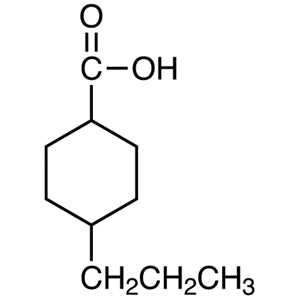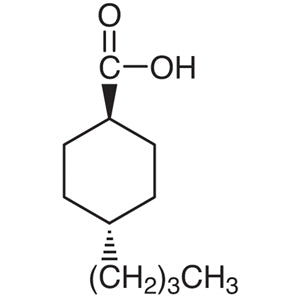
Trans-4-Butylcyclohexanecarboxylic Acid is a chemical compound widely used in laboratory settings for its structural versatility and reactivity. As a building block in organic chemistry, it plays a crucial role in the synthesis of complex molecules, particularly those requiring cyclohexane-based frameworks. This compound is commonly found in chemical laboratories where researchers aim to develop new materials, pharmaceuticals, or functional chemicals. Its ability to participate in various chemical reactions makes it an essential component in synthetic pathways that demand precise molecular design.
The compound's chemical properties, including its stability and reactivity under controlled conditions, make it a preferred choice for synthetic chemists. Its molecular structure, featuring a cyclohexane ring with a butyl side chain, allows for multiple functionalization opportunities. This versatility enables its use in a wide range of chemical transformations, including esterification, amidation, and oxidation reactions. Additionally, its solubility in organic solvents facilitates efficient processing and purification, making it ideal for laboratory applications that require high precision.
In Indonesian laboratories, Trans-4-Butylcyclohexanecarboxylic Acid is commonly used in organic chemistry research, particularly in the development of pharmaceutical compounds and industrial chemicals. Due to its structural specificity and chemical reactivity, it is often selected for experiments that require tailored molecular structures. Its availability through reliable suppliers like AMI Scientific ensures that researchers can access this compound for their specialized needs.
Related TCI products
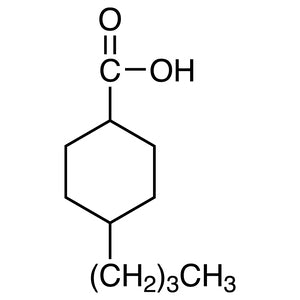
- TCI B2986 71101-89-8 4-Butylcyclohexanecarboxylic Acid (cis- and trans- mixture)
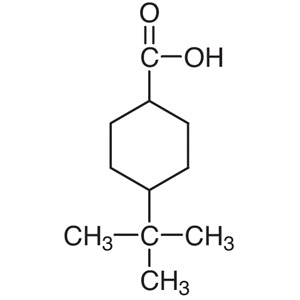
- TCI B3037 943-29-3 trans-4-tert-Butylcyclohexanecarboxylic Acid
- TCI B1285 5451-55-8 4-tert-Butylcyclohexanecarboxylic Acid (cis- and trans- mixture)
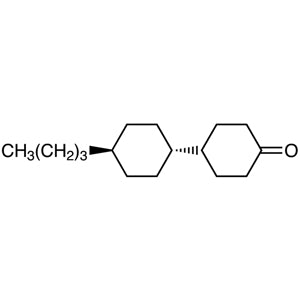
- TCI B4946 92413-47-3 4-(trans-4-Butylcyclohexyl)cyclohexanone
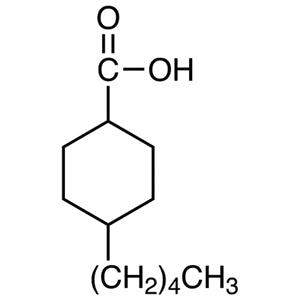
- TCI P2045 38792-89-1 4-Pentylcyclohexanecarboxylic Acid (cis- and trans- mixture)
- TCI P1656 70928-91-5 4-Propylcyclohexanecarboxylic Acid (cis- and trans- mixture)
- Synthesis of complex organic compounds due to its cyclohexane framework and butyl side chain, enabling diverse chemical modifications.
- Development of pharmaceuticals as a building block for drug molecules requiring specific stereochemistry and functional groups.
- Organic chemistry research where precise molecular structures are necessary for catalytic reactions and functional group transformations.
- Industrial chemical production for the creation of specialty chemicals with tailored properties and applications.
- Structural analysis experiments that require stable and reactive compounds for spectroscopic and chromatographic studies.
| Brand | TCI |
|---|---|
| CAS number | 38289-28-0 |
| Molecular formula | — |
| Purity | — |
| Category | Chemistry > Building Blocks > Non-Heterocyclic Building Blocks |
| Pack sizes | Available in various quantities as per supplier specifications |
| Physical form | Solid or crystalline, depending on purity and storage conditions |
| Storage | Store in a cool, dry place away from light and moisture |
Trans-4-Butylcyclohexanecarboxylic Acid should be stored in a cool, dry environment to maintain its chemical stability. It is recommended to keep the compound in airtight containers to prevent exposure to moisture and air, which could lead to degradation. Due to its organic nature, it is best stored in glass or polyethylene containers that are resistant to chemical reactions. Laboratory personnel should handle the compound with care, using appropriate personal protective equipment such as gloves and safety goggles to minimize direct contact. It should not be stored near incompatible materials such as strong oxidizing agents. Regular monitoring of storage conditions is essential to ensure the compound remains in optimal condition for use in research applications.
—
Produk Terkait
-
4-ButylcyclohexanecarboxylicAcid(cis-andtrans-mixture) TCI B2986
Regular price From Rp 4.213.650,00Regular price -
trans-4-tert-ButylcyclohexanecarboxylicAcid TCI B3037
Regular price From Rp 1.724.100,00Regular price -
4-tert-ButylcyclohexanecarboxylicAcid(cis-andtrans-mixture) TCI B1285
Regular price From Rp 2.041.200,00Regular price -
4-(trans-4-Butylcyclohexyl)cyclohexanone TCI B4946
Regular price From Rp 689.850,00Regular price -
4-PentylcyclohexanecarboxylicAcid(cis-andtrans-mixture) TCI P2045
Regular price Rp 5.672.100,00Regular priceRp 3.981.600,00Sale price Rp 5.672.100,00 -
4-PropylcyclohexanecarboxylicAcid(cis-andtrans-mixture) TCI P1656
Regular price Rp 2.518.950,00Regular priceRp 1.776.600,00Sale price Rp 2.518.950,00 -
trans-4-PentylcyclohexanecarboxylicAcid TCI P0944
Regular price Rp 1.246.350,00Regular priceRp 887.250,00Sale price Rp 1.246.350,00 -
trans-4-PropylcyclohexanecarboxylicAcid TCI P0943
Regular price Rp 582.750,00Regular priceRp 423.150,00Sale price Rp 582.750,00