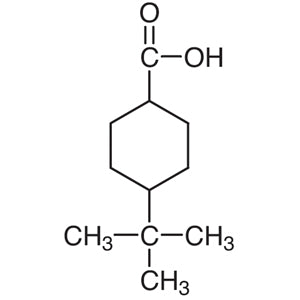
Trans-4-tert-Butylcyclohexanecarboxylic Acid (TCI B3037) is a chemical compound widely used in organic synthesis as a building block for creating complex molecular structures. Its role in the laboratory is critical, particularly in the development of compounds with cyclic frameworks and side chains. This compound is a key component in various synthetic pathways, enabling chemists to construct more intricate molecules with precision. Due to its structural versatility, it is frequently employed in both academic and industrial research settings.
The compound’s stability and solubility in organic solvents make it a preferred choice for many chemical reactions. Its carboxylic acid group allows for easy functionalization, making it adaptable to a wide range of synthetic strategies. The presence of the tert-butyl group further enhances its utility, as it provides steric protection and influences reactivity in different reaction conditions. These characteristics make it a reliable and flexible reagent for organic chemists.
In Indonesian laboratories, this compound is commonly used by researchers and students working on organic chemistry projects. Its availability and chemical stability make it a practical choice for both teaching and research applications. It supports the development of new compounds and plays a vital role in advancing chemical knowledge in the region.
Related TCI products
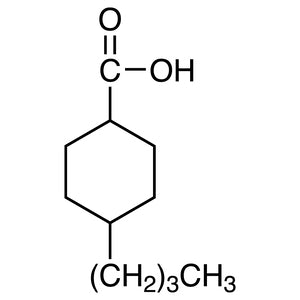
- TCI B2986 71101-89-8 4-Butylcyclohexanecarboxylic Acid (cis- and trans- mixture)
- TCI B1285 5451-55-8 4-tert-Butylcyclohexanecarboxylic Acid (cis- and trans- mixture)
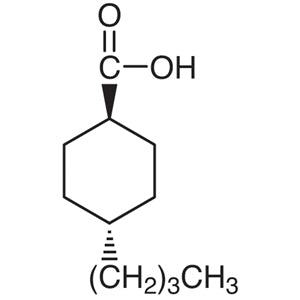
- TCI B1136 38289-28-0 trans-4-Butylcyclohexanecarboxylic Acid
- TCI B2631 943-28-2 cis-4-tert-Butylcyclohexanecarboxylic Acid
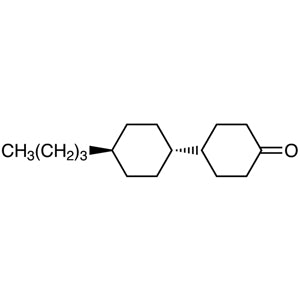
- TCI B4946 92413-47-3 4-(trans-4-Butylcyclohexyl)cyclohexanone
- TCI B3371 14765-30-1 2-sec-Butylcyclohexanone (mixture of isomers)
- Organic synthesis is a primary application where this compound is used to build complex molecules with cyclic structures and side chains.
- Medicinal chemistry research benefits from its ability to participate in various reactions, such as substitution and oxidation, aiding in drug development.
- Teaching laboratories utilize it for demonstrating synthetic techniques and molecular structure building in undergraduate courses.
- Polymer science applications leverage its stability and reactivity for creating new materials with tailored properties.
- Analytical chemistry uses it as a reference standard for identifying and quantifying compounds in complex mixtures.
| Brand | TCI |
|---|---|
| CAS number | 943-29-3 |
| Molecular formula | — |
| Purity | — |
| Category | Chemistry > Building Blocks > Non-Heterocyclic Building Blocks |
| Pack sizes | Available in various quantities as per supplier specifications |
| Physical form | Solid, crystalline or powder |
| Storage | Store in a cool, dry place away from moisture and direct sunlight |
This compound should be stored in a cool, dry environment to maintain its chemical integrity. It is recommended to use airtight containers to prevent exposure to moisture and air, which may affect its stability. Due to its potential reactivity, it should be handled in a well-ventilated laboratory setting, preferably with appropriate personal protective equipment. Avoid contact with incompatible materials such as strong bases or oxidizing agents. Regular monitoring of storage conditions is essential to ensure the compound remains in optimal condition for use in laboratory applications.
—
Produk Terkait
-
4-ButylcyclohexanecarboxylicAcid(cis-andtrans-mixture) TCI B2986
Regular price From Rp 4.266.150,00Regular priceRp 2.998.800,00Sale price From Rp 4.266.150,00 -
4-tert-ButylcyclohexanecarboxylicAcid(cis-andtrans-mixture) TCI B1285
Regular price From Rp 2.093.700,00Regular priceRp 1.479.450,00Sale price From Rp 2.093.700,00 -
trans-4-ButylcyclohexanecarboxylicAcid TCI B1136
Regular price From Rp 530.250,00Regular priceRp 386.400,00Sale price From Rp 530.250,00 -
cis-4-tert-ButylcyclohexanecarboxylicAcid TCI B2631
Regular price From Rp 3.340.050,00Regular priceRp 2.350.950,00Sale price From Rp 3.340.050,00 -
4-(trans-4-Butylcyclohexyl)cyclohexanone TCI B4946
Regular price From Rp 742.350,00Regular priceRp 534.450,00Sale price From Rp 742.350,00 -
2-sec-Butylcyclohexanone(mixtureofisomers) TCI B3371
Regular price Rp 1.113.000,00Regular priceRp 793.800,00Sale price Rp 1.113.000,00 -
4-tert-Butylcyclohexanone TCI B1074
Regular price From Rp 1.618.050,00Regular priceRp 1.146.600,00Sale price From Rp 1.618.050,00 -
4-tert-ButylcyclohexylAcetate(cis-andtrans-mixture) TCI A0723
Regular price From Rp 505.050,00Regular priceRp 352.800,00Sale price From Rp 505.050,00