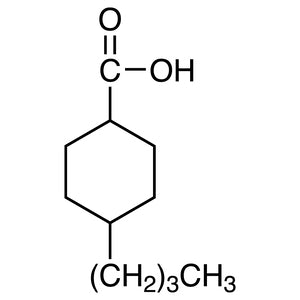
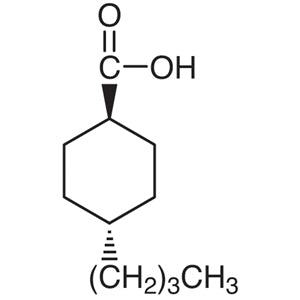
4-tert-Butylcyclohexanecarboxylic Acid (cis- and trans- mixture) is a chemical compound widely used in organic synthesis as a foundational building block. This compound plays a crucial role in the development of complex organic molecules due to its unique molecular structure. It features a carboxylic acid group attached to a cyclohexane ring, which is further substituted with a tert-butyl group. This structural combination provides stability and versatility, making it an essential component in many synthetic pathways. Its controlled reactivity and predictable behavior in chemical reactions make it a reliable choice for researchers aiming for precision in their experiments.
The compound’s physical properties, such as its melting point and solubility, are well-suited for laboratory processing under various conditions. These characteristics ensure that it remains stable during synthesis and purification steps. Additionally, its stereochemical diversity—being a mixture of cis- and trans-isomers—offers researchers the opportunity to explore different chemical outcomes. This property is particularly valuable in studies involving stereochemistry and its impact on molecular function. The compound’s consistent performance and predictable behavior further enhance its appeal in both academic and industrial research settings.
In Indonesian laboratories, this compound is commonly used in organic chemistry research, especially in academic institutions and research centers. It is a key reagent in the synthesis of new compounds and is often employed in pharmaceutical and materials science studies. Its availability and reliability make it a preferred choice for researchers seeking to develop novel chemical structures and explore the properties of organic compounds.
Related TCI products
- TCI B3037 943-29-3 trans-4-tert-Butylcyclohexanecarboxylic Acid
- TCI B2986 71101-89-8 4-Butylcyclohexanecarboxylic Acid (cis- and trans- mixture)
- TCI B1136 38289-28-0 trans-4-Butylcyclohexanecarboxylic Acid
- TCI B2631 943-28-2 cis-4-tert-Butylcyclohexanecarboxylic Acid
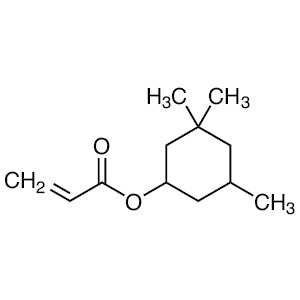
- TCI T3984 86178-38-3 3,3,5-Trimethylcyclohexyl Acrylate (cis- and trans- mixture) (stabilized with MEHQ)
- TCI T3033 52831-11-5 Trimethyl 1,3,5-Cyclohexanetricarboxylate (cis- and trans- mixture)
- Organic synthesis applications benefit from this compound's structural versatility, enabling the creation of complex molecular frameworks with controlled stereochemistry.
- Pharmaceutical research utilizes it to develop new drug molecules, leveraging its reactivity and stability in synthetic pathways.
- Materials science studies incorporate it to design polymers and functional materials with specific chemical properties.
- Academic research in chemistry relies on its predictable behavior for teaching and experimental purposes in undergraduate and graduate programs.
- Analytical chemistry applications use it as a reference standard to calibrate instruments and ensure the accuracy of chemical analyses.
| Brand | TCI |
|---|---|
| CAS number | 5451-55-8 |
| Molecular formula | — |
| Purity | — |
| Category | Chemistry > Building Blocks > Non-Heterocyclic Building Blocks |
| Pack sizes | Available in various quantities as per supplier specifications |
| Physical form | Solid |
| Storage | Store in a cool, dry place away from light and moisture |
This compound should be stored in a cool, dry environment, away from direct sunlight and moisture. It is recommended to use airtight containers to prevent exposure to air and humidity, which could affect its stability. Due to its chemical nature, it should be handled in a well-ventilated area, and appropriate personal protective equipment, such as gloves and safety goggles, should be worn. Avoid contact with incompatible materials, and ensure that storage conditions are consistent with standard laboratory safety protocols. Proper labeling of containers is essential to ensure safe handling and prevent accidental misuse.
—
Produk Terkait
-
trans-4-tert-ButylcyclohexanecarboxylicAcid TCI B3037
Regular price From Rp 1.776.600,00Regular priceRp 1.257.900,00Sale price From Rp 1.776.600,00 -
4-ButylcyclohexanecarboxylicAcid(cis-andtrans-mixture) TCI B2986
Regular price From Rp 4.266.150,00Regular priceRp 2.998.800,00Sale price From Rp 4.266.150,00 -
trans-4-ButylcyclohexanecarboxylicAcid TCI B1136
Regular price From Rp 530.250,00Regular priceRp 386.400,00Sale price From Rp 530.250,00 -
cis-4-tert-ButylcyclohexanecarboxylicAcid TCI B2631
Regular price From Rp 3.340.050,00Regular priceRp 2.350.950,00Sale price From Rp 3.340.050,00 -
3,3,5-TrimethylcyclohexylAcrylate(cis-andtrans-mixture)(stabilizedwithMEHQ) TCI T3984
Regular price From Rp 1.510.950,00Regular priceRp 1.056.300,00Sale price From Rp 1.510.950,00 -
Trimethyl1,3,5-Cyclohexanetricarboxylate(cis-andtrans-mixture) TCI T3033
Regular price From Rp 5.274.150,00Regular priceRp 3.687.600,00Sale price From Rp 5.274.150,00 -
Trimethyl1,2,4-Cyclohexanetricarboxylate(cis-andtrans-mixture) TCI T3029
Regular price From Rp 1.590.750,00Regular priceRp 1.111.950,00Sale price From Rp 1.590.750,00 -
2,3,4,5-Tetramethylcyclopent-2-en-1-one(cis-andtrans-mixture) TCI T2827
Regular price Rp 3.683.400,00Regular priceRp 2.591.400,00Sale price Rp 3.683.400,00