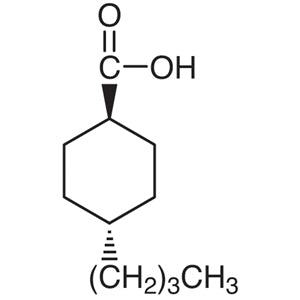
4-Butylcyclohexanecarboxylic Acid (cis- and trans- mixture), with CAS number 71101-89-8, is a chemical compound widely used in organic laboratory reactions. This compound serves as a building block in the synthesis of more complex molecules, making it essential for researchers and students engaged in chemical experimentation. Its structural characteristics allow it to participate in various chemical transformations, contributing to the development of new compounds with specific properties. As a key component in synthetic chemistry, it plays a vital role in the creation of pharmaceuticals, materials, and other advanced chemical products.
The compound’s unique molecular structure, featuring a cyclohexane ring with a butyl group and a carboxylic acid functional group, provides it with high reactivity. This reactivity makes it suitable for reactions such as esterification, reduction, and substitution. Its stability under normal conditions ensures that it remains a reliable reagent in laboratory settings. However, it is important to note that the compound is sensitive to high temperatures and UV light, which may affect its integrity if not stored properly.
In Indonesian laboratories, this compound is commonly used in academic and research settings. It is a valuable tool for students and scientists working on organic synthesis projects. Its versatility and chemical properties make it a preferred choice for those seeking to explore new chemical pathways and develop innovative compounds. Its application is widespread across various fields, including pharmaceutical research and material science.
Related TCI products
- TCI B1136 38289-28-0 trans-4-Butylcyclohexanecarboxylic Acid
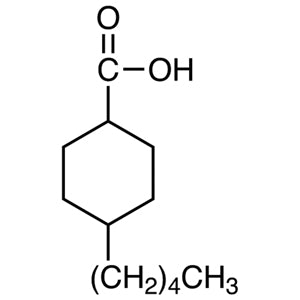
- TCI P2045 38792-89-1 4-Pentylcyclohexanecarboxylic Acid (cis- and trans- mixture)
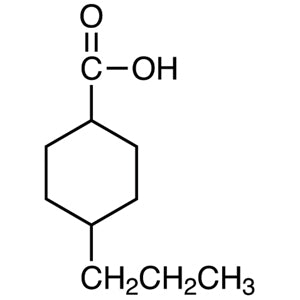
- TCI P1656 70928-91-5 4-Propylcyclohexanecarboxylic Acid (cis- and trans- mixture)
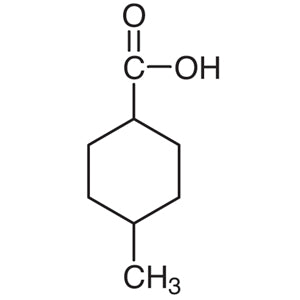
- TCI M1621 4331-54-8 4-Methylcyclohexanecarboxylic Acid (cis- and trans- mixture)
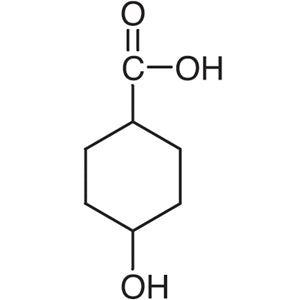
- TCI H0960 17419-81-7 4-Hydroxycyclohexanecarboxylic Acid (cis- and trans- mixture)
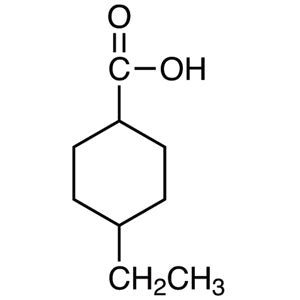
- TCI E0966 91328-77-7 4-Ethylcyclohexanecarboxylic Acid (cis- and trans- mixture)
- Organic synthesis is a primary application where this compound is used as a building block to create more complex molecules.
- Pharmaceutical research benefits from its reactivity, allowing the development of new drug compounds with specific functional groups.
- Material science applications utilize its chemical structure to design polymers and other advanced materials.
- Academic teaching incorporates this compound in laboratory courses to demonstrate organic reaction mechanisms and synthesis techniques.
- Industrial chemical processes may use it as a precursor for the production of specialty chemicals and intermediates.
| Brand | TCI |
|---|---|
| CAS number | 71101-89-8 |
| Molecular formula | — |
| Purity | — |
| Category | Chemistry > Building Blocks > Non-Heterocyclic Building Blocks |
| Pack sizes | Available in various quantities as per supplier specifications |
| Physical form | Solid or liquid, depending on the specific product variant |
| Storage | Store in a cool, dark place away from heat and UV light |
This compound should be stored in a cool, dark environment to maintain its chemical stability. It is recommended to keep it in a tightly sealed container to prevent exposure to air and moisture. Due to its sensitivity to high temperatures and UV light, it should be stored away from direct sunlight and heat sources. Appropriate personal protective equipment, such as gloves and safety goggles, should be worn when handling the compound to ensure safety in the laboratory. Regular monitoring of storage conditions is essential to maintain the integrity of the material and prevent degradation. The compound should not be stored near incompatible substances to avoid any potential chemical reactions. Proper labeling of containers is also important for safe handling and identification.
—
Produk Terkait
-
trans-4-ButylcyclohexanecarboxylicAcid TCI B1136
Regular price From Rp 530.250,00Regular priceRp 386.400,00Sale price From Rp 530.250,00 -
4-PentylcyclohexanecarboxylicAcid(cis-andtrans-mixture) TCI P2045
Regular price Rp 5.672.100,00Regular priceRp 3.981.600,00Sale price Rp 5.672.100,00 -
4-PropylcyclohexanecarboxylicAcid(cis-andtrans-mixture) TCI P1656
Regular price From Rp 2.518.950,00Regular priceRp 1.776.600,00Sale price From Rp 2.518.950,00 -
4-MethylcyclohexanecarboxylicAcid(cis-andtrans-mixture) TCI M1621
Regular price From Rp 2.093.700,00Regular priceRp 1.479.450,00Sale price From Rp 2.093.700,00 -
4-HydroxycyclohexanecarboxylicAcid(cis-andtrans-mixture) TCI H0960
Regular price From Rp 4.266.150,00Regular priceRp 2.998.800,00Sale price From Rp 4.266.150,00 -
4-EthylcyclohexanecarboxylicAcid(cis-andtrans-mixture) TCI E0966
Regular price Rp 2.359.350,00Regular priceRp 1.665.300,00Sale price Rp 2.359.350,00 -
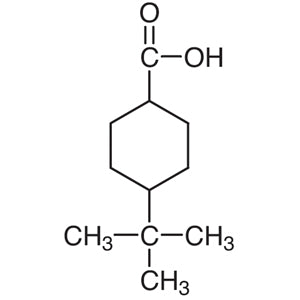
trans-4-tert-ButylcyclohexanecarboxylicAcid TCI B3037
Regular price From Rp 1.776.600,00Regular priceRp 1.257.900,00Sale price From Rp 1.776.600,00 -
4-tert-ButylcyclohexanecarboxylicAcid(cis-andtrans-mixture) TCI B1285
Regular price From Rp 2.093.700,00Regular priceRp 1.479.450,00Sale price From Rp 2.093.700,00